KI-Beratung Beta

Produktbild: Geospatial Information to Support the UN's Sustainable Development Goals

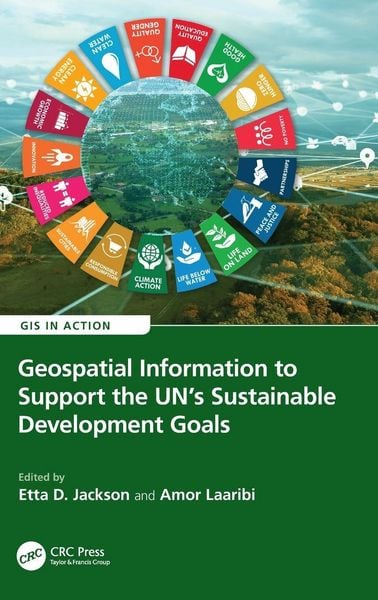
Geospatial Information to Support the UN's Sustainable Development Goals

279,99 €

inkl. gesetzl. MwSt., Versandkostenfrei


Beschreibung

This unique book investigates the 2030 Agenda for Sustainable Development through geospatial information lenses, making the case that geospatial information is central to the SDGs and is imperative to understand the place, location, communities, and the people to identify where the root of the problem...

Beschreibung

This unique book investigates the 2030 Agenda for Sustainable Development through geospatial information lenses, making the case that geospatial information is central to the SDGs and is imperative to understand the place, location, communities, and the people to identify where the root of the problem lies. Combined with other layers of information, it supports advanced analysis and visualizations and explains how SDG indicators can be interpreted and measured either through direct use of geospatial data itself or through integration with other statistical data. International case studies and coverage of all the SDGs help users evaluate impacts and monitor progress to achieve the SDGs.

Features


  • Demonstrates how geospatial information can be used to assess SDG targets and indicators.

  • Provides 16 applications and real-world case studies of SDGs and their related indicators where geospatial information contributes significantly to the implementation and monitoring.

  • Addresses practical and technological issues related to geospatial information, data acquisition, and integration approaches.

  • Illustrates the integration of geospatial information with statistical and other development information

  • Discusses the impact that applications have on policy and society to make informed decisions and implement better policies.

This book is for professionals, researchers, senior undergraduates and graduate students, working on or studying projects focused on specific GIS applications in support of sustainable development. It is also an excellent resource for policymakers and NGOs involved with UN SDGs.

Produktdetails

Einband

Gebundene Ausgabe

Erscheinungsdatum

09.12.2025

Abbildungen

schwarz-weiss Illustrationen, farbige Illustrationen, Raster, farbig, Zeichnungen, schwarz-weiss, Zeichnungen, farbig, Tabellen, schwarz-weiss, Tabellen, farbig

Herausgeber Etta D. Jackson + weitere

Produktdetails

Einband

Gebundene Ausgabe

Erscheinungsdatum

09.12.2025

Abbildungen

schwarz-weiss Illustrationen, farbige Illustrationen, Raster, farbig, Zeichnungen, schwarz-weiss, Zeichnungen, farbig, Tabellen, schwarz-weiss, Tabellen, farbig

Herausgeber
Verlag Taylor and Francis
Seitenzahl

326

Maße (L/B/H)

24/16,1/2,2 cm

Gewicht

605 g

Sprache

Englisch

ISBN

978-1-03-295744-9

Herstelleradresse

Libri GmbH
Europaallee 1
36244 Bad Hersfeld
DE

Email: gpsr@libri.de

Noch keine Bewertungen vorhanden

Verfassen Sie die erste Bewertung zu diesem Artikel

Helfen Sie anderen Kundinnen und Kunden durch Ihre Meinung.

Kundinnen und Kunden meinen

Bewertungen (0)

Die Leseprobe wird geladen.
  • Produktbild: Geospatial Information to Support the UN's Sustainable Development Goals
  • Introduction. Part 1: Eradication of Extreme Poverty, Food Security, Healthy Lives. 1. SDG #1- Leveraging Geographic Information Systems (GIS) to Address Multidimensional Poverty. 2. SDG #2 - Technology for Regenerative and Sustainable Agriculture for Food Security. 3. SDG #3 - Good Health: The Heart of UN SDGs Enabled by GIS. 4. SDG #4 - Mapping Learning beyond Indicators: GIS Impact for Achieving SDG 4 - Quality Education for All. Part 2: Innovations, Safe Communities and Life of Dignity. 5. SDG #5 - Leveraging Spatial Dimensions in Advancing Gender Equality. 6. SDG #6 - Earth Observation for SDG 15 & SDG 6 Reporting in North African Countries. 7. SDG #9 - Blueprint Strategies for Resilient Infrastructure, Inclusive Industrialization and Innovation. 8. SDG #11 - Geospatial Information for Sustainable Cities. Part 3: Climate, Food Consumption, and Environmental Sustainability. 9. SDG #12 - Responsible Consumption and Production: Spatially Enabled Assessment of Resource Consumption, Waste Generation, and Production Patterns. 10. SDG #13 - Global South Climate Change Protection Through GIS Study and Coordinated Sustainable Development Measures. 11. SDG #15- Disrupted Progress: The Impact of COVID-19 on Sustainable Development Goals in the Indian Subcontinent. Paret 4: Strong Institutions and Sustainable Development. 12. SDG #16 - The Role of Spatially Enabled Governance in the Implementation of the SDGs. 13. SDG#17: Implementation through Partnerships and Technology.