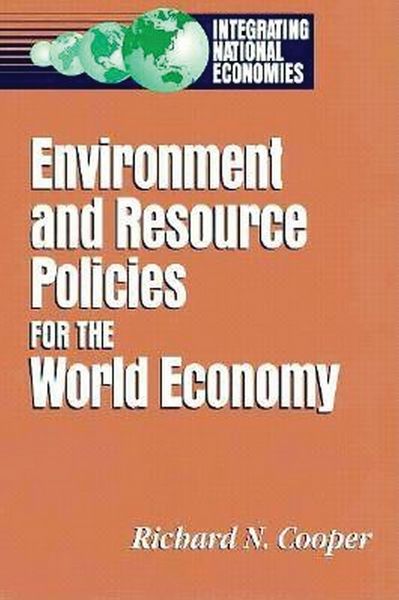
Environment and Resource Policies for the Integrated World Economy
-
- Taschenbuch
- eBook ausgewählt
-
Form:Einzelkauf Download
-
Sprache:Englisch
21,10 €
inkl. gesetzl. MwSt.Beschreibung
Produktdetails
Format
Kopierschutz
Ja
Family Sharing
Nein
Text-to-Speech
Nein
Erscheinungsdatum
01.10.1994
Verlag
Bloomsbury eBooks USSeitenzahl
121 (Printausgabe)
Auflage
1. Auflage
Sprache
Englisch
EAN
9780815791362
To whom do the Earth's riches belong¿all of mankind, the nations in which those riches are found, or individuals? Why should a relatively small number of Arabs own most of the world's oil reserves? Why should South Africans own most of the world's gold and diamond resources? Or why should the Americans and Canadians own the agriculturally rich Great Plains? Shouldn't these resources and the environment be treated as endowments available to all mankind?
Long ago, the international community agreed to a system of national ownership of natural resources, giving states sovereignty over their respective territories. In recent years, however, environmentalists have raised questions about this distribution of property rights with respect to global environmental issues, such as atmospheric disposal of waste gases, preservation of the Earth's genetic material, and the destruction of tropical rain forests. When environmental impacts are global, international action may be warranted to ensure that individual nations are complying with transnational standards.
In this book, part of the Brookings Integrating National Economies series, Richard N. Cooper evaluates the need for international policy action in natural resource and environmental management. Using numerous examples, he illustrates the issues that cause conflict in environment and resources policies. Cooper divides the use of natural resources into three categories and examines the rationale for international action in each. He discusses the use of resources not yet subject to national jurisdiction, such as Antarctica, open oceans, and outer space, and analyzes the effects of national action on other nations via both market and environmental externalities.
Taking into account the diversity of individual states' circumstances and priorities, Copper concludes that stiff environmental regulations generally are not the best answer to environmental management. He explains that developing countries a
Noch keine Bewertungen vorhanden
Verfassen Sie die erste Bewertung zu diesem Artikel
Helfen Sie anderen Kundinnen und Kunden durch Ihre Meinung.
Kurze Frage zu unserer Seite
Vielen Dank für Ihr Feedback
Wir nutzen Ihr Feedback, um unsere Produktseiten zu verbessern. Bitte haben Sie Verständnis, dass wir Ihnen keine Rückmeldung geben können. Falls Sie Kontakt mit uns aufnehmen möchten, können Sie sich aber gerne an unseren Kund*innenservice wenden.
zum Kundenservice