KI-Beratung Beta

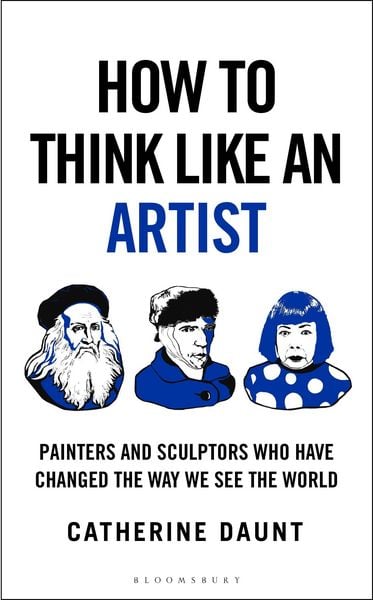
Produktbild: How To Think Like an Artist

How To Think Like an Artist Painters and Sculptors Who Have Changed The Way We See The World

Aus der Reihe How To Think

16,99 €

inkl. gesetzl. MwSt., zzgl. Versandkosten


  • Kostenlose Lieferung ab 30 € Einkaufswert
  • Versandkostenfrei für Bonuscard-Kund*innen

Beschreibung

ONE OF LITERARY HUB'S 10 GREAT NONFICTION TITLES TO READ THIS AUGUST An illuminating guide to history's most influential and inspiring artists - from Leonardo da Vinci to Frida Kahlo - and how they can teach us to see the world more clearly. How did the greatest artists in history look at the world through...

Beschreibung

ONE OF LITERARY HUB'S 10 GREAT NONFICTION TITLES TO READ THIS AUGUST
An illuminating guide to history's most influential and inspiring artists - from Leonardo da Vinci to Frida Kahlo - and how they can teach us to see the world more clearly.
How did the greatest artists in history look at the world through new eyes? And what can we learn from the imagination, boldness and originality of their art? From the allusive frescos of the Renaissance to the cool irony of conceptual art in the 20th century, this is the ultimate guide to the greatest artists of the human age.
Curator and writer Catherine Daunt interweaves the lives and loves of these great artists with moving and enlightening descriptions of their most famous and important works. This book takes the reader on a whirlwind journey through the greatest art of all time, and shows us how we can understand and interpret them.
Daunt re-examines the canon, traditionally dominated by Western, white and male artists, and makes space for major figures from other cultures and traditions, as well as those who have been traditionally overlooked because of their gender or class. Every artist in this book has made a revolutionary contribution to art, changing the way that we view, depict and navigate our world.

Produktdetails

Einband

Taschenbuch

Erscheinungsdatum

25.06.2026

Abbildungen

An 8-page plate colour section

Verlag Bloomsbury Academic

Produktdetails

Einband

Taschenbuch

Erscheinungsdatum

25.06.2026

Abbildungen

An 8-page plate colour section

Verlag Bloomsbury Academic
Seitenzahl

304

Maße (L/B/H)

21,3/13,4/2,7 cm

Gewicht

320 g

Sprache

Englisch

ISBN

978-1-399-42293-2

Herstelleradresse

Libri GmbH
Europaallee 1
36244 Bad Hersfeld
DE

Email: gpsr@libri.de

Noch keine Bewertungen vorhanden

Verfassen Sie die erste Bewertung zu diesem Artikel

Helfen Sie anderen Kundinnen und Kunden durch Ihre Meinung.

Kundinnen und Kunden meinen

Bewertungen (0)

Weitere Artikel finden Sie in

Die Leseprobe wird geladen.
  • Produktbild: How To Think Like an Artist
  • Introduction
    1 Apelles: The G.O.A.T.
    2 Giotto: Painting the Human Experience
    3 Hieronymus Bosch: (Poor) People are Terrible
    4 Leonardo da Vinci: Re-presenting the World
    5 Artemisia Gentileschi: Until her Work is Seen
    6 Rembrandt van Rijn: Things for Which There Are No Words
    7 William Hogarth: The First YBA
    8 Francisco de Goya: Producing Monsters
    9 Katsushika Hokusai: Old Man Mad About Art
    10 J.M.W. Turner: Painting as Poetry
    11 Rosa Bonheur: Art and Animals
    12 Claude Monet: Making an Impression
    13 Vincent van Gogh: Feeling Deeply
    14 Käthe Kollwitz: Artist as Advocate
    15 Henri Matisse: Seeking Colour and Light
    16 Pablo Picasso: That Guy Missed Nothing!
    17 Kazimir Malevich: Nothing in Common with Nature
    18 Mark Rothko: Basic Human Emotions
    19 Barbara Hepworth: Every Hill and Valley Becomes a Sculpture
    2o Frida Kahlo: Identity and Self
    21 Emily Kam Kngwarray: Life and Landscape
    22 Jacob Lawrence: History Painting
    23 Andy Warhol: The Same Thing, Over and Over
    24 Yayoi Kusama: Self-Obliteration
    25 Marina Abramovic: The Audience and I Become One
    26 Ai Weiwei: An Artist Must Be an Activist
    27 Keith Haring: Art in the City
    28 The Guerrilla Girls: Collective and Covert
    29 Rachel Whiteread: The Spaces In-Between
    30 Wangechi Mutu: Beauty, Bodies and Optimistic Futures
    Conclusions
    Acknowledgements
    Endnotes
    Index