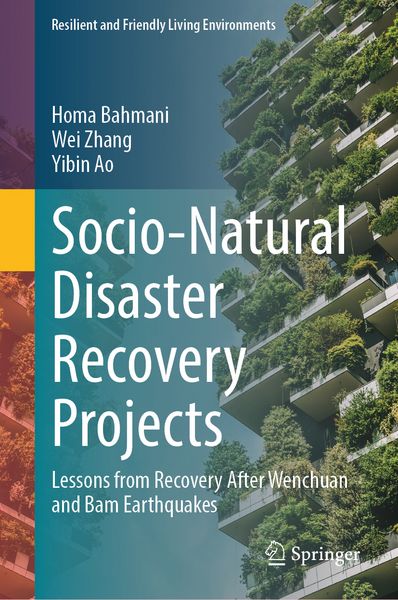
Socio-Natural Disaster Recovery Projects Lessons from Recovery After Wenchuan and Bam Earthquakes
144,99 €
UVP
164,99 €
inkl. gesetzl. MwSt.,
Beschreibung
Produktdetails
Einband
Gebundene Ausgabe
Erscheinungsdatum
20.08.2025
Abbildungen
XVII, 193 p. 59 illus., 52 illus. in color.
Verlag
Springer SingaporeSeitenzahl
193
Maße (L/B/H)
24,1/16/1,8 cm
Gewicht
487 g
Auflage
1. Auflage
Sprache
Englisch
ISBN
978-981-9501-12-0
This book offers a comprehensive analysis of socio-natural disaster recovery projects, using the Bam and Wenchuan earthquakes as case studies to evaluate their success and failure. With escalating losses from socio-natural disasters and a high failure rate among recovery projects, it addresses the urgent need for effective management guidelines by leveraging past experiences. Tackling the discrepancy between reported project success and public perception, the book emphasizes the importance of stakeholder perspectives and assessment timing. It sets out to solve the problem of ineffective disaster recovery management by proposing a robust framework and practical guidelines for successful recovery projects, aiming to prioritize project goals and refine evaluation criteria, leading to more desirable outcomes and enhanced community resilience. The main topics covered include:
1. Critical Overview and Conceptual Framework: The book begins with a thorough overview of socio-natural disaster recovery projects, leading to the development of a conceptual management framework. This framework outlines essential steps based on a continuous life cycle to streamline recovery efforts.
2. Success Factors and Dimensions: It identifies key success factors and dimensions to comprehensively measure project outcomes. These findings are structured through rigorous triangulation of primary and secondary data.
3. Comparative Policy Analysis: A micro-comparison of recovery policies in Iran and China, two of the most vulnerable countries, provides practical suggestions using success factors, influential pathways, and SWOT analysis.
4. Community Recovery Dynamics: The book explores why communities recover differently, applying qualitative comparative analysis to neighborhoods in Bam and towns affected by the Wenchuan earthquake.
The target audience includes policymakers, project managers, researchers, and practitioners in disaster management, urban planning, and civil engineering. Academics and government officials responsible for managing socio-natural disaster recovery projects will find this book invaluable for improving project success and community resilience.
Noch keine Bewertungen vorhanden
Verfassen Sie die erste Bewertung zu diesem Artikel
Helfen Sie anderen Kundinnen und Kunden durch Ihre Meinung.
Kurze Frage zu unserer Seite
Vielen Dank für Ihr Feedback
Wir nutzen Ihr Feedback, um unsere Produktseiten zu verbessern. Bitte haben Sie Verständnis, dass wir Ihnen keine Rückmeldung geben können. Falls Sie Kontakt mit uns aufnehmen möchten, können Sie sich aber gerne an unseren Kund*innenservice wenden.
zum Kundenservice