KI-Beratung Beta

Gutscheinbedingungen

**Gültig am 01.10.2026 ab einem Mindestbestellwert von 30€ auf Spielzeug, Schreibwaren, Filme, Geschenke & Trends, Musik, tolino eReader & Zubehör, Hörbücher und Hörbuch-Downloads, nicht preisgebundene Bücher und Kalender online auf thalia.at und in der Thalia App. Einzelne Artikel können ausgeschlossen sein. Aufgrund der Buchpreisbindung sind deutschsprachige Bücher und eBooks ausgenommen. Zusätzlich ausgenommen sind Abos & Flatrates, Games, Geschenkkarten/-boxen, Shelfies, Software, Zeitschriften sowie einzelne Artikel von tonies®. Pro Einkauf einmal einlösbar. Click & Collect nur bei Onlinevorabzahlung möglich. Keine Barauszahlung. Nicht kombinierbar mit anderen Aktionen und Gutscheinen. Gutschein wird auf max. 500€ Bestellwert angerechnet. Nicht gültig für Versandkosten und Services. Preisgebundene Artikel sind vom Mindestbestellwert ausgeschlossen.

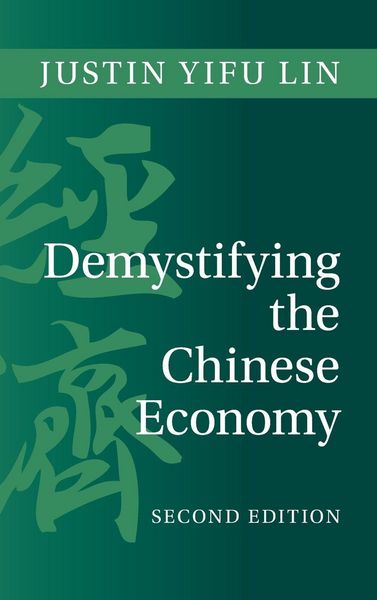
Produktbild: Demystifying the Chinese Economy

Demystifying the Chinese Economy

149,99 €

inkl. gesetzl. MwSt., Versandkostenfrei


Beschreibung

Produktdetails

Einband

Gebundene Ausgabe

Erscheinungsdatum

25.11.2025

Verlag

Cambridge Academic

Seitenzahl

432

Maße (L/B/H)

23,5/15,7/2,8 cm

Gewicht

806 g

Übersetzt von

Wang Qiong

Sprache

Englisch

ISBN

978-1-00-920930-4

Beschreibung

Produktdetails

Einband

Gebundene Ausgabe

Erscheinungsdatum

25.11.2025

Verlag

Cambridge Academic

Seitenzahl

432

Maße (L/B/H)

23,5/15,7/2,8 cm

Gewicht

806 g

Übersetzt von

Wang Qiong

Sprache

Englisch

ISBN

978-1-00-920930-4

Herstelleradresse

Libri GmbH
Europaallee 1
36244 Bad Hersfeld
DE

Email: gpsr@libri.de

Noch keine Bewertungen vorhanden

Verfassen Sie die erste Bewertung zu diesem Artikel

Helfen Sie anderen Kundinnen und Kunden durch Ihre Meinung.

Kundinnen und Kunden meinen

Bewertungen (0)

  • Produktbild: Demystifying the Chinese Economy
  • Preface to the second edition; Preface to the first edition; 1. Opportunities and challenges in China's economic development; 2. Why the scientific and industrial revolutions bypassed China; 3. The great humiliation and the socialist revolution; 4. The comparative advantage-defying, catching-up strategy and China's traditional economic system; 5. Enterprise viability and factor endowments; 6. The comparative advantage-following development strategy; 7. Rural reform and the three rural issues; 8. Urban reform and the remaining issues; 9. Reforming the state-owned enterprises; 10. The financial reforms; 11. Deflationary expansion and building a new socialist countryside; 12. Improving the market system and promoting fairness and efficiency for harmonious development; 13. Supply-side structural reform and economic transformation and upgrading under the new normal; 14. China's economic development and cultural rejuvenation; 15. Reflections on neoclassical theories; Appendix 1. Economic growth and institutional changes; Appendix 2. The puzzles of long-term unchanged per capita income and a large population in pre-modern China; Appendix 3. Global imbalances, reserve currency, and global economic governance; Appendix 4. The debates with Xiaokai Yang and Weiying Zhang on the role of the state and the sequence of reform; Appendix 5. The belt and road initiative and the free trade zone: China's new measures for opening.