KI-Beratung Beta

Gutscheinbedingungen

**Gültig bis 11.11.2026 auf Spielzeug, Schreibwaren, Filme, Geschenke & Trends, Musik, tolino eReader & Zubehör, Hörbücher und Hörbuch-Downloads, nicht preisgebundene Bücher und Kalender online auf thalia.at und in der Thalia App. Einzelne Artikel können ausgeschlossen sein. Aufgrund der Buchpreisbindung sind deutschsprachige Bücher und eBooks ausgenommen. Zusätzlich ausgenommen sind Abos & Flatrates, Games, Geschenkkarten/-boxen, Shelfies, Software, Zeitschriften sowie einzelne Artikel von tonies®. Pro Einkauf einmal einlösbar. Click & Collect nur bei Onlinevorabzahlung möglich. Keine Barauszahlung. Nicht kombinierbar mit anderen Aktionen und Gutscheinen. Gutschein wird auf max. 500€ Bestellwert angerechnet. Nicht gültig für Versandkosten und Services.

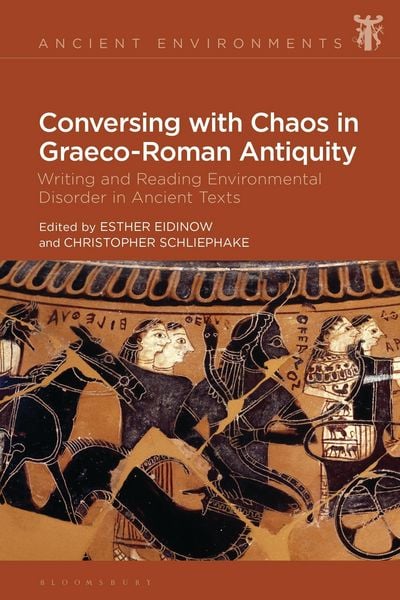
Produktbild: Conversing with Chaos in Graeco-Roman Antiquity

Conversing with Chaos in Graeco-Roman Antiquity Writing and Reading Environmental Disorder in Ancient Texts

Aus der Reihe Ancient Environments

54,99 €

inkl. gesetzl. MwSt., Versandkostenfrei


Beschreibung

How did ancient Greeks and Romans perceive their environments: did they see order or chaos, chance or control? And how do their views compare to modern perceptions?Conversing with Chaos in Graeco-Roman Antiquity challenges prevailing ideas that ancient perceptions of the non-human world rested on a...

Beschreibung

How did ancient Greeks and Romans perceive their environments: did they see order or chaos, chance or control? And how do their views compare to modern perceptions?Conversing with Chaos in Graeco-Roman Antiquity challenges prevailing ideas that ancient perceptions of the non-human world rested on a profound belief in universal order, and that the cosmos was harmonious and under human control.Engaging with the concept of chaos in both its ancient and modern meanings, and focusing on the ancient Mediterranean and Near East, this book reveals another sense of environmental awareness, one that paid equal attention to chance and chaos, and the sometimes-fatal consequences of human interventions in nature. Bringing together a team of international scholars, the volume investigates the experience of the interaction of humans with the environment, as reflected in ancient evidence from myths and philosophical treatises, to epigraphic evidence and archaeological remains. The contributors consider the role of the human in the formation of perspectives about the natural world and explore themes of agency, affordances, ecophobia, gender and temporality. Overall, the volume reveals how, in ancient imaginations, environments were perceived as living entities with their own agency, and respondent (or even vulnerable) to human actions and decision-making. It highlights how modern insights can enrich our understanding of the past, and demonstrates the increasing relevance of ancient historical research for reflecting on current relations to the natural world.

Produktdetails

Einband

Taschenbuch

Erscheinungsdatum

25.06.2026

Herausgeber Esther Eidinow + weitere
Verlag Bloomsbury Academic

Produktdetails

Einband

Taschenbuch

Erscheinungsdatum

25.06.2026

Herausgeber
Verlag Bloomsbury Academic
Seitenzahl

230

Maße (L/B/H)

23,4/15,6/1,3 cm

Gewicht

357 g

Sprache

Englisch

ISBN

978-1-350-34423-5

Herstelleradresse

Libri GmbH
Europaallee 1
36244 Bad Hersfeld
DE

Email: gpsr@libri.de

Noch keine Bewertungen vorhanden

Verfassen Sie die erste Bewertung zu diesem Artikel

Helfen Sie anderen Kundinnen und Kunden durch Ihre Meinung.

Kundinnen und Kunden meinen

Bewertungen (0)

Die Leseprobe wird geladen.
  • Produktbild: Conversing with Chaos in Graeco-Roman Antiquity
  • List of Contributors
    Preface
    List of Abbreviations

    Introduction, Esther Eidinow and Christopher Schliephake

    I. Control
    1. Perilous Environs: The Rustic World in Aratus and Nicander, Leonardo Cazzadori
    2. Shared Suffering and Cyclical Destruction: Failures of Environmental Control in the
    Aeneid, Aaron M. Seider
    3. Chaos and Kosmos: An Ecocritical Reading of Seneca's Thyestes, Simona Martorana

    II. Connection
    4. The Interspecies and Trans-Corporeal Mesh in Euripides' Bacchae, Maria Combatti
    5. The Relationality of Darkness in Thucydides, Esther Eidinow
    6. The Only Constant Is Change - The Environmental Dimension of Plutarch's De defectu oraculorum, Christopher Schliephake

    III. Contact
    7. Poseidon's Mode of Action: Divine Agency and the Helike Disaster, Michiel van Veldhuizen
    8. River, Agency, and Gender: An Ecocritical Reading of the Myths of the Tiber, Kresimir Vukovic
    9. Ecological Grief and the Safaitic Inscriptions of Ancient North Arabia, Eris Williams Reed

    IV. Change
    10. Ecological Grief in Aelius Aristides and Philostratus, Jason König
    11. An Allegory of the 'Anthropocene': Environmental and textual disorder in Claudian's De Raptu Proserpinae, Marco Formisano
    12. The Environmental Ethics of Delphi: Back-filling Latour's Facing Gaia, Mark D. Usher