KI-Beratung Beta

Gutscheinbedingungen

**Gültig bis 30.11.2026 auf Spielzeug, Schreibwaren, Filme, Geschenke & Trends, Musik, tolino eReader & Zubehör, Hörbücher und Hörbuch-Downloads, nicht preisgebundene Bücher und Kalender online auf thalia.at und in der Thalia App. Einzelne Artikel können ausgeschlossen sein. Aufgrund der Buchpreisbindung sind deutschsprachige Bücher und eBooks ausgenommen. Zusätzlich ausgenommen sind Abos & Flatrates, Games, Geschenkkarten/-boxen, Shelfies, Software, Zeitschriften sowie einzelne Artikel von tonies®. Pro Einkauf einmal einlösbar. Nur gültig mit im Onlineshop hinterlegter Bonuscard. Click & Collect nur bei Onlinevorabzahlung möglich. Keine Barauszahlung. Nicht kombinierbar mit anderen Aktionen und Gutscheinen. Gutschein wird auf max. 500€ Bestellwert angerechnet. Nicht gültig für Versandkosten und Services.

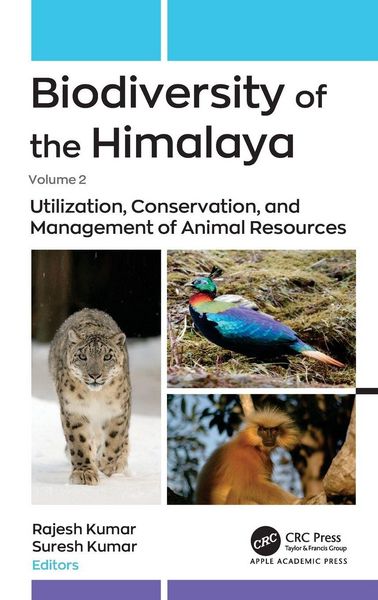
Produktbild: Biodiversity of the Himalaya

Biodiversity of the Himalaya Volume 2: Utilization, Conservation, and Management of Plant Resources

197,99 €

inkl. gesetzl. MwSt., Versandkostenfrei


Beschreibung

This new two-volume set pays tribute to the incredibly diversified Himalaya. It presents and assesses the various threats and challenges to Himalayan biodiversity, documenting the multifaceted approaches for conservation and sustainable management of biological resources in the Himalayan region.

Volume...

Beschreibung

This new two-volume set pays tribute to the incredibly diversified Himalaya. It presents and assesses the various threats and challenges to Himalayan biodiversity, documenting the multifaceted approaches for conservation and sustainable management of biological resources in the Himalayan region.

Volume 2 focuses on the utilization, conservation, and management of animal resources in the Himalayan region. It covers traditional knowledge of insects and animals for food and medicinal purposes and discusses adverse changing climatic conditions; the overuse of chemical and synthetic pesticides; ecotourism, wildlife tourism, and hunting tourism; radiation from cell phone towers; invasive/alien animal and plant species; habitat destruction; etc., and how they impact the region. Sustainable mitigation and conservation strategies are described as well, offering hope for preservation of the rich biodiversity of the Himalaya.

Volume 1: Utilization, Conservation, and Management of Plant Resources focuses on the flora of the area, exploring the diversity, distribution, utilization, threat status, and conservation of medicinal, edible, and other economic plant resources.

Rezension

"Rich and diverse in content . . . presents an extensive range of chapters on different key aspects associated with Himalayan plant diversity . . . considering the rich floristic diversity, high endemism, and vulnerability to the emerging threats to these ecologically fragile and sensitive ecosystems . . . A detailed account on existing studies with reference to floristics, ecology of habitats, the status of medicinal and threatened species . . . A wonderful endeavor."

-From the Foreword by Anil Prakash Joshi, PhD, Founder, Himalayan Environmental Studies and Conservation Organization (HESCO), Dehradun, India

Portrait

Rajesh Kumar, PhD, is an Assistant Professor of Biosciences at Himachal Pradesh University, Shimla, India. With over 10 years of experience in teaching and research, he has been teaching animal physiology and applied zoology and supervising students for their research work. His own research activities also include environmental toxicology, waste management, and the impact of environmental degradation on animal physiology. He is an expert lecturer at beekeeping training/extension activities. Dr. Kumar has successfully completed two major research projects and two startup projects sponsored by government agencies and has published research articles, book chapters, abstracts, and conference papers as well as several books and monographs. He has successfully organized seminars and conferences and delivered invited talks and extension lectures.

Suresh Kumar, PhD, is an Associate Professor in the Department of Bio-Sciences, H.P. University, Shimla, India. He has more than 12 years of experience in teaching and research. His thrust areas include floristics, ethnobotany, and biodiversity. Dr. Kumar has published 10 books and more than 20 research papers in journals of national and international repute. Presently, he is guiding several students for their PhD degrees. He has participated in many conferences and seminars and has delivered invited talks as a resource person at various institutions. He is a member of the Indian Science Congress and many other scientific agencies. He is an associate editor as well as a reviewer for various journals in the field of botany.

Produktdetails

Einband

Gebundene Ausgabe

Erscheinungsdatum

28.10.2025

Abbildungen

13 SW-Abb., 12 Farbabb., 3 SW-Fotos, 7 Farbfotos, 10 SW-Zeichn., 5 Farbzeichn., 18 Tabellen

Herausgeber Rajesh Kumar + weitere

Produktdetails

Einband

Gebundene Ausgabe

Erscheinungsdatum

28.10.2025

Abbildungen

13 SW-Abb., 12 Farbabb., 3 SW-Fotos, 7 Farbfotos, 10 SW-Zeichn., 5 Farbzeichn., 18 Tabellen

Herausgeber
Verlag Taylor & Francis
Seitenzahl

322

Maße (L/B/H)

24/16,1/2,2 cm

Gewicht

599 g

Sprache

Englisch

ISBN

978-1-77491-995-8

Herstelleradresse

Libri GmbH
Europaallee 1
36244 Bad Hersfeld
DE

Email: gpsr@libri.de

Noch keine Bewertungen vorhanden

Verfassen Sie die erste Bewertung zu diesem Artikel

Helfen Sie anderen Kundinnen und Kunden durch Ihre Meinung.

Kundinnen und Kunden meinen

Bewertungen (0)

Die Leseprobe wird geladen.
  • Produktbild: Biodiversity of the Himalaya
  • 1. Indian Traditional Knowledge in Relation to Animal Origin Products with Special Reference to Insects 2. The Himalayas: A Hotspot of Biodiversity 3. Effect of Changing Climatic Conditions on Faunal Diversity of Northwestern Himalaya 4. Impact of Chemical and Synthetic Pesticides on Himalayan Insect Diversity 5. Impact of Anthropogenic Activities on Faunal Diversity of the Snow-Covered Himalayan Range 6. Conservation Strategies for Threatened Faunal Diversity of Himachal Pradesh 7. Eco-Tourism: Frenemy of Himalayan Diversity 8. Effect of Invasive/Alien Animal Species in the Himalayan Faunal System 9. Impact of Mobile Tower Radiation on Himalayan Fauna 10. Socio-Economic Evaluation of Insect Products with Special Reference to Himalayan Honeybees 11. Cordyceps militaris: An Entomopathogenic Fungus as a Promising Solution for Conservation of Himalayan Cordyceps 12. Hunting, Habitat Destruction, and Human Fun as Potential Threat to Himalayan Diversity 13. Narpuh Wildlife Sanctuary, Meghalaya: Status, Challenges, Sustainable Benefits and Future Perspectives