Gutscheinbedingungen

**Gültig bis 04.08.2026 ab einem Mindestbestellwert von 30€ auf Spielzeug, Schreibwaren, Filme, Geschenke & Trends, Musik, tolino eReader & Zubehör, Hörbücher und Hörbuch-Downloads (außer Abo), nicht preisgebundene Bücher und Kalender online auf thalia.at und in der Thalia App. Einzelne Artikel können ausgeschlossen sein. Aufgrund der Buchpreisbindung sind deutschsprachige Bücher und eBooks ausgenommen. Zusätzlich ausgenommen sind preisgebundene Artikel, Abos & Flatrates, eBooks, Games, Geschenkkarten/-boxen, Shelfies, Software, Zeitschriften sowie einzelne Artikel von tonies®. Pro Einkauf einmal einlösbar. Click & Collect nur bei Onlinevorabzahlung möglich. Keine Barauszahlung. Nicht kombinierbar mit anderen Aktionen und Gutscheinen. Gutschein wird auf max. 500€ Bestellwert angerechnet. Nicht gültig für Versandkosten und Services. Preisgebundene Artikel sind vom Mindestbestellwert ausgeschlossen.

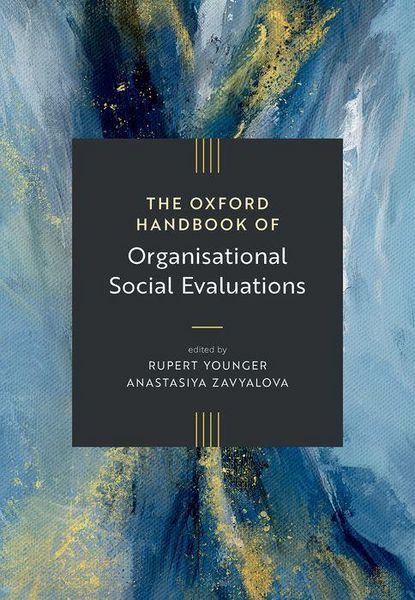
Produktbild: The Oxford Handbook of Organisational Social Evaluations

The Oxford Handbook of Organisational Social Evaluations

218,99 €

inkl. gesetzl. MwSt., Versandkostenfrei


Beschreibung

Produktdetails

Einband

Gebundene Ausgabe

Erscheinungsdatum

10.05.2026

Abbildungen

13

Verlag

Oxford University Press

Seitenzahl

720

Maße (L/B/H)

24,7/17,3/4,8 cm

Gewicht

1382 g

Sprache

Englisch

ISBN

978-0-19-893313-7

Beschreibung

Produktdetails

Einband

Gebundene Ausgabe

Erscheinungsdatum

10.05.2026

Abbildungen

13

Verlag

Oxford University Press

Seitenzahl

720

Maße (L/B/H)

24,7/17,3/4,8 cm

Gewicht

1382 g

Sprache

Englisch

ISBN

978-0-19-893313-7

Herstelleradresse

Libri GmbH
Europaallee 1
36244 Bad Hersfeld
DE

Email: GPSR Kontakt

Noch keine Bewertungen vorhanden

Verfassen Sie die erste Bewertung zu diesem Artikel

Helfen Sie anderen Kundinnen und Kunden durch Ihre Meinung.

Kundinnen und Kunden meinen

Bewertungen (0)

  • Produktbild: The Oxford Handbook of Organisational Social Evaluations
    • Acknowledgements
    • Part I - Introductions
    • 1: Rupert Younger and Anastasiya Zavyalova: Introduction
    • 2: Emma Cox and James Morris: Why Shaping Social Evaluations Is Now a Leadership Imperative
    • Part II Social Evaluations
    • Legitimacy
    • 3: David L. Deephouse and Patrick Haack: Legitimacy Foundations
    • 4: Natalie Eng, Emily Block, Royston Greenwood and Michael Lounsbury: Legitimacy Dynamics
    • 5: Roger Parry: Legitimacy in Practice
    • Status
    • 6: Michael Jensen, Heeyon Kim and Bo Kyung Kim: Status Foundations
    • 7: Amanda Sharkey and Balázs Kovács: Status Dynamics
    • 8: Bob Wigley: Status in Practice
    • Reputation
    • 9: Scott Graffin and Farhan Iqbal: Reputation Foundations
    • 10: Jonathan Bundy and Milo Wang: Reputation Dynamics
    • 11: Roland Rudd and James Leviseur: Reputation In Practice
    • Stigma
    • 12: Madeline Toubiana and Trish Ruebottom: Stigma Foundations
    • 13: Thomas Roulet and Paul Tracey: Stigma Dynamics
    • 14: Tara Waite: Stigma in Practice
    • Trust
    • 15: Ashley Fulmer and Lisa van der Werff: Trust Foundations
    • 16: Nicole Gillespie and Kurt Dirks: Trust Dynamics
    • 17: Anne Simpson: Trust in Practice
    • Celebrity
    • 18: Jeffrey B. Lovelace and Abbie G. Oliver: Celebrity Foundations
    • 19: Laura D'Oria and Mike Pfarrer: Celebrity Dynamics
    • Part III - Foundational Drivers and Moderators
    • 20: Samuel A. Mortimer and Alan D. Morrison: The Moral Dimension of Organisational Social Evaluations
    • 21: Yuri Mishina, Maxine (Yinmiao) Yu and Sven Mikolon: Behavioural Signals
    • 22: Daniel B. Sands and Joseph Porac: Categories and Social Evaluations
    • 23: Ronald S. Burt and Sonja Opper: Evaluation in Network Context
    • 24: Kimberly D. Elsbach and Ileana Stigliani: Organisational Identity and Corporate Values
    • 25: Sue Dopson and Mark Fearn: Organisational Culture
    • 26: Badri Zolfaghari and Farsan Madjdi: The Influence of Cultural Values on Social Evaluations
    • 27: Thomas B. Lawrence and Nelson Phillips: Social-Symbolic Work and Organisational Social Evaluations
    • 28: Alexander Rustler, Eero Vaara and Ana M. Aranda: The Role of Language and Communication in Shaping Social Evaluations: The Case of Discursive Legitimation
    • Part IV New and Emerging Macro, Meso, and Micro Forces
    • 29: Witold J. Henisz: Social Evaluations of Environmental, Social and Governance Issues
    • 30: Timothy Werner: From User to Shaper: Firm Reputation and Business-Government Relations
    • 31: Kishanthi Parella: Reputational Regulation: The Public Governance Functions of Reputation
    • 32: Brayden G. King: Activism and Its Consequences for Social Evaluation
    • 33: Marco Clemente and Laura Illia: Media and Social Media in Social Evaluations Research
    • 34: Rhonda K. Reger, Niken Putri and Md Ziad Haidar: Social Media, Social Approval, and Social Disapproval
    • 35: Naomi A. Gardberg, Patrick Haack and William Newburry: Measuring Up: The Challenges of Quantifying Social Evaluations
    • 36: Michael Etter: The Role of Digital Platforms as Social Evaluation Intermediaries
    • 37: Alex Murray and Vern L. Glaser: Artificial Intelligence and the Reshaping of Social Evaluations
    • Part V Essays on Interrelationships
    • 38: Donald Lange, Nicole Gillespie and Alex Bitektine: The Evaluator's Perspective: Understanding Valence Alignment in Organisational Evaluations
    • 39: Timothy G. Pollock and Violina P. Rindova: The Alchemy of Social Evaluations: Increasing Value through Dynamic Transformations
    • 40: Kisha Lashley, Ilaria Orlandi, Esin Bozdag, Lindsey Yonish and Cynthia E. Devers: Stigmatising Events and Their Relationships to Positive Social Evaluations
    • Part VI Conclusions
    • 41: Rupert Younger and Anastasiya Zavyalova: Concluding Thoughts