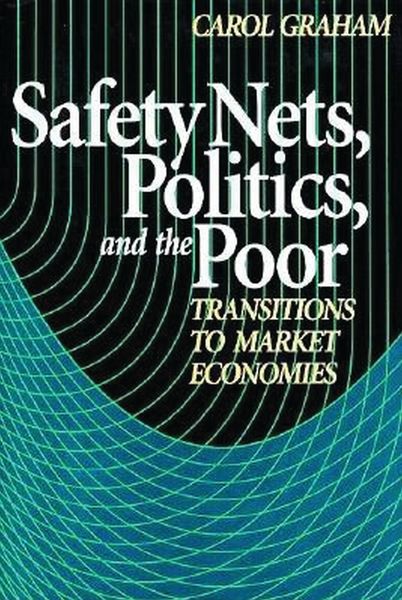
Safety Nets, Politics, and the Poor Transitions to Market Economies
-
- Einzelkauf Download ausgewählt
-
Sprache:Englisch
35,50 €
inkl. gesetzl. MwSt.Beschreibung
Produktdetails
Format
ePUB
Kopierschutz
Ja
Family Sharing
Nein
Text-to-Speech
Ja
Erscheinungsdatum
01.12.2010
Verlag
Bloomsbury eBooks USSeitenzahl
392 (Printausgabe)
Auflage
1. Auflage
Sprache
Englisch
EAN
9780815719892
Countries worldwide are attempting difficult transitions from state-planned to market economies. Most of these countries have fragile democratic regimes that are threatened by the high social and political costs of reform. Governments¿and ultimately societies¿have to make hard choices about allocating scarce public resources as they undergo these transitions. A central, often controversial, and most poignant question is how to protect vulnerable groups and the poor. What compensation, what ""safety net"" will be provided for them?
Carol Graham argues that safety nets can provide an environment in which economic reform is more politically sustainable and poverty can be permanently reduced. However, these two objectives frequently involve trade-offs, as vocal and organized opponents of reform (for obvious political reasons) often concern governments far more than the poor. These organized and less vulnerable groups tend to place heavy demands on the scarce resources available to governments at times of economic crisis. Governments that fail to address the social costs of reform, meanwhile, often face popular opposition that jeopardizes or even derails the entire market transition--the results of the September 1993 elections in Poland are a case in point.
The author examines these trade-offs in detail, with a particular focus on how political and institutional contexts affect the kinds of safety nets that are implemented. For example, reaching the poor and vulnerable with safety nets tends to be more difficult in closed-party systems, such as in Senegal, where entrenched interest groups have a monopoly on state benefits. In contrast, dramatic political change or rapid implementation of economic reform undermines the influence of such groups and therefore can provide unique political opportunities to redirect resources to the poor, as in the case of Bolivia and Zambia. Rather than focus their efforts on organized interest groups--such as public sector
Noch keine Bewertungen vorhanden
Verfassen Sie die erste Bewertung zu diesem Artikel
Helfen Sie anderen Kundinnen und Kunden durch Ihre Meinung.
Kurze Frage zu unserer Seite
Vielen Dank für Ihr Feedback
Wir nutzen Ihr Feedback, um unsere Produktseiten zu verbessern. Bitte haben Sie Verständnis, dass wir Ihnen keine Rückmeldung geben können. Falls Sie Kontakt mit uns aufnehmen möchten, können Sie sich aber gerne an unseren Kund*innenservice wenden.
zum Kundenservice