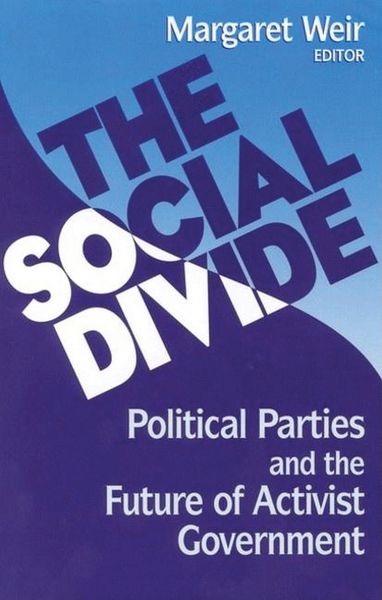
The Social Divide Political Parties and the Future of Activist Government
-
- Hardcover
- Taschenbuch
- eBook ausgewählt
-
Form:Einzelkauf Download
-
Sprache:Englisch
24,20 €
inkl. gesetzl. MwSt.Beschreibung
Produktdetails
Format
ePUB
Kopierschutz
Ja
Family Sharing
Nein
Text-to-Speech
Ja
Erscheinungsdatum
01.02.1998
Herausgeber
Margaret WeirVerlag
Bloomsbury eBooks USSeitenzahl
555 (Printausgabe)
Auflage
1. Auflage
Sprache
Englisch
EAN
9780815722960
A Brookings Institution Press and Russell Sage Foundation publication
The extraordinary swings in the scope and content of the policy agenda during the first Clinton administration revealed a fundamental partisan divide over the social role of the federal government. This book argues that the recent conflicts over social policy represent key elements in strategies that parties designed in an attempt to consolidate their hold over the federal government. Long frustrated by divided government, each party exceeded its electoral mandate in hopes of enacting major policy reforms aimed to shift politics in their direction for the foreseeable future.
The book traces the overreaching and limited legislative success that characterized the first Clinton administration's approach to three distinctive features of politics and policymaking: the polarization of political elites; the predominance of advertising campaigns and intense interest group politics as political parties have ceased to mobilize ordinary people; and the unprecedented role that budgetary concerns now play in social policymaking. Although neither party managed to enact its major transforming agenda, Congress did pass new policies--most notably welfare reform--that together with a host of other changes in the states and the private sector altered the landscape for social policy. The poor have been the biggest losers as Democrats and Republicans have fought to win the middle class over to their vision of the future.
The authors first analyze the institutions and tools of policymaking, including Congress, the political use of public opinion polling, and the politics of the deficit. They then consider policies designed to win over the middle class, including health care policy, employer-provided social benefits, wages and jobs, and crime policy. Last, they address policies targeted at the disadvantaged, including welfare, affirmative action, and urban policy.
In addition to the editor, the contributors include John Ferejohn, Lawrence R. Jacobs, Robert Y. Sha
Noch keine Bewertungen vorhanden
Verfassen Sie die erste Bewertung zu diesem Artikel
Helfen Sie anderen Kundinnen und Kunden durch Ihre Meinung.
Kurze Frage zu unserer Seite
Vielen Dank für Ihr Feedback
Wir nutzen Ihr Feedback, um unsere Produktseiten zu verbessern. Bitte haben Sie Verständnis, dass wir Ihnen keine Rückmeldung geben können. Falls Sie Kontakt mit uns aufnehmen möchten, können Sie sich aber gerne an unseren Kund*innenservice wenden.
zum Kundenservice