KI-Beratung Beta

Gutscheinbedingungen

**Gültig bis 30.11.2026 auf Spielzeug, Schreibwaren, Filme, Geschenke & Trends, Musik, tolino eReader & Zubehör, Hörbücher und Hörbuch-Downloads, nicht preisgebundene Bücher und Kalender online auf thalia.at und in der Thalia App. Einzelne Artikel können ausgeschlossen sein. Aufgrund der Buchpreisbindung sind deutschsprachige Bücher und eBooks ausgenommen. Zusätzlich ausgenommen sind Abos & Flatrates, Games, Geschenkkarten/-boxen, Shelfies, Software, Zeitschriften sowie einzelne Artikel von tonies®. Pro Einkauf einmal einlösbar. Nur gültig mit im Onlineshop hinterlegter Bonuscard. Click & Collect nur bei Onlinevorabzahlung möglich. Keine Barauszahlung. Nicht kombinierbar mit anderen Aktionen und Gutscheinen. Gutschein wird auf max. 500€ Bestellwert angerechnet. Nicht gültig für Versandkosten und Services.

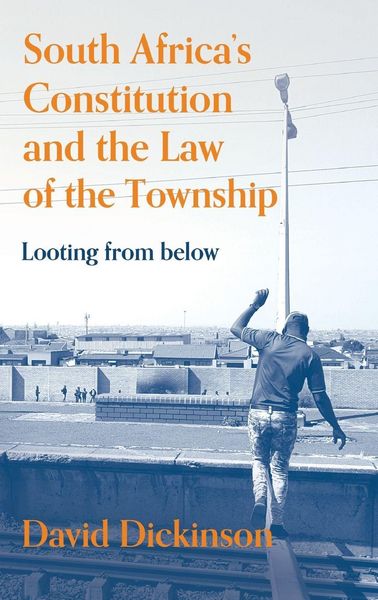
Produktbild: South Africa's Constitution and the Law of the Township

South Africa's Constitution and the Law of the Township Looting from Below

127,99 €

inkl. gesetzl. MwSt., Versandkostenfrei


Beschreibung

How are residents of South Africa's townships responding to socio-economic inequality and a pervasive sense that the country's democratic transition has not delivered on its constitutional promises of social justice? Based on extensive fieldwork, this book challenges beliefs that the agency of township...

Beschreibung

How are residents of South Africa's townships responding to socio-economic inequality and a pervasive sense that the country's democratic transition has not delivered on its constitutional promises of social justice? Based on extensive fieldwork, this book challenges beliefs that the agency of township residents is limited to waiting for handouts or demanding delivery from the state, showing how they are instead assisting themselves by taking advantage of the opportunities, menyetla, available. In the kasi, or urban townships, where almost half of the urban population lives, there is limited state-enforced order; while the lex constitutional may be the law of the land, the lex lokasi governs day-to-day life in the township. The book opens with a description of life in townships and the interconnected crises facing the country before examining commonly practiced township menyetla to illustrate how the lex lokasi operates: stealing electricity, informal charges to access the Social Relief of Distress grant, fare evasion on the Metrorail, the illicit sale of alcohol during COVID-19 prohibition, medical aid scams, and looting. Exploring how this looting from below protects those looting from above, it provides a different perspective to the view that state capture is the primary cause of the country's current entropic trajectory and that the application of the much-vaunted constitution can bring South Africa back on track.

Produktdetails

Einband

Gebundene Ausgabe

Erscheinungsdatum

25.11.2025

Verlag James Currey
Seitenzahl

242

Produktdetails

Einband

Gebundene Ausgabe

Erscheinungsdatum

25.11.2025

Verlag James Currey
Seitenzahl

242

Maße (L/B/H)

24/16,1/1,8 cm

Gewicht

481 g

Sprache

Englisch

ISBN

978-1-84701-426-9

Herstelleradresse

Libri GmbH
Europaallee 1
36244 Bad Hersfeld
DE

Email: gpsr@libri.de

Noch keine Bewertungen vorhanden

Verfassen Sie die erste Bewertung zu diesem Artikel

Helfen Sie anderen Kundinnen und Kunden durch Ihre Meinung.

Kundinnen und Kunden meinen

Bewertungen (0)

  • Produktbild: South Africa's Constitution and the Law of the Township
  • Preface Abbreviations & Racial Categories Introduction: Looting from Below 1. South Africa's entropic trajectory 2. The apartheid township 3. The post-apartheid township 4. A crisis of social order: the lex constitutional and the lex lokasi 5. Izinyoka: stealing electricity 6. A fleeting monyetla: the Social Relief of Distress grant 7: Mangobers: riding the Metrorail for free 8. Lockdown liquor: the sale of alcohol during COVID-19 prohibition 9. Therapeutic fraud: medical aid scams 10. The lockdown looting of the Metrorail 11. The July unrest: looting, agency and legal fetishism 12. Conclusion: part-time criminals secure corrupt elites Glossary Bibliography