Gutscheinbedingungen

**Gültig bis 25.06.2026 auf fremdsprachige Bücher online auf thalia.at und in der Thalia App. Einzelne Artikel können ausgeschlossen sein. Ausgenommen sind preisgebundene Artikel & eBooks. Pro Einkauf einmal einlösbar. Click & Collect nur bei Onlinevorabzahlung möglich. Keine Barauszahlung. Nicht kombinierbar mit anderen Aktionen und Gutscheinen. Gutschein wird auf max. 500€ Bestellwert angerechnet. Nicht gültig für Geschenkkarten, Versandkosten und Services.

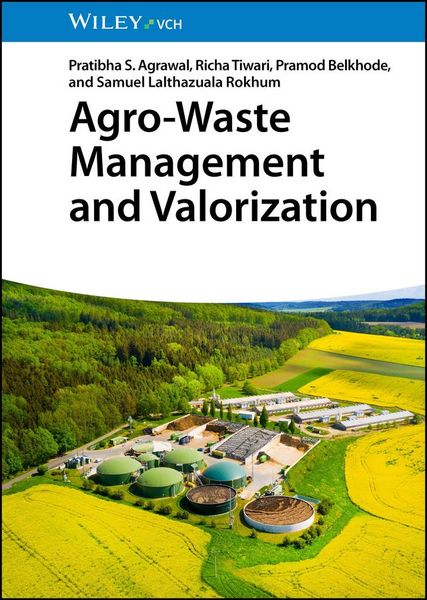
Produktbild: Agro-Waste Management and Valorization
- 13%

Agro-Waste Management and Valorization

13% sparen

141,99 € UVP 163,50 €

inkl. gesetzl. MwSt., Versandkostenfrei


Beschreibung

Produktdetails

Einband

Gebundene Ausgabe

Erscheinungsdatum

28.01.2026

Verlag

Wiley-VCH

Seitenzahl

400

Maße (L/B/H)

24,4/17/1,5 cm

Gewicht

666 g

Auflage

1. Auflage

Sprache

Englisch

ISBN

978-3-527-35575-4

Beschreibung

Produktdetails

Einband

Gebundene Ausgabe

Erscheinungsdatum

28.01.2026

Verlag

Wiley-VCH

Seitenzahl

400

Maße (L/B/H)

24,4/17/1,5 cm

Gewicht

666 g

Auflage

1. Auflage

Sprache

Englisch

ISBN

978-3-527-35575-4

Herstelleradresse

Wiley-VCH GmbH
Boschstrasse 12
69469 Weinheim
DE
product_safety@wiley.com

Kundinnen und Kunden meinen

0 Bewertungen

Informationen zu Bewertungen

Zur Abgabe einer Bewertung ist eine Anmeldung im Konto notwendig. Die Authentizität der Bewertungen wird von uns nicht überprüft. Wir behalten uns vor, Bewertungstexte, die unseren Richtlinien widersprechen, entsprechend zu kürzen oder zu löschen.

Die Bewertungen sind nach Format, Anzahl Sterne und Datum sortiert.

Verfassen Sie die erste Bewertung zu diesem Artikel

Helfen Sie anderen Kund*innen durch Ihre Meinung

Kundinnen und Kunden meinen

0 Bewertungen filtern

Die Leseprobe wird geladen.
  • Produktbild: Agro-Waste Management and Valorization
  • 1 Waste to Value- Opportunity and Challenges

    1.1 Introduction

    1.2 Classification of Waste

    1.3 Current Status in Waste Management

    1.4 Problems Encountered in Waste Handling

    1.5 Economic Competitiveness

    1.6 Sustainable Challenges

    1.7 Carbon sequestration for Green and Sustainable environment

    1.8 IoT Services

    1.9 Smart city infrastructure

    1.10 Conclusion and Discussion

    2 A Perspective on the Emergence and Need for Alternate Fuels

    2.1 Introduction

    2.2 Challenges Associated with Conventional Fuels

    2.3 Alternative Fuels

    2.4 Types of Alternative Fuels

    2.5 Applications of Alternative Fuels

    2.6 Environmental Impact and Economic Feasibility

    2.7 Future Aspects of Alternative Fuels

    2.8 Conclusion

    3 The Role of Waste in the Circular Economy, Policies and Legislation

    3.1 Introduction

    3.2 Crucial Reasons for Implementing a Circular Economy

    3.3 Principal of the Circular Economy

    3.4 Role of Agro Waste in Circular Economy - Examples

    3.5 Circular Economy Challenges

    3.6 Agro Waste

    3.7 Agro Waste Management: Current Practices

    3.8 Challenges in Implementing the Circular Economy for Agro Waste

    3.9 Conclusion

    4 Waste Management

    4.1 Introduction

    4.2 Assessment of RDF and SRF

    4.3 MSW & RDF/SRF Legislation

    4.4 Type of Solid Waste

    4.5 Pelletization & Incineration

    4.6 Case Study: Energy Recovery Potential

    4.7 Liquid Waste Management

    4.8 Physico-Chemical Treatment

    4.9 Physical or Mechanical Treatment

    4.10 Biological Treatment

    4.11 E-waste

    4.12 Environmental and Health Impacts of Waste Mismanagement

    4.13 Disposal Methods of Waste Management

    4.14 Environmental Impacts and Considerations

    4.15 Sustainable Waste Management

    4.16 Biological Conversion Techniques

    4.17 Thermochemical Conversion Techniques

    4.18 Techno-Economic Analysis (TEA) and Life Cycle Assessment (LCA): Evaluating Sustainability

    4.19 Emerging Technologies and Future Trends: Shaping the Future of Agrowaste Management

    4.20 Conclusion

    5 Waste Biorefinery

    5.1 Introduction

    5.2 Waste feedstock for biorefinery

    5.3 Kinetic analysis of biomass

    5.4 Conversion Processes

    5.5 Water based biorefinery

    5.6 The economic aspects of waste-to-energy biorefineries

    5.7 Conclusion

    6 Algal Biorefinery

    6.1 Introduction

    6.2 Algal Biomass Cultivation

    6.3 Algal Biomass Processing

    6.4 Biofuel Production from Algal Biomass

    6.5 Bioproducts and Bio-compounds from Algae

    6.6 Integrated Algal Biorefinery Approach

    6.7 Genetic Engineering and Algal Strain Improvement

    6.8 Environmental Sustainability and Life Cycle Assessment in Algal Biorefining

    6.9 Challenges and Future Perspectives

    6.10 Conclusion

    7 Waste to Bio-Additive

    7.1 Introduction

    7.2 Types of waste utilized for bio-additive production

    7.3 Waste to bio-additive conversion technologies

    7.4 Application of Bio-additives

    7.5 Life Cycle assessment (LCA) of WtBA technologies

    7.6 Challenges and Limitations

    7.7 Case studies and success stories

    7.8 Conclusion and Recommendations

    8 Waste to Compost

    8.1 Introduction

    8.2 Defining and Categorizing Agrowaste for Composting

    8.3 The Science of Composting: Biochemical Processes and Microbial Ecology

    8.4 Composting Methodologies for Agrowaste: From Traditional to Advanced Techniques

    8.5 Advanced Composting Methodologies

    8.6 Factors Influencing Composting Efficiency and Compost Quality

    8.7 Conclusion

    9 Glycerol: From Abundant Byproduct to Valuable Bio-oil

    9.1 Introduction

    9.2 Production of Glycerol in Biodiesel Production:

    9.3 Conversion Technologies of Glycerol to Bio-oil

    9.4 Bio-oil Properties and Applications

    9.5 Catalytic Processes for Glycerol Conversion to Bio-oil

    9.6 Chemistry of Glycerol Conversion to Bio-oil

    9.7 Reactor Design and Process Optimization for Glycerol Conversion to Bio-oil

    9.8 Challenges and Limitations

    9.9 Commercial Glycerol-to-Bio-oil Plants

    9.10 Conclusion

    10 Production of Biochar

    10.1 Introduction

    10.2 Agrowaste Feedstocks for Biochar Production

    10.3 Pyrolysis: Thermal Decomposition for Biochar Maximization or Bio-oil Production

    10.4 Gasification: Primarily Syngas Production with Biochar as a Byproduct

    10.5 Hydrothermal Carbonization (HTC): A Wet Biomass Solution

    10.6 Comparative Analysis and Future Trends

    10.7 Conclusion

    11 Waste Valorization for Biogas Production

    11.1 Introduction

    11.2 Biogas Production - A Versatile Energy Source

    11.3 Agricultural Waste as a Resource

    11.4 Pre-treatment of Agro-waste

    11.5 Process Technology - Agro-waste to Bioenergy

    11.6 Factors Influencing the Efficiency of Agrowaste-to-Biogas Systems

    11.7 Digestate Utilization and Impact

    11.8 Conclusion

    12 Digitalization for Agro-Waste Management

    12.1 Introduction

    12.2 Infrastructure for Agro Waste Management

    12.3 Improved Resource Allocation with Geospatial Tools

    12.4 Enhanced Monitoring of Waste Generation and Collection through IoT Sensors

    12.5 The Imperative of Efficient Agricultural Waste Transportation

    12.6 Smart Logistics: A Paradigm Shift in Waste Transportation

    12.7 Communication Networks

    12.8 Cloud Computing and Storage

    12.9 Technological Applications in Agro Waste Management

    12.10 Predictive Analytics

    12.11 Automation and Robotics

    12.12 Conclusion