Gutscheinbedingungen

**Gültig bis 25.06.2026 auf fremdsprachige Bücher online auf thalia.at und in der Thalia App. Einzelne Artikel können ausgeschlossen sein. Ausgenommen sind preisgebundene Artikel & eBooks. Pro Einkauf einmal einlösbar. Click & Collect nur bei Onlinevorabzahlung möglich. Keine Barauszahlung. Nicht kombinierbar mit anderen Aktionen und Gutscheinen. Gutschein wird auf max. 500€ Bestellwert angerechnet. Nicht gültig für Geschenkkarten, Versandkosten und Services.

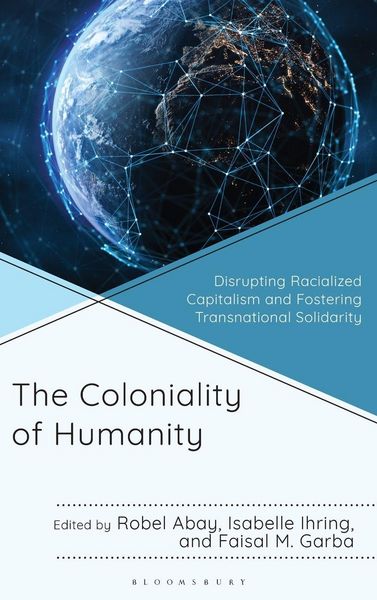
Produktbild: The Coloniality of Humanity

The Coloniality of Humanity Disrupting Racialized Capitalism and Fostering Transnational Solidarity

155,99 €

inkl. gesetzl. MwSt., Versandkostenfrei


Beschreibung

Produktdetails

Einband

Gebundene Ausgabe

Erscheinungsdatum

08.01.2026

Herausgeber

Robel Abay + weitere

Verlag

Bloomsbury Academic

Seitenzahl

360

Maße (L/B/H)

23,5/15,7/2,4 cm

Gewicht

660 g

Sprache

Englisch

ISBN

978-1-66695-737-2

Beschreibung

Produktdetails

Einband

Gebundene Ausgabe

Erscheinungsdatum

08.01.2026

Herausgeber

Verlag

Bloomsbury Academic

Seitenzahl

360

Maße (L/B/H)

23,5/15,7/2,4 cm

Gewicht

660 g

Sprache

Englisch

ISBN

978-1-66695-737-2

Herstelleradresse

Libri GmbH
Europaallee 1
36244 Bad Hersfeld
DE

Email: gpsr@libri.de

Kundinnen und Kunden meinen

0 Bewertungen

Informationen zu Bewertungen

Zur Abgabe einer Bewertung ist eine Anmeldung im Konto notwendig. Die Authentizität der Bewertungen wird von uns nicht überprüft. Wir behalten uns vor, Bewertungstexte, die unseren Richtlinien widersprechen, entsprechend zu kürzen oder zu löschen.

Die Bewertungen sind nach Format, Anzahl Sterne und Datum sortiert.

Verfassen Sie die erste Bewertung zu diesem Artikel

Helfen Sie anderen Kund*innen durch Ihre Meinung

Kundinnen und Kunden meinen

0 Bewertungen filtern

Die Leseprobe wird geladen.
  • Produktbild: The Coloniality of Humanity
  • Table of Contents
    Introduction: Epistemological and Political Implications of Analyzing the Coloniality of Humanity by Robel Abay, Isabelle Ihring, and Faisal M. Garba
    Section I: Silencing the Colonial Past
    Foreword by Vanessa E. Thompson
    Chapter 1: 'Transgressive' Mobility and the Structuring of Space and Belonging by Rose Jaji
    Chapter 2: Coloniality in Refugee/Forced Migration and Health Research: Reflections on Complicity and Disobedience by Diana Podar and Yudit Namer
    Chapter 3: Can the African subaltern speak? The Colonial Legacies of Racial Hierarchies in Times of COVID-19 by Robel Abay and Nomaswazi Mthombeni
    Chapter 4: The Neglected Colonial Legacy of the 1951 Refugee Convention by Edwin O. Abuya, Ulrike Krause, and Lucy Mayblin
    Chapter 5: The Construction of the 'West' and the 'Rest' Reloaded by Isabelle Ihring and Faisal M. Garba
    Chapter 6: Self-Determination under Coloniality: Cultivating Open-mindedness in South-North Relationships by Jacques Zannou
    Section II: Understanding the Postcolonial Present
    Foreword by Nomaswazi Mthombeni
    Chapter 7: Can Human Rights Help [re]build Community? by Oche Onazi
    Chapter 8: The Paradigm of the Camp: COVID-19 and Pandemic Politics in Racialized Capitalism by Robel Abay, Tanja Kleibl, Caroline Schmitt and Nikos Xypolytas
    Chapter 9: Examining the Colonial and Apartheid Socio-economic Intersectionalities during COVID-19 in South Africa : Implications for Social Policy and Social Justice by Minenhle Matela and Ndangwa Noyoo
    Chapter 10: From the Kitchen Table to the Streets: Queer of Colour Reflections on Racial Capitalism by Jin Haritaworn
    Chapter 11: School as a Place of Self-experience: Knowledge about Racism from the Perspective of Subjects Who Experience Racism in Germany by Yasmina Gandouz-Touati, Veronika Kourabas, and Paul Mecheril
    Chapter 12: The Transatlantic Trade with Enslaved People: Dehumanizing Effects of Slavery and Colonialism upon the Enslaved People by Joseph Wolsing
    Chapter 13: When the Circle is Closing: On the Motivation of People of African Descent to Leave Their Home Countries to Live in Ghana by Isabelle Ihring
    Section III: Imagining the Decolonial Future
    Foreword by Céline Barry
    Chapter 14: Resistance and Creating Spaces for Transformation with Smai Tawi/Kemetic Yoga in Germany by Cassandra Ellerbe
    Chapter 15: The Importance of Transnational Solidarity in Shaping the Decolonization of Social Work by Janet Ananias and Ursula Kämmerer-Rütten
    Chapter 16: Conversation with the Specters of the Camp: Thinking Refugee Resistance through the Lens of the Mass Strike and Convivial Futurity by Céline Barry
    Chapter 17: Decolonizing Development Studies: Social Work in the African Perspective and Social Work Considerations in Africa by Zeldah U. Rukambe and Utjiua I. Ndjoonduezu
    Chapter 18: Exploring Transformative Relationships towards Decolonizing Social Work Education in Sylhet and Frankfurt by Chaitali Das and Tulshi Kumar Das
    Index
    About the Editors
    About the Contributors