KI-Beratung Beta

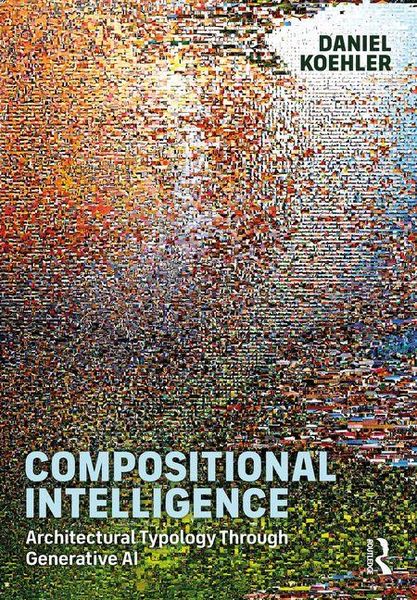
Produktbild: Compositional Intelligence

Compositional Intelligence Architectural Typology Through Generative AI

57,99 €

inkl. gesetzl. MwSt., Versandkostenfrei


Beschreibung

*With a foreword by Mario Carpo*

Given the extensive data sources represented by urban environments, this book investigates the potential of architecting for cities using large-scale models - the technological underpinning of Generative AI. Koehler examines Large Language Models (LLMs) in relation to...

Beschreibung

*With a foreword by Mario Carpo*

Given the extensive data sources represented by urban environments, this book investigates the potential of architecting for cities using large-scale models - the technological underpinning of Generative AI. Koehler examines Large Language Models (LLMs) in relation to architectural questions of typology - those critical junctures where architecture engages with the city itself. Typology becomes the interface between an AI model and its modeled audiences, represented languages, and scales of operation.

The investigation reveals how LLMs represent a fundamental shift from comprehending discrete elements to understanding entire languages - introducing a stochastic perspective that transforms how we read and shape urban reality. At the heart of this framework lies the concept of "inductive types" - threshold interfaces that superpose multiple value regimes and actively reconfigure themselves in response to changing urban conditions. By treating architecture as a form of representational materialism rather than a fixed language, designers can engage with complex urban systems while maintaining critical agency.

This approach envisions architecture as an embedding of languages, where buildings become processors of information that compute through their spatial arrangements. The synthetic knowledge produced by LLMs enables access to plural values and stakeholder perspectives, allowing architects to participate in broader material ecologies through computational superposition rather than traditional dialectical methods.

Providing a robust theoretical framework as well as practical insights into how architects can adapt their notational tools and design processes to embrace AI, this will be an essential read for any practicing or researching architect or urban designer interested in the implications of AI on the built environment.

Produktdetails

Einband

Taschenbuch

Erscheinungsdatum

12.09.2025

Abbildungen

farbige Illustrationen, Raster, farbig, Tabellen, schwarz-weiss

Verlag Taylor & Francis

Produktdetails

Einband

Taschenbuch

Erscheinungsdatum

12.09.2025

Abbildungen

farbige Illustrationen, Raster, farbig, Tabellen, schwarz-weiss

Verlag Taylor & Francis
Seitenzahl

256

Maße (L/B/H)

25,2/17,9/1,4 cm

Gewicht

688 g

Sprache

Englisch

ISBN

978-1-04-103053-9

Herstelleradresse

Libri GmbH
Europaallee 1
36244 Bad Hersfeld
DE

Email: gpsr@libri.de

Noch keine Bewertungen vorhanden

Verfassen Sie die erste Bewertung zu diesem Artikel

Helfen Sie anderen Kundinnen und Kunden durch Ihre Meinung.

Kundinnen und Kunden meinen

Bewertungen (0)

  • Produktbild: Compositional Intelligence
  • 1. Introduction - The City as the Affordance of Language 2.The Digital City and the Erosion of Human-Centric Design 3.Out of the Blue: Computing Beyond the Virtual 4.The Generated City 5.Model: From Representation to Synthesis 6.Language to Latent Space: Architecture's New Materialism 7.Large: The Architecture of Scale 8.From Dialectics to Superposition:
    Architectural Implications of Computational Criticality 9.Architecture as an Embedding of Languages