KI-Beratung Beta

Gutscheinbedingungen

**Gültig am 25.11.2026 auf fremdsprachige Bücher online auf thalia.at und in der Thalia App. Einzelne Artikel können ausgeschlossen sein. Ausgenommen sind preisgebundene Artikel & eBooks. Pro Einkauf einmal einlösbar. Click & Collect nur bei Onlinevorabzahlung möglich. Keine Barauszahlung. Nicht kombinierbar mit anderen Aktionen und Gutscheinen. Gutschein wird auf max. 500€ Bestellwert angerechnet. Nicht gültig für Geschenkkarten, Versandkosten und Services.

Produktbild: Sociopolitical Sciences and International Military Affairs

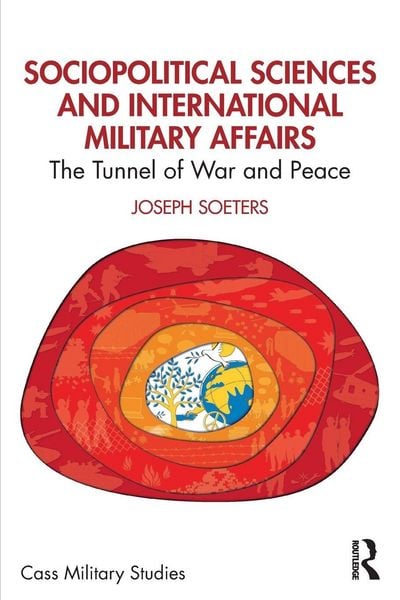
Sociopolitical Sciences and International Military Affairs The Tunnel of War and Peace

Aus der Reihe Cass Military Studies

58,99 €

inkl. gesetzl. MwSt., Versandkostenfrei


Beschreibung

This book examines the connection between sociology and international military affairs by analysing the work of key social and political scientists in the field.

The book demonstrates the renewed relevance of older sociological concepts such as imitation, unanticipated consequences of policies, structural...

Beschreibung

This book examines the connection between sociology and international military affairs by analysing the work of key social and political scientists in the field.

The book demonstrates the renewed relevance of older sociological concepts such as imitation, unanticipated consequences of policies, structural violence, the governance of the commons, collateral damage, McDonaldization, the Garrison State and many others. It also proposes new notions, such as the dynamics of hostilization (as a twin concept of criminalization) and security panic. The work illustrates these concepts through examples from today's world - including Gaza, the war in Ukraine, conflicts in Africa, and riots in cities such as Amsterdam. It also uses material from conflicts and military actions in the recent past, such as in Rwanda, Bosnia, and Afghanistan. The book is a companion volume to the author's 2018 Sociology and Military Studies, which examined the link between sociology and the military by studying the work of key foundational thinkers in the field. As a follow-up, the present book presents 14 new authors from the field of general sociology and politics but takes a broader approach in terms of application, including the dynamics of politics, conflict and war.

This book will be of great interest to students of the social and political sciences, military studies, civil-military relations, war and conflict studies and International Relations in general.

Rezension

'I enjoyed reading this book. It is a sequel to the earlier Sociology and Military Studies, which had a similar formula that proved very successful. More than that other book, this one is not just about military sociology stricto sensu, but also about the broader field of conflict sociology. The book is a pleasure to read, each time providing an encounter with a well-known sociologist whose writings contain insights that turn out to be surprisingly relevant to this book's subject. A treasure trove for students about to write a thesis.'

Abram de Swaan, Emeritus Distinguished Research Professor, University of Amsterdam

'Following Soeters's volumes on sociology and management in military contexts, this third work expands the analytical lens beyond the armed forces to encompass the broader dynamics of international conflict, revolution and peacebuilding. Soeters illuminates the continued relevance of general social theory to understanding contemporary warfare - from hybrid and cognitive operations to the erosion of democratic structures. This volume cements Soeters's position as a leading voice in reimagining military sociology as a field deeply informed by the breadth and depth of the social sciences. Through his sustained intellectual endeavour, the field of military sociology has grown conceptually more ambitious and theoretically richer.'

Yagil Levy, Professor, Department of Sociology, Political Science & Communication, Open University of Israel

'This very timely and original book proposes using theories and ideas of 14 social and political scientists to help us understand why and how violent conflicts and wars erupt, develop and how they can end peacefully. It also analyses the role and functioning of military organizations in these kinds of environments. People interested in making sense of contemporary violent events, such as in Ukraine and Gaza, will find the book particularly interesting and useful, and so will students and scholars in conflicts and military studies.'

Philippe Manigart, Professor Emeritus, Royal Military School, Brussels

Produktdetails

Einband

Taschenbuch

Erscheinungsdatum

30.09.2025

Abbildungen

5 SW-Abb., 5 SW-Fotos

Verlag Taylor & Francis

Produktdetails

Einband

Taschenbuch

Erscheinungsdatum

30.09.2025

Abbildungen

5 SW-Abb., 5 SW-Fotos

Verlag Taylor & Francis
Seitenzahl

260

Maße (L/B/H)

23,4/15,6/1,5 cm

Gewicht

401 g

Sprache

Englisch

ISBN

978-1-03-290624-9

EU-Ansprechpartner

Taylor & Francis Verlag GmbH
Kaufingerstraße 24
80331 München
DE
GPSR@taylorandfrancis.com

Herstelleradresse

Taylor & Francis Group
5 Howick Place
SW1P 1WG London
UK
GPSR@taylorandfrancis.com

Noch keine Bewertungen vorhanden

Verfassen Sie die erste Bewertung zu diesem Artikel

Helfen Sie anderen Kundinnen und Kunden durch Ihre Meinung.

Kundinnen und Kunden meinen

Bewertungen (0)

  • Produktbild: Sociopolitical Sciences and International Military Affairs
  • Introduction 1. Gabriel Tarde: Interaction, imitation, democracy and innovation 2. Pitirim Sorokin: War and revolution, catastrophes and calamities, international relations, altruism 3. Robert K. Merton: "Theories of the middle range" in the military 4. Howard S. Becker: Professional identification - from labelling to hostilization 5. James C. Scott: State interventions vis-à-vis the weapons of the weak 6. Fatema Mernissi: The world of Islam, religious influences and women in military affairs 7. Robert Axelrod: Strategic handling of (rising) conflicts 8. Saskia Sassen: Global cities at war, expulsion and migration, information technology in the military 9. Elinor Ostrom: Governing the commons in security matters 10. Theda Skocpol: Revolutions, welfare policies and the military 11. Johan Galtung: From direct, structural and cultural violence to peace 12. Randall Collins: Prediction, interaction rituals and micro-violence 13. Zygmunt Bauman: Holocaust, modernity and collateral damage 14. George Ritzer: Globalization, McDonaldization and (ir)rationality in the armed forces 15. Conclusions: From war to peace (eventually)