Gutscheinbedingungen

**Gültig bis 15.06.2026 auf Spiele & Spielzeug online auf thalia.at, in der Thalia App ab einem Mindestbestellwert von 30€ und in allen Thalia Buchhandlungen in Österreich. In den Buchhandlungen nur gültig auf lagernde Ware. Einzelne Artikel können ausgeschlossen sein. Ausgenommen sind preisgebundene Artikel sowie online auf thalia.at und in der Thalia App einzelne Artikel von tonies®. Pro Einkauf einmal einlösbar. Nur gültig gegen Vorlage oder im Onlineshop hinterlegter Bonuscard. Infos zur Einlösung in der Buchhandlung sind auf der Bonuscard-Vorteilspreisseite zu finden. Click & Collect nur bei Onlinevorabzahlung möglich. Keine Einlösung bei Scan & Go-Bezahlung. Keine Barauszahlung. Nicht kombinierbar mit anderen Aktionen und Gutscheinen. Gutschein wird auf max. 500€ Bestellwert angerechnet. Nicht gültig für Geschenkkarten, Versandkosten und Services.

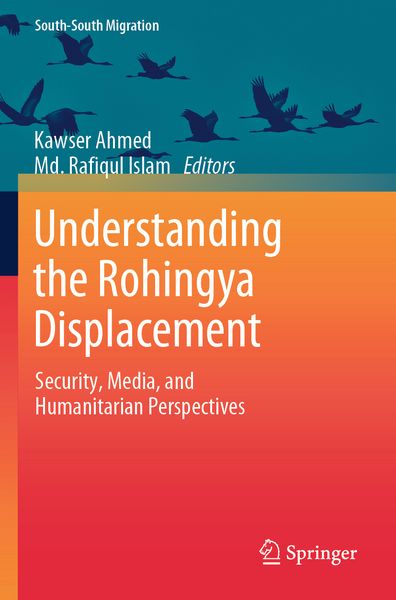
Produktbild: Understanding the Rohingya Displacement

Understanding the Rohingya Displacement Security, Media, and Humanitarian Perspectives

119,99 €

inkl. gesetzl. MwSt., Versandkostenfrei


Beschreibung

Produktdetails

Einband

Taschenbuch

Erscheinungsdatum

23.04.2025

Herausgeber

Kawser Ahmed + weitere

Verlag

Springer Singapore

Seitenzahl

339

Maße (L/B/H)

23,5/15,5/2 cm

Gewicht

534 g

Auflage

1. Auflage

Sprache

Englisch

ISBN

978-981-9714-26-1

Beschreibung

Portrait

Kawser Ahmed is an adjunct Professor at University of Winnipeg (Political Science) and University of Manitoba (NRI). He received his PhD in Peace and Conflict Studies from University of Manitoba in 2017 and completed his Social Science and Humanities Research Council (SSHRC) of Canada’s post-doctoral fellowship at University of Winnipeg. He was an exchange officer with the Turkish Armed Forces (TSK), an observer-Peacekeeper to the United Nations Missions in Western Sahara (MINURSO), and an alumnus at the Near East South Asia Center for Strategic Studies (NESA) in Washington DC. He is associated with the Center for Defence and Security Studies (CDSS) as a research fellow and a member of the Writers Union of Canada. He leads a Winnipeg based not-for-profit organization named Conflict and Resilience Research Institute, Canada (CRRIC). His research interests are social conflict and peace building, radicalism and violent extremism prevention, and UN peacekeeping operations.  

Md. Rafiqul Islam is a Professor at the Department of Peace and Conflict Studies, University of Dhaka, Bangladesh. He has a PhD from Flinders University, Australia, and his thesis was awarded the John Lewis Silver Medal in South Australia. He had previously completed his bachelor’s degree in political science and has a master’s and an MPhil in peace and conflict studies from the University of Dhaka, Bangladesh. He has also completed an MA degree in environmental security and peace from the University for Peace, Costa Rica. His primary research interests include climate change, migration, refugees, peace, conflict, and development. Dr. Islam also has a keen interest in global politics, security, and peace issues and has published 40 articles and chapters across several publications based globally. Dr. Islam is currently involved in research in the field of Rohingya issues and statelessness in the Bengali borderland. Dr. Islam’s first book on “Climate Change, Migration and Conflict in Bangladesh” was published in 2023 by Routledge.

Produktdetails

Einband

Taschenbuch

Erscheinungsdatum

23.04.2025

Herausgeber

Verlag

Springer Singapore

Seitenzahl

339

Maße (L/B/H)

23,5/15,5/2 cm

Gewicht

534 g

Auflage

1. Auflage

Sprache

Englisch

ISBN

978-981-9714-26-1

Herstelleradresse

Springer-Verlag GmbH
Tiergartenstr. 17
69121 Heidelberg
DE

Email: ProductSafety@springernature.com

Kundinnen und Kunden meinen

0 Bewertungen

Informationen zu Bewertungen

Zur Abgabe einer Bewertung ist eine Anmeldung im Konto notwendig. Die Authentizität der Bewertungen wird von uns nicht überprüft. Wir behalten uns vor, Bewertungstexte, die unseren Richtlinien widersprechen, entsprechend zu kürzen oder zu löschen.

Die Bewertungen sind nach Format, Anzahl Sterne und Datum sortiert.

Verfassen Sie die erste Bewertung zu diesem Artikel

Helfen Sie anderen Kund*innen durch Ihre Meinung

Kundinnen und Kunden meinen

0 Bewertungen filtern

  • Produktbild: Understanding the Rohingya Displacement
  • ¿Chapter 1: Setting the Stage and Addressing Conceptual Issues.- Part I: Historical Context and Ethnic Identity.- ¿Chapter 2: A History of Rohingya Displacement, Rohingya Ethnicity, and Contested Identity in Myanmar and Bangladesh.- ¿Chapter 3: The Continuing History of Rohingya Settlement in Bangladesh.- Part II: Conflict Dynamics and Security Implications.- ¿Chapter 4: Exploring Post-settlement Social Dynamics and Conflict Between the Host Community and Rohingyas.- ¿Chapter 5: Rohingyas in Bangladesh: Economic and Environmental Conflict Potential.- ¿Chapter 6: Rohingyas in Bangladesh: Regional and International Conflict Potential.- ¿Chapter 7: Rohingyas in Bangladesh: Sociopolitical Conflict Potential.- ¿Chapter 8: The Rohingya Crisis: Its Geopolitical Context and Security Ramifications.- ¿Chapter 9: Military Coup d'état, State of Anarchy, and the Future of Ethnic Armed Resistance vis-à-vis Reconciliation in Myanmar.- ¿Chapter 10: Crime and Securitization Conundrums in the Rohingya Camps.- Part III - Media Narratives and Propaganda in Conflict.- ¿Chapter 11: Media, Propaganda, and the Othering Process of the Rohingyas.- ¿Chapter 12: "Framing" the Rohingya Crisis: Mainstream Media Coverage and Shifting Narratives.- Part IV: Right to Return, Rehabilitation, Peacebuilding, and Camp Management.- ¿Chapter 13: Displaced Rohingya Management in Bangladesh and Law Enforcement Agencies' Role.- ¿Chapter 14: Social Cohesion and Integration of Rohingyas in the Host Community in Bangladesh.- ¿Chapter 15: Repatriation of Rohingya Refugees: Prospects and Challenges.- ¿Chapter 16: Updates on Rohingya Repatriation to Myanmar: The Tale of a Never-Ending Process.- ¿Chapter 17: Rohingya Relocation to Bhasan Char Island: A Sustainability Assessment.- ¿Chapter 18: Civic Education as Peacebuilding in the Rohingya Refugee Camps.- ¿Chapter 19: Conclusion.