KI-Beratung Beta

Gutscheinbedingungen

**Gültig bis 11.11.2026 auf Spielzeug, Schreibwaren, Filme, Geschenke & Trends, Musik, tolino eReader & Zubehör, Hörbücher und Hörbuch-Downloads, nicht preisgebundene Bücher und Kalender online auf thalia.at und in der Thalia App. Einzelne Artikel können ausgeschlossen sein. Aufgrund der Buchpreisbindung sind deutschsprachige Bücher und eBooks ausgenommen. Zusätzlich ausgenommen sind Abos & Flatrates, Games, Geschenkkarten/-boxen, Shelfies, Software, Zeitschriften sowie einzelne Artikel von tonies®. Pro Einkauf einmal einlösbar. Click & Collect nur bei Onlinevorabzahlung möglich. Keine Barauszahlung. Nicht kombinierbar mit anderen Aktionen und Gutscheinen. Gutschein wird auf max. 500€ Bestellwert angerechnet. Nicht gültig für Versandkosten und Services.

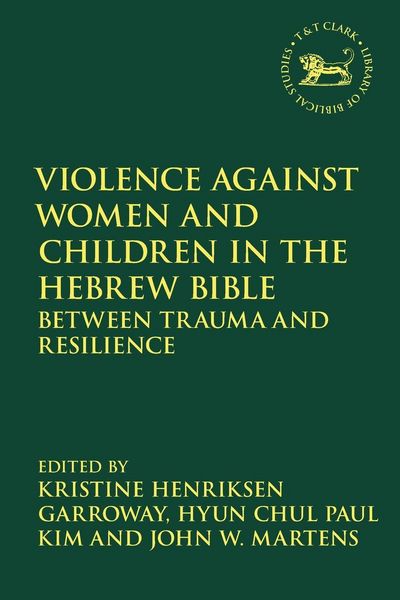
Produktbild: Violence against Women and Children in the Hebrew Bible

Violence against Women and Children in the Hebrew Bible Between Trauma and Resilience

58,99 €

inkl. gesetzl. MwSt., Versandkostenfrei


Beschreibung

What did violence against women and children mean for ancient audiences and how do modern audiences hear and process the meaning of violence in the texts of the Hebrew Bible? The rape of Tamar, the sacrifice of Jephthah's daughter, babes ripped from the womb during war-texts such as these are hardly...

Beschreibung

What did violence against women and children mean for ancient audiences and how do modern audiences hear and process the meaning of violence in the texts of the Hebrew Bible? The rape of Tamar, the sacrifice of Jephthah's daughter, babes ripped from the womb during war-texts such as these are hardly fodder for Sunday School classes; yet we are left with the reality that the Bible is a violent text full of war, murder, genocide, and destruction, often carried out at the behest of God.

The essays in this volume explore ways in which the Hebrew Bible uses and abuses women and children to make indelible points concerning the people of Israel, the lived realities of the Israelite society, and God's relationship to His people. Where other works turn to the study of the violence itself, or to the divine nature of violence, this volume focuses in on the human component. As a result, these studies are reminders that women and children born out of trauma are at once vulnerable and valuable, fragile and resilient.

Produktdetails

Einband

Taschenbuch

Erscheinungsdatum

30.04.2026

Herausgeber Garroway Kristine Henriksen + weitere
Verlag Bloomsbury Publishing

Produktdetails

Einband

Taschenbuch

Erscheinungsdatum

30.04.2026

Herausgeber
Verlag Bloomsbury Publishing
Seitenzahl

212

Maße (L/B/H)

23,4/15,6/1,2 cm

Gewicht

330 g

Sprache

Englisch

ISBN

978-0-567-70472-6

Herstelleradresse

Libri GmbH
Europaallee 1
36244 Bad Hersfeld
DE

Email: gpsr@libri.de

Noch keine Bewertungen vorhanden

Verfassen Sie die erste Bewertung zu diesem Artikel

Helfen Sie anderen Kundinnen und Kunden durch Ihre Meinung.

Kundinnen und Kunden meinen

Bewertungen (0)

  • Produktbild: Violence against Women and Children in the Hebrew Bible
  • Acknowledgements
    List of Abbreviations
    Contributor Bios
    1. Introduction: The Place of Women, Children, and Violence in the Hebrew Bible, Kristine Henriksen Garroway, Hyun Chul Paul Kim, John W. Martens

    PART 1
    Violence against (Resilient) Children
    2. A Resilient Reading of the Young Miriam in Exodus 2, Paba Nidhani De Andrado
    3. The Perils of Prophetic Proximity: Violence against Children in the Elisha Narratives, M. L. Case

    PART 2
    Women and Children in the Context of War
    4. A Whole Burnt Offering to the LORD? Contextualizing Ritual Violence against Women and Children in the Deuteronomistic History and the Punishment of
    Achan, Anthony P. SooHoo, SJ
    5. Scorched Birth Tactics: The Eighth-Century Prophets and Rhetoric of Violence against Children in War, Jason A. Riley
    6. Sons (and a Daughter) as Scary Semantic Signs: Naming Children in Isaiah 7-8 and Hosea 1 as Acts of Violence, Julie Faith Parker

    PART 3
    Texts of Violence and Contemporary Readership
    7. The Lost and Found Children of Daughter Zion in Deutero-Isaiah, Angela Sawyer
    8. "Wife of Promiscuity and Children of Promiscuity": The Legitimation and Normalization of Sexual Violence and Illegitimacy Disability through Hosea's Marriage Metaphor!, Alice Yafeh-Deigh
    9. Performing Grief for the "Ungrievable": A Re-reading of Ezekiel 16 with The Statue of Peace, Jina Kang