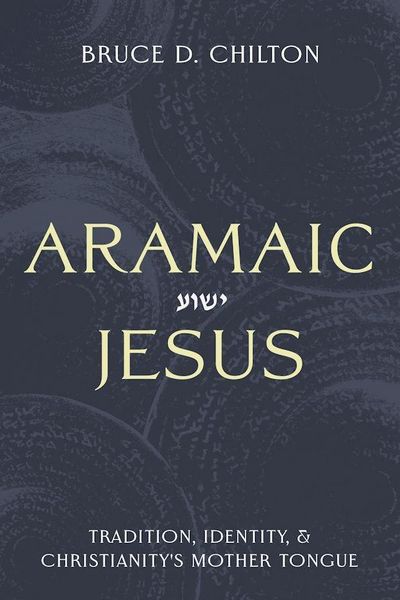
Aramaic Jesus Tradition, Identity, and Christianity's Mother Tongue
62,99 €
inkl. gesetzl. MwSt.,
Beschreibung
Produktdetails
Einband
Gebundene Ausgabe
Erscheinungsdatum
15.12.2025
Verlag
Baylor University PressSeitenzahl
277
Maße (L/B/H)
16,3/23,8/3,3 cm
Gewicht
716 g
Sprache
Englisch
ISBN
978-1-4813-2223-2
Aramaic, one of the great international languages of antiquity, left an indelible mark on the New Testament. Jesus and his first followers knew it because for centuries Aramaic had been a primary means of communication in the Middle East, and it remained current long after their time. Usage of Aramaic within Jesus' movement, initially with or without recourse to other languages, helped provide the fledgling community with a cultural as well as linguistic identity. Precise examples of the words of Jesus' teaching in Aramaic, reinforced by portrayals of him among Aramaic speakers, are explicit in the Gospels. Whatever other language choices he may have made, the Greek Gospels portray him as employing Aramaic as his medium of teaching. Bruce Chilton's Aramaic Jesus is a groundbreaking study in pursuit of this "Aramaic Jesus," a pursuit that requires awareness of the kind of Aramaic in play. In the past, sorting out dialects and types of Aramaic relied on sources composed well after the time of the New Testament; this work factors in analysis of the Dead Sea Scrolls and related materials to access forms of Aramaic current during the first century CE. Since the depiction of Jesus in the Gospels involves various intersections with Aramaic, tracing the impact of Aramaic in the depiction of Jesus within the New Testament entails several investigative categories: specific cases in which Aramaic is identifiably transliterated within the Greek Gospels; analysis that accounts for the cultural settings of Aramaic through the technique of retroversion (involving translation back into Aramaic); and assessment of noticeable overlaps between the New Testament and contemporaneous Aramaic literature, where thematic emphases emerge that relate Jesus' movement to Second Temple Judaism. The writings we call the Gospels involved transitions from the au/orality of Jesus and his movement to reliance upon writing, and from their language(s) to written Koine Greek. Those shifts involved an increasing resort to narrative and literary conventions. The extent to which Aramaic is a factor within this process is uncharted, and this volume clarifies the issues that are in play. Chilton's analysis illuminates the Aramaic Jesus and the people and processes that conveyed his memory.
Noch keine Bewertungen vorhanden
Verfassen Sie die erste Bewertung zu diesem Artikel
Helfen Sie anderen Kundinnen und Kunden durch Ihre Meinung.
Kurze Frage zu unserer Seite
Vielen Dank für Ihr Feedback
Wir nutzen Ihr Feedback, um unsere Produktseiten zu verbessern. Bitte haben Sie Verständnis, dass wir Ihnen keine Rückmeldung geben können. Falls Sie Kontakt mit uns aufnehmen möchten, können Sie sich aber gerne an unseren Kund*innenservice wenden.
zum Kundenservice