Gutscheinbedingungen

**Gültig bis 04.08.2026 ab einem Mindestbestellwert von 30€ auf Spielzeug, Schreibwaren, Filme, Geschenke & Trends, Musik, tolino eReader & Zubehör, Hörbücher und Hörbuch-Downloads (außer Abo), nicht preisgebundene Bücher und Kalender online auf thalia.at und in der Thalia App. Einzelne Artikel können ausgeschlossen sein. Aufgrund der Buchpreisbindung sind deutschsprachige Bücher und eBooks ausgenommen. Zusätzlich ausgenommen sind preisgebundene Artikel, Abos & Flatrates, eBooks, Games, Geschenkkarten/-boxen, Shelfies, Software, Zeitschriften sowie einzelne Artikel von tonies®. Pro Einkauf einmal einlösbar. Click & Collect nur bei Onlinevorabzahlung möglich. Keine Barauszahlung. Nicht kombinierbar mit anderen Aktionen und Gutscheinen. Gutschein wird auf max. 500€ Bestellwert angerechnet. Nicht gültig für Versandkosten und Services. Preisgebundene Artikel sind vom Mindestbestellwert ausgeschlossen.

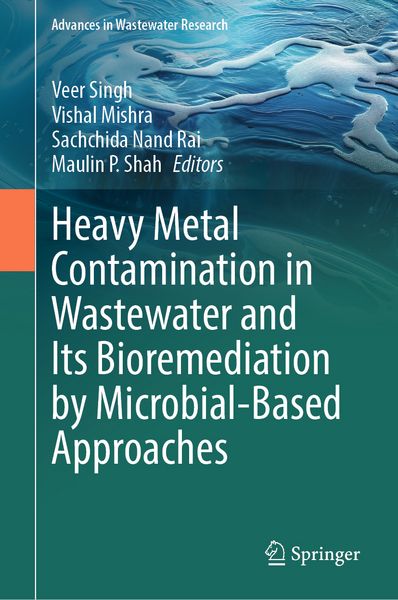
Produktbild: Heavy Metal Contamination in Wastewater and Its Bioremediation by Microbial-Based Approaches
- 11%

Heavy Metal Contamination in Wastewater and Its Bioremediation by Microbial-Based Approaches

11% sparen

135,99 € UVP 153,99 €

inkl. gesetzl. MwSt., Versandkostenfrei


Beschreibung

Produktdetails

Einband

Gebundene Ausgabe

Erscheinungsdatum

10.10.2025

Abbildungen

XVII, 372 p. 51 illus., 48 illus. in color.

Herausgeber

Veer Singh + weitere

Verlag

Springer Singapore

Seitenzahl

372

Maße (L/B/H)

24,1/16/2,6 cm

Gewicht

821 g

Auflage

1. Auflage

Sprache

Englisch

ISBN

978-981-9678-77-8

Beschreibung

Portrait


Dr. Veer Singh is currently working as DHR-Young Scientist in the Department of Biochemistry, Rajendra Memorial Research Institute of Medical Sciences, Patna, India. He received his Ph.D. from the Indian Institute of Technology (Banaras Hindu University), Varanasi. He has more than 30 publications. His research interests include biomass characterization, biofuel production, waste management, nanomaterial for biofuel production, waste to value-added products and microbial biofuel production and wastewater treatment.


Dr. Vishal Mishra is currently working as an assistant professor in the School of Biochemical Engineering, Indian Institute of Technology (BHU), Varanasi, India. He received his Ph.D. degree from IIT Roorkee, India. He has more than 80 publications. His research interests include algal fuel and biodiesel, life cycle assessment, agro-waste biomass, carbon materials and green synthesized nanomaterials for enhanced capacitance.


Dr. Sachchida Nand Rai is a research associate (ICMR-RA) at the Centre of Experimental Medicine and Surgery, Institute of Medical Sciences, Banaras Hindu University (BHU), Varanasi, where he received his Ph.D. in 2018. Before joining the BHU, he was a post-doctoral fellow at the Centre of Biotechnology, University of Allahabad, Prayagraj, India from 2020 to 2023. Dr. Rai serves as an academic editor for the journal
Mediators of Inflammation
,
International Journal of Inflammation
, and
BMC Research Notes
. He is also an associate editor for
3 Biotech
,
Molecular Neurobiology
,
Oxidative Medicine and Cellular Longevity
,
Journal of Inflammation Research
and
Degenerative Neurological and Neuromuscular Disease
. He has published 2 books. He investigates the neuroprotective activity of common Indian medicinal plants in toxin induced Parkinsonian mouse model. He is a member of the Indian Academy of Neurosciences.


Dr. Maulin P. Shah has emerged as a prominent researcher with his dedication to research spanning over two decades. He completed his BSc in Microbiology from Gujarat University, Godhra (Gujarat), India, in 1999. He further completed his PhD from Sardar Patel University, Vallabh Vidyanagar (Gujarat), India in 2005. His expertise and efforts are committed to investigating the complex relation between pollution and microbial diversity of wastewater via both cultivation-dependent and independent analyses. His contributions to science and literature have advanced the scientific realms of environmental microbiology such as biological wastewater treatment, biodegradation, bioremediation, and phytoremediation of environmental pollutants. Dr. Shah’s prolific scholarly journey is underscored by a staggering publication record, comprising more than 250 research papers across esteemed national and international journals. Beyond his research articles, he holds the distinguished role of editor for over 150 internationally renowned books, published by esteemed publishers such as Elsevier, Springer, RSC, and CRC Press, Wiley, IWA, IOP, Bentham, Apple Academic Press. His influence extends beyond publications, as he actively serves on the editorial boards of top-rated journals. Alongside his advisory role includes as the Editorial Board Member of CLEAN-Soil, Air, Water- Wiley; Current Pollution Reports- Springer Nature; Journal of Biotechnology & Biotechnological Equipment-Taylor & Francis; Applied Water Science - Springer Nature;

Produktdetails

Einband

Gebundene Ausgabe

Erscheinungsdatum

10.10.2025

Abbildungen

XVII, 372 p. 51 illus., 48 illus. in color.

Herausgeber

Verlag

Springer Singapore

Seitenzahl

372

Maße (L/B/H)

24,1/16/2,6 cm

Gewicht

821 g

Auflage

1. Auflage

Sprache

Englisch

ISBN

978-981-9678-77-8

Herstelleradresse

Springer-Verlag GmbH
Tiergartenstr. 17
69121 Heidelberg
DE

Email: GPSR Kontakt

Noch keine Bewertungen vorhanden

Verfassen Sie die erste Bewertung zu diesem Artikel

Helfen Sie anderen Kundinnen und Kunden durch Ihre Meinung.

Kundinnen und Kunden meinen

Bewertungen (0)

  • Produktbild: Heavy Metal Contamination in Wastewater and Its Bioremediation by Microbial-Based Approaches

  • Introduction of heavy metal contamination in wastewater.- Impacts of Industrialization on Biosphere Integrity: Heavy Metal Contamination Threats to Water Resources and Ecosystem.- Sources and Types of Environmental Contaminants.- Health Impacts of Heavy Metal Exposure: Toxicity Mechanisms and Public Health Risks.- Heavy metals in the environment: A major health issue.- Heavy metal resistant bacteria for bioremediation of toxic heavy metal ion-Arsenic and Lead.- Arsenic Contamination in Surface and Groundwater: Assessment and Carcinogenic Impacts.- Heavy Metals as Ecological Contaminants: Sources, Persistence, Human Health Risks, and Pollution Assessment Indices.- Genetically Modified Microorganisms for Enhanced Heavy Metal Removal Properties.- Current Approaches in Enhancing the Capacity of Microbial Fuel Cells (MFCs) for the Treatment of Heavy Metal-Containing Wastewater.- Microbial Fuel cells (MFCs): An integrated approach for wastewater treatment and bioelectricity generation.- Recent updates of eco-friendly heavy metal reduction methods.- Current Update of Microbial based Water Treatment and its Role in the Sustainable Development Goals.- Heavy Metal Removal by Bacteria: Mechanism and Challenges.- As (III) and Cr (VI) Remediation by Genetically Engineered Microorganisms: An Overview of Principles and Criteria of Fundamental Processes.- Major Challenges for Implementation of Microbes in the Wastewater Treatment Plants, Commercialization, and Future Prospective.