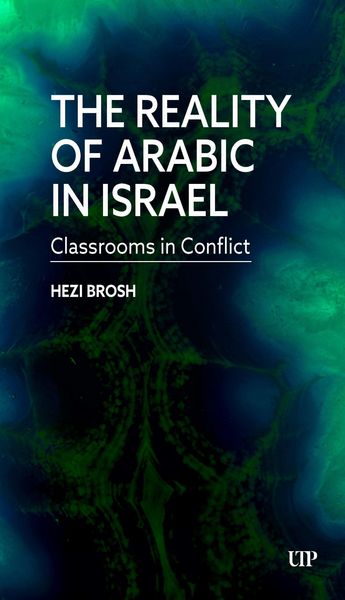
The Reality of Arabic in Israel Classrooms in Conflict
-
- Englisch ausgewählt
109,99 €
inkl. gesetzl. MwSt.,
Beschreibung
Produktdetails
Einband
Gebundene Ausgabe
Erscheinungsdatum
30.12.2025
Verlag
University of Toronto PressSeitenzahl
336
Maße (L/B/H)
23,2/15,2/2,4 cm
Gewicht
560 g
Sprache
Englisch
ISBN
978-1-4875-7020-0
This book offers a compelling case study on Arabic Teaching and Learning (ATL) as a foreign language within Israel's Jewish educational system. It delves into the intricate interplay among politics, pedagogy, and linguistics. The author argues that ATL has not met expectations, despite investments and pedagogical reforms. The sociopolitical context, particularly the Arab–Israeli conflict, has far-reaching consequences for various aspects of Arabic education, affecting the status and dissemination of the language within Jewish-Israeli society. These aspects encompass language policies, attitudes and motivation, curriculum development, recognizing Arabic as a critical security concern, and the roles of native and non-native teachers. By examining the distinct circumstances, constraints, and challenges encountered in ATL in Israel, this book provides valuable insights into the role of language education in conflict-ridden environments.
Hezi Brosh sheds light on language teaching methodologies, policy, and planning, providing a fresh perspective on the intricate relationship between language and politics. Understanding these dynamics can pave the way for exploring strategies to leverage language as a unifying force rather than a divisive one. The Israeli experience holds valuable lessons and hypotheses that can be applied to other conflict-affected regions worldwide, such as Cyprus, South Africa, Northern Ireland, Bosnia, Serbia, Croatia, Myanmar, and Kosovo. These regions, where specific languages and cultures may bear negative stigmas, can benefit from comprehending how language policies shaped by conflict contribute to discrimination against minority groups. Given the significance of investigating language learning in conflict contexts, there is a need for extensive research to enhance our understanding. Critically evaluating the implications of conflicts on language policies and their impact on minority groups would yield valuable lessons to inform language education practices in conflict-affected regions.
Noch keine Bewertungen vorhanden
Verfassen Sie die erste Bewertung zu diesem Artikel
Helfen Sie anderen Kundinnen und Kunden durch Ihre Meinung.
Kurze Frage zu unserer Seite
Vielen Dank für Ihr Feedback
Wir nutzen Ihr Feedback, um unsere Produktseiten zu verbessern. Bitte haben Sie Verständnis, dass wir Ihnen keine Rückmeldung geben können. Falls Sie Kontakt mit uns aufnehmen möchten, können Sie sich aber gerne an unseren Kund*innenservice wenden.
zum Kundenservice