KI-Beratung Beta

Gutscheinbedingungen

**Gültig bis 11.11.2026 auf Spielzeug, Schreibwaren, Filme, Geschenke & Trends, Musik, tolino eReader & Zubehör, Hörbücher und Hörbuch-Downloads, nicht preisgebundene Bücher und Kalender online auf thalia.at und in der Thalia App. Einzelne Artikel können ausgeschlossen sein. Aufgrund der Buchpreisbindung sind deutschsprachige Bücher und eBooks ausgenommen. Zusätzlich ausgenommen sind Abos & Flatrates, Games, Geschenkkarten/-boxen, Shelfies, Software, Zeitschriften sowie einzelne Artikel von tonies®. Pro Einkauf einmal einlösbar. Click & Collect nur bei Onlinevorabzahlung möglich. Keine Barauszahlung. Nicht kombinierbar mit anderen Aktionen und Gutscheinen. Gutschein wird auf max. 500€ Bestellwert angerechnet. Nicht gültig für Versandkosten und Services.

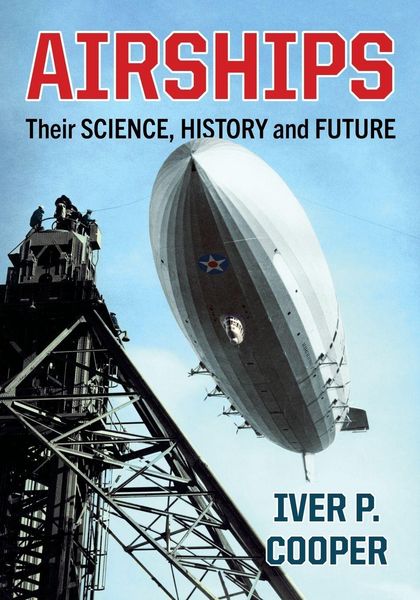
Produktbild: Airships

Airships Their Science, History and Future

71,99 €

inkl. gesetzl. MwSt., Versandkostenfrei


Beschreibung

Produktdetails

Einband

Taschenbuch

Erscheinungsdatum

01.05.2025

Abbildungen

Raster,schwarz-weiss

Verlag

Ingram Publishers Services

Seitenzahl

380

Maße (L/B/H)

25,4/17,8/2,1 cm

Gewicht

713 g

Sprache

Englisch

ISBN

978-1-4766-9508-2

Beschreibung

Produktdetails

Einband

Taschenbuch

Erscheinungsdatum

01.05.2025

Abbildungen

Raster,schwarz-weiss

Verlag

Ingram Publishers Services

Seitenzahl

380

Maße (L/B/H)

25,4/17,8/2,1 cm

Gewicht

713 g

Sprache

Englisch

ISBN

978-1-4766-9508-2

Herstelleradresse

Libri GmbH
Europaallee 1
36244 Bad Hersfeld
DE

Email: gpsr@libri.de

Noch keine Bewertungen vorhanden

Verfassen Sie die erste Bewertung zu diesem Artikel

Helfen Sie anderen Kundinnen und Kunden durch Ihre Meinung.

Kundinnen und Kunden meinen

Bewertungen (0)

  • Produktbild: Airships
  • Table of Contents

    Preface
    Abbreviations
    Selected Airship Alphanumeric Designations
    Chapter 1.¿Airships 101
    What Is an Airship?¿5; Airship Successes¿6; The Forces on an Airship¿9; Airship Design Goals¿10; Airship Size¿13; Airship Shape¿15
    Chapter 2.¿Buoyant (Aerostatic) Lift
    Milestones in Airship (and Balloon) Lift¿16; The Creation of Buoyancy¿17; Specific Lift¿18; Gross Aerostatic Lift¿19; Hydrogen Versus Helium¿20; Hydrogen Production and Purity¿20; Helium Production and Purity¿24; Inflating the Airship¿25; Effect of Atmospheric Conditions on Specific Lift¿25; Superheating and Supercooling¿27; Superpressure¿29; Maximum Gas Capacity¿30; Altitude Effects¿31; Thermal Airships: Hot Air¿34; Rozier (Multigas) Airships¿38; The Problem with Vacuum Lift¿39
    Chapter 3.¿Propulsion System
    Milestones in Airship Propulsion¿41; Propulsion System Components¿42; Propulsors¿42; Power Transmission¿44; Propulsive Efficiency¿44; Engines¿47; Internal Combustion Engine Performance¿49; Altitude Effects on Internal Combustion Engine Performance¿50; Engine Efficiency, Overall Efficiency and Fuel Consumption¿51; Sizing the Engine¿52; Auxiliary Power Draw¿53; Power and Weight¿54; "Golden Age" Airship Engines¿55; Later Airship Engines¿57; Number of Engines¿58; Propeller (and Engine) Location¿58; Propulsion System Controls¿60; Propulsion System Monitoring¿60; Engine Reliability¿61; Engine Cooling¿61; Fuel Tanks¿62
    Chapter 4.¿Thrust and Drag
    Dirigibility¿63; Aerodynamic Drag¿63; Power, Propulsive Efficiency, and Speed¿66; Propulsion Scaling Rules¿67; Airship Size and Power¿68; Airspeed (Engine Power) Selection¿69; The Drag Coefficient and the Reynolds Number¿71; Drag Measurement¿73; Prediction of Drag¿74
    Chapter 5.¿­­Non-Buoyant (Aerodynamic) Lift
    Aerodynamic Lift Force¿77; The Effect of Profile Shape¿78; The Effect of Aspect Ratiö79; ­­Lift-Induced Drag¿80; Component Contributions to Lift and ­­Lift-Induced Drag: Experimental Datä80; Effect of Aerodynamic Lift and Drag on Airspeed (Engine Power) Selection¿82; Aerodynamic Lift Measurements¿84; ­­Lift-Induced Drag Measurements¿86
    Chapter 6.¿Altitude (Net Total Lift) Control
    The Problem of Altitude Control¿88; Venting (or Burning) Lift Gas¿89; Shipboard Production of Lift Gas (Hydrogen)¿90; Dropping Ballast¿91; ­­Re-Ballasting¿94; Drag Rope (Recoverable Ballast)¿97; Temperature Manipulation¿97; Dynamic Lift (Positive or Negative)¿100; Directed Thrust¿101; Burning Gaseous Fuels¿103; Other Methods¿103
    Chapter 7.¿Orientation Stability and Control
    Terminology¿104; Pitching, Yawing and Rolling Moments¿104; Stability and Control¿105; Effect of Pitch¿106; Effect of Yaw¿108; Trim¿108; Lift Gas Surge and Pitching Moment¿109; Intrinsic Pitch Stability¿109; Pitch and Yaw Stabilizing Surfaces¿110; Longitudinal (Pitch) Control¿110; Yaw (Directional) Control¿111; Roll Stability¿112; Reversing Speed¿113
    Chapter 8.¿Takeoff, Landing, and Ground Handling
    Weighing Off¿116; Unmoored Takeoff and Landing¿117; Ground Crew¿119; Forces on a "Walked" Airship¿120; Wind Flow Near Hangars¿123; Mechanical Aids¿124; Miscellaneous Ground Handling Issues¿125
    Chapter 9.¿Hangars
    Hangar Siting¿128; Stationary Hangars¿128; Hangar Entrances¿132; Temporary (Demountable) Hangars¿133; Rotating (Floating) Hangars¿135; Floating, ­­Non-Rotating Hangars¿137; Rotating (Mechanical) Hangars¿137; Circular or ­­Many-Sided Hangars¿139
    Chapter 10.¿Mooring Systems
    Stationary (Permanent) Mooring Systems¿141; Temporary and Portable Masts¿148; Mobile Masts¿150; Auxiliary Mooring Equipment¿156; Mooring Procedure¿156; Mastless Mooring at Seä158; Water Takeoffs and Landings¿159; Miscellaneous ­­Ship-Based Operations¿160; Forest Clearing Havens¿162; Emergency Field Expedients¿162
    Chapter 11.¿Flight Operations
    Ascending and Descending¿165; Cruising Altitude¿166; Turning (Circling)¿166; Route Planning¿167; The Wind Triangle¿168; Wind Speed and Altitude¿171; Navigation¿173; Pressure Pattern Flying¿174; Other Weather Considerations¿175; Flight Controls¿176; Communications¿177
    Chapter 12.¿Structure
    Envelope Construction¿178; Superpressure¿179; Simple Aerostat Envelope Accessories¿180; Semirigid Airships: Keel Design¿181; Multilobal Airships¿183; Compound Aerostats¿183; Rigid Airships¿185; Car Suspension¿191; Cars (Gondolas) and Internal Space¿193; Empennage¿194; Miscellaneous Structural Features¿195; Airship Shapes¿195
    Chapter 13.¿Stresses on an Airship Hull
    Simple Aerostats: The Need for Superpressure¿199; Simple Aerostats: The Hull as a Pressure Vessel¿200; Gas Pressure in a Rigid Airship¿201; Transverse Forces on an Airship Hull¿201; Resistance to Bending by Nonrigid Airship¿202; Resistance to Bending by a Semirigid Airship¿203; Resistance to Bending by Metalclad¿204; Force Transfer in a Rigid Airship¿204; The Hull as a Simple Beam¿205; The Effect of Stresses on the ­­Length-to-Diameter Ratiö208; Distortion of the Airship Cross Section¿209; Temperature Stresses in Rigid Airships¿210; Anticipated Aerodynamic Loads: Level Flight¿210; Aerodynamic Loads from Flight Maneuvers¿211; Aerodynamic Loads from Gusts¿212; Water Models¿213; Deflated (or Inflated) Gasbag Test¿214; Finite Element Analysis¿215; Safety Factors¿216
    Chapter 14.¿Materials
    Flexible Materials¿218; Environmental Protection Materials¿219; High Specific Strength, Flexible Materials¿221; Gas Containment Criteriä225; Gas Containment Materials¿227; Historical Laminates¿230; Modern Laminates¿234; Holes and Tears¿235; Structural Materials¿236
    Chapter 15.¿Weight Estimation
    Weight Classification¿240; Surface Areä240; Weight Efficiency¿241; Detailed Empty Weight Breakdowns¿243; Historical Attempts at Weight Estimation¿246; Weight Estimation for Modern Nonrigid Airships¿251; Operating Load¿255
    Chapter 16.¿Airship Failures and Accidents
    Causative and Contributory Factors¿256; Accident Contexts¿267; Loss of the R101: Case Study¿273; Loss of USS Macon: Case Study¿274; Personal Injuries in Airship Accidents¿274
    Chapter 17.¿Fiery Deaths and Hydrogen Embrittlement
    Fire and Explosion Risks from Lift Gases and Fuels¿276; ­­Non-Hydrogen Fires¿277; Hydrogen Fires¿277; The Hindenburg Disaster¿280; Increasing Hydrogen Safety¿282; Hydrogen Embrittlement¿283
    Chapter 18.¿The Future of Airships
    Unmanned Airships¿288; Hybrid (Semibuoyant) Lift¿288; ­­Solar-Electric Propulsion¿291; Lift Gas Compression¿292; Missions for Future Airships¿

    Conclusion
    Appendices:
    A.¿Vacuum Lift
    Failure by Crushing¿305; Failure by Buckling¿307; Akhmeteli's Layered Shell¿308; Metlen's Reinforced Spheres¿308; Barton Inflatable Vacuum Chamber (IVC) Design¿308; Additional Vacuum Lift Proposals¿309
    B.¿Prediction of ­­Zero-Lift Drag
    Frictional Drag Coefficient, Flat Plate (Cf)¿311; Reference Areä312; Shape Factor¿312; Beyond the Fineness Ratiö313; Complete Rigging Analysis¿314; Rigging Factor¿315; Accuracy of Drag Coefficient Predictions¿317
    C.¿Prediction of Lift and ­­Lift-Induced Drag
    Tail (Stabilizer) Contribution¿319; Elevator Contribution¿321; Hull Contribution¿321; Car Contribution¿323
    D.¿Hot-Air Lift: Alternatives to Propane Burner Fuel
    E.¿Thermal Airships: Steam Lift
    F.¿Net Lift Control by Liquefaction of Lift Gas
    Helium¿328; Ammoniä328; Water Vapor (Steam)¿330
    G.¿Net Lift Control by Liquefaction of Gaseous Fuel
    H.¿Sizing the Empennage
    I.¿Hydrogen Degradation of Polymers
    J.¿Calculation of Maximum Bending Moment from Gusts
    K.¿Additional Materials Data
    Notes
    Bibliography
    Index