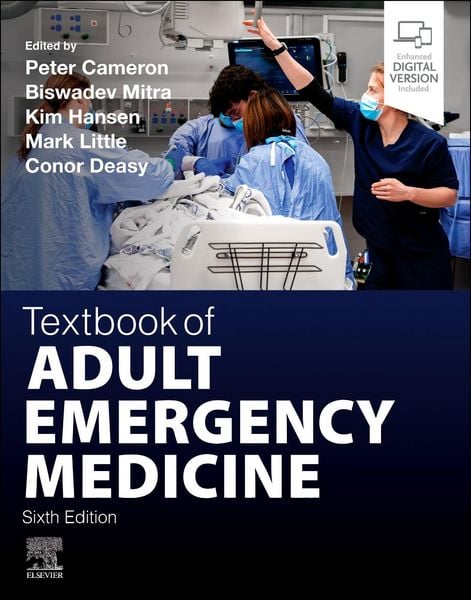
Produktbild: Textbook of Adult Emergency Medicine

Textbook of Adult Emergency Medicine

116,99 €

inkl. gesetzl. MwSt., Versandkostenfrei


Beschreibung

Produktdetails

Einband

Taschenbuch

Erscheinungsdatum

24.12.2025

Herausgeber

Biswadev Mitra + weitere

Verlag

Elsevier

Seitenzahl

1008

Maße (L/B/H)

27,4/21,5/3,5 cm

Gewicht

2264 g

Auflage

6. Auflage

Sprache

Englisch

ISBN

978-0-443-24899-3

Beschreibung

Produktdetails

Einband

Taschenbuch

Erscheinungsdatum

24.12.2025

Herausgeber

Verlag

Elsevier

Seitenzahl

1008

Maße (L/B/H)

27,4/21,5/3,5 cm

Gewicht

2264 g

Auflage

6. Auflage

Sprache

Englisch

ISBN

978-0-443-24899-3

Herstelleradresse

Libri GmbH
Europaallee 1
36244 Bad Hersfeld
DE

Email: gpsr@libri.de

Kundinnen und Kunden meinen

0 Bewertungen

Informationen zu Bewertungen

Zur Abgabe einer Bewertung ist eine Anmeldung im Konto notwendig. Die Authentizität der Bewertungen wird von uns nicht überprüft. Wir behalten uns vor, Bewertungstexte, die unseren Richtlinien widersprechen, entsprechend zu kürzen oder zu löschen.

Die Bewertungen sind nach Format, Anzahl Sterne und Datum sortiert.

Verfassen Sie die erste Bewertung zu diesem Artikel

Helfen Sie anderen Kund*innen durch Ihre Meinung

Kundinnen und Kunden meinen

0 Bewertungen filtern

  • Produktbild: Textbook of Adult Emergency Medicine
  • Section 1: Resuscitation
    1.1 Basic life support
    1.2 Advanced life support

    Section 2: Critical care
    2.1 Airway and ventilation management
    2.2 Oxygen therapy
    2.3 Haemodynamic monitoring
    2.4 Shock overview
    2.5 Sepsis and septic shock
    2.6 Arterial blood gases
    2.7 Cerebral resuscitation after cardiac arrest
    2.8 Anaphylaxis

    Section 3: Trauma
    3.1 Trauma overview
    3.2 Traumatic brain injury
    3.3 Spinal trauma
    3.4 Facial trauma
    3.5 Abdominal trauma
    3.6 Chest trauma
    3.7 Limb trauma
    3.8 Radiology in major trauma
    3.9 Trauma in pregnancy
    3.10 Wound care and repair
    3.11 Burns
    3.12 Major haemorrhage

    Section 4: Orthopaedic emergencies
    4.1 Injuries of the shoulder
    4.2 Dislocations of the elbow
    4.3 Fractures of the humerus
    4.4 Fractures of the forearm and carpal bones
    4.5 Hand injuries
    4.6 Pelvic injuries
    4.7 Hip injuries
    4.8 Femur injuries
    4.9 Knee injuries
    4.10 Tibial and fibular injuries
    4.11 Ankle joint injuries
    4.12 Foot injuries
    4.13 Osteomyelitis

    Section 5: Cardiovascular emergencies
    5.1 Chest pain
    5.2 Acute coronary syndromes
    5.3 Assessment and management of acute pulmonary oedema
    5.4 Arrhythmias
    5.5 Pulmonary embolism
    5.6 Pericarditis, cardiac tamponade and myocarditis
    5.7 Heart valve emergencies
    5.8 Peripheral vascular disease
    5.9 Hypertension
    5.10 Aortic dissection
    5.11 Aneurysms

    Section 6: Respiratory emergencies
    6.1 Upper respiratory tract
    6.2 Asthma
    6.3 Community-acquired pneumonia
    6.4 Influenza
    6.5 Chronic obstructive pulmonary disease
    6.6 Pneumothorax
    6.7 Pleural effusion
    6.8 Haemoptysis

    Section 7: Digestive emergencies
    7.1 Dysphagia
    7.2 Approach to abdominal pain
    7.3 Bowel obstruction
    7.4 Hernia
    7.5 Gastroenteritis
    7.6 Haematemesis and melaena
    7.7 Peptic ulcer disease and gastritis
    7.8 Biliary tract disease
    7.9 Acute pancreatitis
    7.10 Acute appendicitis
    7.11 Inflammatory bowel disease
    7.12 Acute liver failure
    7.13 Haematochezia
    7.14 Perianal conditions

    Section 8: Neurology emergencies
    8.1 Headache
    8.2 Stroke and transient ischaemic attacks
    8.3 Subarachnoid haemorrhage
    8.4 Altered conscious state
    8.5 Seizures
    8.6 Syncope and vertigo
    8.7 Weakness

    Section 9: Infectious disease emergencies
    9.1 Approach to undifferentiated fever in adults
    9.2 Meningitis
    9.3 Septic arthritis
    9.4 Urinary tract infections
    9.5 Skin and soft-tissue infections
    9.6 COVID-19
    9.7 Needlestick injuries and related blood and body fluid exposures
    9.8 Hepatitis
    9.9 Human immunodeficiency virus and acquired immune deficiency syndrome
    9.10 Sexually transmitted infections
    9.11 Tropical infectious diseases

    Section 10: Genitourinary emergencies
    10.1 Acute kidney injury
    10.2 The acute scrotum
    10.3 Renal colic

    Section 11: Endocrine emergencies
    11.1 Diabetes mellitus and hypoglycaemia: an overview
    11.2 Diabetic ketoacidosis and hyperosmolar, hyperglycaemic state
    11.3 Thyroid and adrenal emergencies

    Section 12: Metabolic emergencies
    12.1 Acid-base disorders
    12.2 Electrolyte disturbances

    Section 13: Haematology emergencies
    13.1 Anaemia
    13.2 Neutropaenia
    13.3 Thrombocytopaenia
    13.4 Haemophilia
    13.5 Blood and blood components

    Section 14: Rheumatology and musculoskeletal emergencies
    14.1 Rheumatological emergencies
    14.2 Monoarthritis
    14.3 Polyarthritis
    14.4 Musculoskeletal and soft-tissue emergencies

    Section 15: Dermatology emergencies
    15.1 Emergency dermatology

    Section 16: Ocular emergencies
    16.1 Ocular emergencies

    Section 17: Dental emergencies
    17.1 Dental emergencies

    Section 18: Ear, nose and throat emergencies
    18.1 Ear, nose and throat emergencies

    Section 19: Obstetrics and gynaecology emergencies
    19.1 Pelvic pain
    19.2 Pelvic inflammatory disease
    19.3 Abnormal vaginal bleeding in the nonpregnant patient
    19.4 Pain and bleeding in early pregnancy - miscarriage and ectopic pregnancy
    19.5 Bleeding after the first trimester of pregnancy
    19.6 Pre-eclampsia
    19.7 Emergency birth and complications

    Section 20: Psychiatric emergencies
    20.1 Mental state assessment
    20.2 Distinguishing medical from psychiatric causes of mental disorder presentations
    20.3 Suicidality and self-harm
    20.4 Depression
    20.5 Psychosis
    20.6 Pharmacological management of the aroused patient

    Section 21: Challenging situations
    21.1 Death and dying
    21.2 Sexual assault
    21.3 Family violence
    21.4 Alcohol-related illness
    21.5 The challenging patient
    21.6 End-of-life decision-making and provision of palliative care
    21.7 Organ and tissue donation

    Section 22: Pain relief
    22.1 General pain management
    22.2 Local anaesthesia
    22.3 Emergency department procedural sedation

    Section 23: Emergency imaging
    23.1 Emergency department ultrasound
    23.2 Computed tomography scanning in emergency medicine
    23.3 Magnetic resonance imaging in emergency medicine

    Section 24: Environmental emergencies
    24.1 Heat-related illness
    24.2 Cold-related illness
    24.3 Dysbarism
    24.4 Radiation incidents
    24.5 Drowning
    24.6 Electric shock and lightning injury
    24.7 High-altitude illness

    Section 25: Toxicology emergencies
    25.1 Approach to the poisoned patient
    25.2 Cardiovascular drugs
    25.3 Antipsychotic drugs
    25.4 Antidepressant drugs
    25.5 Lithium
    25.6 Paracetamol
    25.7 Salicylate
    25.8 Antidiabetic drugs
    25.9 Colchicine
    25.10 Caffeine and theophylline
    25.11 Iron
    25.12 Drugs of abuse
    25.13 Cyanide
    25.14 Hydrofluoric acid
    25.15 Anticholinesterase insecticides
    25.16 Herbicides
    25.17 Ethanol and other ‘toxic’ alcohols
    25.18 Carbon monoxide
    25.19 Anticonvulsants
    25.20 Toxidromes
    25.21 Chloroquine
    25.22 Opioids
    25.23 Oral anticoagulants

    Section 26: Toxinology emergencies
    26.1 Snakebite
    26.2 Exotic snakebite
    26.3 Spider bite
    26.4 Marine injury, envenomation and poisoning
    26.5 Hymenoptera stings

    Section 27: Academic emergency medicine
    27.1 Research methodology
    27.2 Writing for publication
    27.3 Principles of medical education
    27.4 Teaching medical students emergency medicine
    27.5 Postgraduate emergency medicine teaching and simulation

    Section 28: Emergency medicine and the law
    28.1 Mental health and the law: the Australian and New Zealand perspectives
    28.2 The coroner
    28.3 Consent and competence
    28.4 Privacy and confidentiality
    28.5 Ethics in emergency medicine

    Section 29: Emergency and medical systems
    29.1 Prehospital emergency medicine
    29.2 Retrieval
    29.3 Medical issues in disasters
    29.4 Triage
    29.5 Emergency care in a humanitarian crisis
    29.6 Emergency department short stay units
    29.7 Overcrowding
    29.8 Rapid and other hyperacute response systems in the emergency department
    29.9 Public health and social emergency medicine
    29.10 Indigenous health in the emergency department setting

    Section 30: Administration
    30.1 Emergency department staffing
    30.2 Emergency department layout
    30.3 Quality assurance and quality improvement
    30.4 Business planning
    30.5 Accreditation, specialist training and recognition in Australia and Aotearoa New Zealand
    30.6 Specialist training and recognition in emergency medicine in the United Kingdom
    30.7 Complaints
    30.8 Patient safety
    30.9 Wellness, resilience and performance in emergency medicine