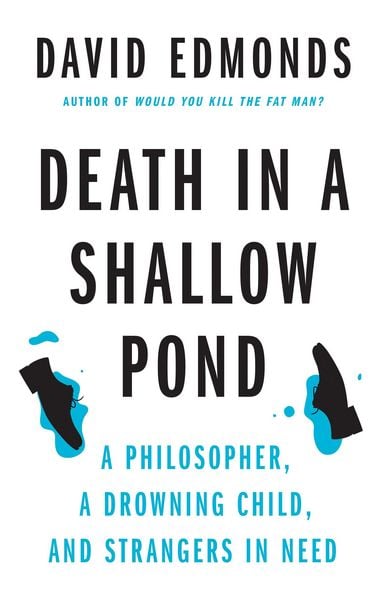
Death in a Shallow Pond A Philosopher, a Drowning Child, and Strangers in Need
25,99 €
inkl. gesetzl. MwSt.,
- Kostenlose Lieferung ab 30 € Einkaufswert
- Versandkostenfrei für Bonuscard-Kund*innen
Beschreibung
Produktdetails
Einband
Gebundene Ausgabe
Erscheinungsdatum
23.09.2025
Verlag
Princeton Univers. PressSeitenzahl
288
Maße (L/B/H)
21,7/14,3/2,3 cm
Gewicht
478 g
Sprache
Englisch
ISBN
978-0-691-25402-9
From the bestselling coauthor of Wittgenstein’s Poker, a fascinating account of Peter Singer’s controversial “drowning child” thought experiment—and how it changed the way people think about charitable giving
Imagine this: You’re walking past a shallow pond and spot a toddler thrashing around in the water, in obvious danger of drowning. You look around for her parents, but nobody is there. You’re the only person who can save her and you must act immediately. But as you approach the pond you remember that you’re wearing your most expensive shoes. Wading into the water will ruin them—and might make you late for a meeting. Should you let the child drown? The philosopher Peter Singer published this thought experiment in 1972, arguing that allowing people in the developing world to die, when we could easily help them by giving money to charity, is as morally reprehensible as saving our shoes instead of the drowning child. Can this possibly be true? In Death in a Shallow Pond, David Edmonds tells the remarkable story of Singer and his controversial idea, tracing how it radically changed the way many think about poverty—but also how it has provoked scathing criticisms.
Death in a Shallow Pond describes the experiences and world events that led Singer to make his radical case and how it moved some young philosophers to establish the Effective Altruism movement, which tries to optimize philanthropy. The book also explores the reactions of critics who argue that the Shallow Pond and Effective Altruism are unrealistic, misguided, and counterproductive, neglecting the causes of—and therefore perpetuating—poverty. Ultimately, however, Edmonds argues that the Shallow Pond retains the power to shape how we live in a world in which terrible and unnecessary suffering persists.
Noch keine Bewertungen vorhanden
Verfassen Sie die erste Bewertung zu diesem Artikel
Helfen Sie anderen Kundinnen und Kunden durch Ihre Meinung.
Kurze Frage zu unserer Seite
Vielen Dank für Ihr Feedback
Wir nutzen Ihr Feedback, um unsere Produktseiten zu verbessern. Bitte haben Sie Verständnis, dass wir Ihnen keine Rückmeldung geben können. Falls Sie Kontakt mit uns aufnehmen möchten, können Sie sich aber gerne an unseren Kund*innenservice wenden.
zum Kundenservice