Simon K. Davy is Professor of Marine Biology at the School of Biological Sciences, Victoria University of Wellington, Wellington, New Zealand.
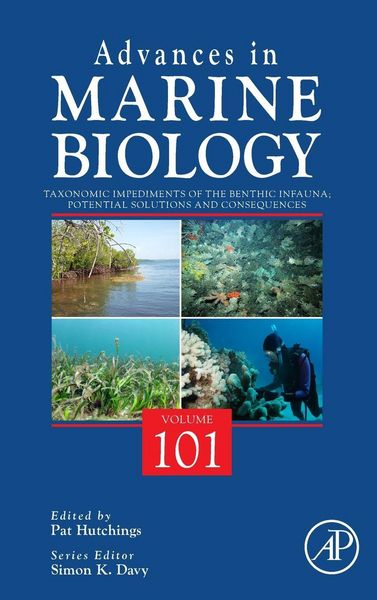
Dr. Pat Hutchings DSc, FRZS, AM, is a distinguished taxonomist and marine ecologist specializing in the systematics and ecology of polychaetes, a major component of benthic habitats. Her research has spanned Australian wetlands and coral reefs, contributing significantly to biodiversity studies and ecological research. She is currently a Senior Fellow at the Australian Museum Research Institute, where she continues her research and student supervision after retiring in 2016. She has also been a Research Fellow at the University of Sydney since 1986 and an Adjunct Fellow at Macquarie University since 2017, with previous adjunct positions at the University of Queensland and James Cook University, supervising PhD students.
From 1970 to 2016, she served as a Senior Principal Research Scientist at the Australian Museum Research Institute in Sydney. Dr. Hutchings completed her BSc (Special Honours, First Class) at Queen Mary College, London University, in 1967, followed by a PhD in Zoology from the University of Newcastle upon Tyne in 1970 and a Doctor of Science (DSc) degree from the same institution in 1989. Her research has taken her across the Australian coastline and offshore regions, as well as the Indo-Pacific, where she has conducted biodiversity surveys and experimental studies on bioerosion processes, particularly in the Great Barrier Reef and French Polynesia.
She has held numerous research fellowships and visiting positions, including a Visiting Fellowship at the Smithsonian Institution (1989), a Visiting Fellowship at Academia Sinica in Taiwan (1991), a French Government Research Fellowship in Paris and Marseille (1993), Visiting Professorships at the University Aix-Marseille (1995-2001), and a Visiting Professorship at Universiti Malaysia Terengganu (2019-2022). In addition to her research, Dr. Hutchings has played key roles in various scientific committees and advisory boards, including the Australian Bureau of Flora and Fauna (1987-1992), the Scientific Working Committee on Ballast Water Introductions (1989-1994), the NSW Scientific Committee under the Threatened Species Act (1997-2004), and the Resource Assessment Committee of the Great Barrier Reef Marine Park Authority (2000-2009). She chaired the 11th International Polychaete Conference in 2013, contributed to the National Marine Science Plan launched in 2015, and has been a member of the Jervis Bay Marine Park Advisory Committee (2017-2024). Since 2018, she has served as a member of the United Nations' Pool of Experts, focusing on Indo-Pacific benthic biodiversity.
Dr. Hutchings has also made significant contributions to scientific publishing. She is currently the Polychaete Editor for Zootaxa and an Associate Editor for Pacific Conservation. Previously, she served as Chief Editor of Marine Pollution Bulletin from 2015 to 2023, after having been its Regional Editor from 1995 to 2015. Her contributions to marine science and environmental conservation have earned her numerous accolades, including the Order of Australia (2024), Fellowship of the Royal Society of New South Wales (2021), Honorary Life Membership in the Australian Marine Sciences Association (2010), the Silver Jubilee Medal from the Australian Marine Sciences Association (2010), Honorary Life Membership in the Australian Coral Reef Society (2009), and Fellowship of the Royal Zoological Society (2005).
Throughout her career, Dr. Hutchings has published over 400 peer-reviewed papers in leading international journals, which are available on ResearchGate or upon request.