Gutscheinbedingungen

**Gültig bis 06.07.2026 auf fremdsprachige Bücher online auf thalia.at, in der Thalia App ab einem Mindestbestellwert von 30€ und in allen Thalia Buchhandlungen in Österreich. In den Buchhandlungen nur gültig auf lagernde Ware. Einzelne Artikel können ausgeschlossen sein. Ausgenommen sind preisgebundene Artikel & eBooks. Pro Einkauf einmal einlösbar. Nur gültig gegen Vorlage oder im Onlineshop hinterlegter Bonuscard. Infos zur Einlösung in der Buchhandlung sind auf der Bonuscard-Vorteilspreisseite zu finden. Click & Collect nur bei Onlinevorabzahlung möglich. Keine Einlösung bei Scan & Go-Bezahlung. Keine Barauszahlung. Nicht kombinierbar mit anderen Aktionen und Gutscheinen. Gutschein wird auf max. 500€ Bestellwert angerechnet. Nicht gültig für Versandkosten und Services.

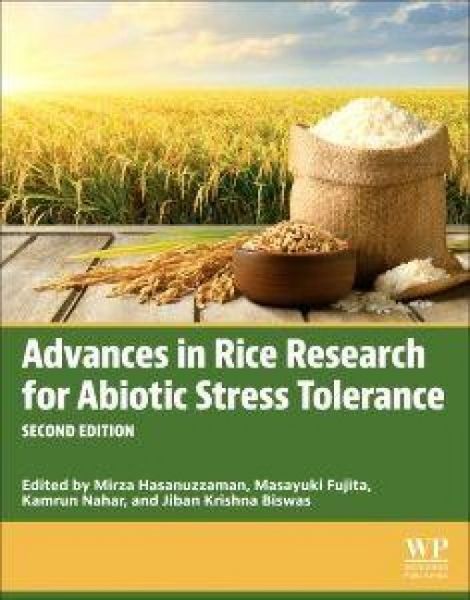
Produktbild: Advances in Rice Research for Abiotic Stress Tolerance
Vorbesteller Neu

Advances in Rice Research for Abiotic Stress Tolerance

267,99 €

inkl. gesetzl. MwSt., Versandkostenfrei


Beschreibung

Produktdetails

Einband

Taschenbuch

Erscheinungsdatum

01.08.2026

Herausgeber

Hasanuzzaman Mirza + weitere

Verlag

Elsevier

Seitenzahl

700

Maße (L/B)

23,5/19,1 cm

Auflage

2nd edition

Sprache

Englisch

ISBN

978-0-443-33465-8

Beschreibung

Portrait

Mirza Hasanuzzaman is Professor of Agronomy at Sher-e-Bangla Agricultural University in Dhaka. He is a specialist in agronomy, plant stress responses, and crop physiology. His current work is focused on the physiological and molecular mechanisms of environmental stress tolerance (salinity, drought, flood, and heavy metals/metalloids). Dr. Hasanuzzaman has published over 60 articles in peer-reviewed journals. He has edited six books and written 30 book chapters on important aspects of plant physiology, plant stress tolerance, and crop production.

Masayuki Fujita is a Professor in the Department of Plant Science, Faculty of Agriculture, Kagawa University, Kagawa, Japan. He received his B.Sc. in Chemistry from Shizuoka University, Shizuoka, and his M.Agr. and Ph.D. in Plant Biochemistry from Nagoya University, Nagoya, Japan. His research interests include physiological, biochemical and molecular biological responses based on secondary metabolism in plants under biotic (pathogenic fungal infection) and abiotic (salinity, drought, extreme temperatures and heavy metals) stresses; phytoalexin, cytochrome P-450, glutathione S-transferase, phytochelatin and redox reaction and antioxidants. He has over 150 peer-reviewed publications and has multiple books.

Kamrun Nahar is a leading plant stress physiologist and Professor of Agricultural Botany at Sher‑e‑Bangla Agricultural University in Dhaka, Bangladesh. She began her academic career at the same institution in 2011 and rose to the rank of Professor in 2021. Her research focuses on the physiological and biochemical mechanisms that enhance plant resilience to abiotic stresses, including drought, waterlogging, salinity, metal toxicity, and extreme temperatures, with particular emphasis on antioxidant and glyoxalase pathways. Prof. Nahar earned her Ph.D. in Environmental Stress Physiology from Ehime University, Japan, and completed her Master’s degree at Kagawa University, both supported by Japanese Government (MEXT) scholarships. She has received numerous distinctions, including the BAS Gold Medal Award (2017), multiple academic merit awards, and national research fellowships. A BAS Associate Fellow since 2021, she continues to supervise graduate researchers and lead projects funded by national research bodies.

Recognized with prestigious national awards for his leadership in rice science, Jiban Krishna Biswas is a distinguished plant physiologist with more than 33 years of experience in research and development. He currently serves as Executive Director of the Krishi Gobeshona Foundation (KGF), having previously held the role from 2020 to 2022 and rejoining in November 2022. An agricultural graduate from SAU and BAU, he earned his PhD in Crop Science from CLSU, Philippines, supported by an IRRI‑USAID fellowship, and completed postdoctoral research under JSPS in Japan. Dr. Biswas has led major research, administrative, and policy roles, including serving as Director General of the Bangladesh Rice Research Institute until his retirement in 2016. His work spans the development of abiotic stress‑tolerant rice varieties, research management, and extensive consultancy for national and international organizations.

Produktdetails

Einband

Taschenbuch

Erscheinungsdatum

01.08.2026

Herausgeber

Verlag

Elsevier

Seitenzahl

700

Maße (L/B)

23,5/19,1 cm

Auflage

2nd edition

Sprache

Englisch

ISBN

978-0-443-33465-8

Herstelleradresse

Libri GmbH
Europaallee 1
36244 Bad Hersfeld
DE

Email: GPSR Kontakt

Noch keine Bewertungen vorhanden

Verfassen Sie die erste Bewertung zu diesem Artikel

Helfen Sie anderen Kundinnen und Kunden durch Ihre Meinung.

Kundinnen und Kunden meinen

Bewertungen (0)

Die Leseprobe wird geladen.
  • Produktbild: Advances in Rice Research for Abiotic Stress Tolerance
  • 1. Managing abiotic stresses with rice agriculture to achieve sustainable food security: Bangladesh dilemma
    2. Growth and Morphological Alteration of Rice under Major Abiotic Stresses
    3. Effects of Salinity on Rice and Rice Weeds: Short- and Long-Term Adaptation Strategies and Weed Management
    4. Drought Stress and its Management in Rice: Mechanisms, Impacts, and Adaptive Strategies
    5. Hotter Climates, Smarter Rice: Coping with Heat Stress Through Adaptive Reprogramming and Tolerance
    6. Coping with Cold: How Rice Responds and Survives
    7. Flooding Stress in Rice under Climate Change: Physiological Responses and Tolerance Mechanisms
    8. Metal and Metalloid Toxicity in Rice: Stress Responses and Mitigation Strategies
    9. Aluminum Sensitivity in Rice: An Underlying Molecular Insight for Tolerance with Reference to Transcriptional And Epigenetic Regulations
    10. Strategies to Reduce Arsenic Stress in Rice: Physiological, Biochemical, and Molecular Perspectives
    11. Abiotic Stress- Induced Oxidative Stress in Rice: Mechanisms and Mitigation Strategies
    12. Engineering of Abiotic Stress Tolerance by Modulating Antioxidant Defense Systems
    13. Harnessing Biostimulants to Mitigate Salt Stress Damage in Rice
    14. Enhancing rice resilience to abiotic stress: The role of osmolytes
    15. Responses of Biofertilizers for Sustainable Rice Production Under Different Abiotic Stresses
    16. Agronomic Approaches to Improve Rice Production Under Abiotic Stress
    17. Seed Priming with Phytohormone to Mitigate Abiotic Stress Tolerance in Rice
    18. Nanoparticles as Emerging Tools for Enhancing Abiotic Stress Tolerance in Rice
    19. Nano-Enabled Biochar Composites and Native Fungal Symbionts for Arsenic Immobilization in Anaerobic Flooded Deltaic Rice Soils
    20. Molecular Tools and Strategies to Improve Abiotic Stress Resilience in Rice: Recent Progress and Future Directions
    21. Proteomics and Post-Translational Modifications of Heat Stress-Associated Proteins in Rice
    22. Developing Rice (Oryza sativa) Tolerance to Abiotic Stress Through Gene Editing Technologies
    23. Biotechnology for Enhancing Rice Tolerance to Abiotic Stress
    24. From Conventional Breeding to Gene Editing: Advances in Biotechnological Strategies for Improving Abiotic Stress Tolerance in Rice
    25. Strategies for Salt Stress Tolerance in Rice: Breeding to Genome Editing
    26. Climate Resilient Rice Crop Improvement Using CRISPR-Cas Technology
    27. Epigenetic Modulation of FKBP12-Dependent Pathways in Drought-Induced Oxidative Stress Resilience in Upland Rice Genotypes
    28. Plant Probiotic Bacteria Enhance Rice Tolerance to Abiotic Stresses
    29. Advances in arbuscular mycorrhizal fungi application for abiotic stress tolerance in rice
    30. Climate Change and Socioeconomic Disturbance in Rice Production
    31. Phytohormone-Mediated Improvement of Salt Stress Tolerance in Rice
    32. Seed Priming in Rice: A Promising Tool for Enhancing Abiotic Stress Tolerance