Gutscheinbedingungen

**Gültig bis 28.07.2026 auf Spielzeug, Schreibwaren, Filme, Geschenke & Trends, Musik, tolino eReader & Zubehör, Hörbücher und Hörbuch-Downloads (außer Abo), nicht preisgebundene Bücher und Kalender in der Thalia App. Einzelne Artikel können ausgeschlossen sein. Aufgrund der Buchpreisbindung sind deutschsprachige Bücher und eBooks ausgenommen. Zusätzlich ausgenommen sind preisgebundene Artikel, Abos & Flatrates, eBooks, Games, Geschenkkarten/-boxen, Shelfies, Software, Zeitschriften sowie einzelne Artikel von tonies®. Pro Einkauf einmal einlösbar. Click & Collect nur bei Onlinevorabzahlung möglich. Keine Barauszahlung. Nicht kombinierbar mit anderen Aktionen und Gutscheinen. Gutschein wird auf max. 500€ Bestellwert angerechnet. Nicht gültig für Versandkosten und Services.

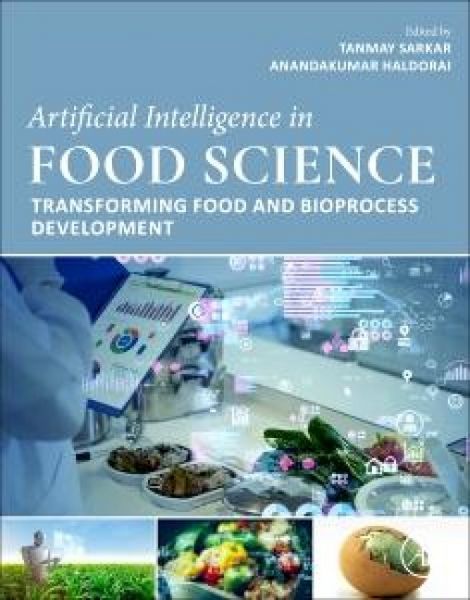
Produktbild: Artificial Intelligence in Food Science
- 13%

Artificial Intelligence in Food Science Transforming Food and Bioprocess Development

13% sparen

207,99 € UVP 239,60 €

inkl. gesetzl. MwSt., Versandkostenfrei


Beschreibung

Produktdetails

Einband

Taschenbuch

Erscheinungsdatum

22.09.2025

Herausgeber

Tanmay Sarkar + weitere

Verlag

Elsevier Science & Technology

Seitenzahl

626

Maße (L/B/H)

27,8/21,4/4,2 cm

Gewicht

450 g

Sprache

Englisch

ISBN

978-0-443-26468-9

Beschreibung

Portrait

Dr. Tanmay Sarkar is currently working as a Lecturer in the Government of West Bengal. With 9 years of experience in both teaching and research, his areas of interest include bioactive components from natural sources, ethnic foods, mathematical modeling, and phytochemicals. He is an editor for several SCI, SCIE, and Scopus- indexed journals and has edited numerous books with Elsevier and Springer.

Dr. Haldorai received his masters in software engineering from PSG College of Technology, Coimbatore and PhD in Information and Communication Engineering from PSG College of Technology, Anna University, Chennai. His research areas include big data, cognitive radio networks, mobile communications and networking protocols. He has authored more than 156 research papers in reputed International Journals and IEEE conferences. He has authored 12 books and many book chapters. He is the guest editor of many prestigious journals and the Editor in Chief of Elsevier’s International Journal of Intelligent Network.

Produktdetails

Einband

Taschenbuch

Erscheinungsdatum

22.09.2025

Herausgeber

Verlag

Elsevier Science & Technology

Seitenzahl

626

Maße (L/B/H)

27,8/21,4/4,2 cm

Gewicht

450 g

Sprache

Englisch

ISBN

978-0-443-26468-9

EU-Ansprechpartner

Zeitfracht Medien GmbH
Ferdinand-Jühlke-Straße 7
99095 Erfurt
DE
produktsicherheit@zeitfracht.de

Herstelleradresse

Elsevier Science & Technology
London Wall 125
EC2Y 5AS London
GB
tradeorders@elsevier.com

Noch keine Bewertungen vorhanden

Verfassen Sie die erste Bewertung zu diesem Artikel

Helfen Sie anderen Kundinnen und Kunden durch Ihre Meinung.

Kundinnen und Kunden meinen

Bewertungen (0)

  • Produktbild: Artificial Intelligence in Food Science
  • Section 1: Learning Approaches and Applications
    1. Data Collection and Preprocessing for AI and ML Applications in Food Science
    2. Supervised Learning Techniques in Food Science: Predictive Modeling and Classification
    3. Unsupervised Learning Techniques in Food Science: Clustering and Dimensionality Reduction
    4. Deep Learning Approaches for Food Science and Bioprocess Optimization 5.Reinforcement Learning in Food Industry Applications

    Section 2: Ingredient discovery, Recipe and New Product Development
    6. Virtual Product Testing and Simulation: Reducing Time and Costs in New Product Development
    7. Computational intelligence for Plant-Based Alternatives: Transforming Ingredients and Developing Innovative Meat and Dairy Substitutes
    8. AI and ML for Ingredient Discovery and Formulation Optimization
    9. Technology-Enabled Smart Kitchen: AI Assistance for Recipe Development and Cooking Techniques
    10. Flavor Profiling and Sensory Analysis using AI and ML

    Section 3 Nutrition
    11. Blockchain, IoT, fuzzy systems in Food Science and Bioprocess Development
    12. Bioinspired optimization techniques in Food Industry
    13. AI mediated modelling approach for nutritional aspects of food and bioproducts
    14. Digital image analysis in Food and bioprocess industries
    15. Advancement in Computational fluid dynamics in food processing
    16. Shelf-life prediction through AI and ML
    17. Personalized Nutrition: AI-driven Approaches for Tailoring Functional Foods to Individual Needs
    18. Smart Packaging and Traceability: Ensuring Quality and Safety of Functional Food Products

    Section 4 Quality Control, Food Safety and Processing
    19. Quality Control and Inspection Techniques with AI and ML
    20. Sensor Technologies and AI Integration for Real-time Monitoring of Food Quality Parameters
    21. AI and ML in Food Safety Assessment: Rapid Detection of Contaminants and Pathogens
    22. Chemometrics and Multivariate Analysis for Quality Control of Food Products
    23. Machine Learning for Spectroscopic Analysis and Quality Evaluation of Food
    24. Robotic Systems and Automation for Quality Inspection in Food Production
    25. Traceability and Blockchain Technology: Ensuring Transparency and Authenticity of Food Quality
    26. Case Studies: Successful Applications of AI and ML in Food Quality Control
    27. AI and ML for Process Optimization in Food Manufacturing
    28. AI and ML for Food Safety and Traceability
    29. Robotics and Automation in Food Processing using AI and ML
    30. IoT Integration and Smart Technologies in Food Systems
    31. Blockchain Technology for Transparent Food Supply Chains: Enhancing Traceability and Reducing Waste

    Section 5 Food Waste
    32. AI and ML in Food Waste Analytics: Leveraging Data for Waste Identification and Quantification
    33. Predictive Modeling for Demand Forecasting and Inventory Management to Minimize Food Waste
    34. Dynamic Pricing Strategies: AI-Driven Approaches for Optimizing Sales and Reducing Food Waste
    35. AI and ML for Supply Chain Optimization: Minimizing Losses and Maximizing Efficiency
    36. Waste Utilization and Valorization: AI-Driven Approaches for Creating Value from Food Byproducts
    37. AI and Robotics in Food Processing: Efficient Sorting and Handling to Minimize Waste

    Section 6: Ethics, Compliance and future trends
    38. Ethical Considerations and Data Privacy in AI and ML Applications
    39. Case Studies and Success Stories: Real-world Applications of AI and ML in Food Science and Bioprocess Development
    40. Challenges and Limitations of AI and ML in the Food Industry
    41. Future Trends and Directions in AI and ML for Food Science and Bioprocess Development