KI-Beratung Beta

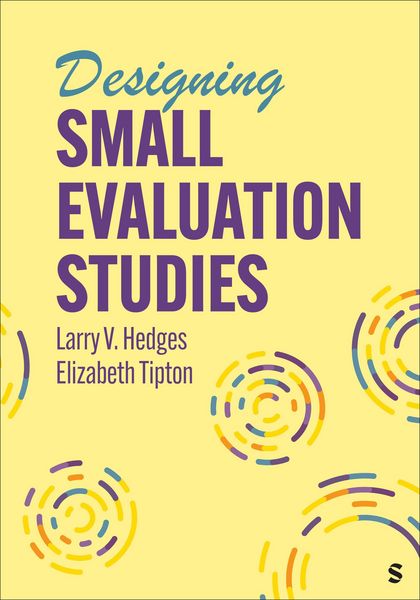
Produktbild: Designing Small Evaluation Studies
- 10%

Designing Small Evaluation Studies

10% sparen

76,99 € UVP 85,80 €

inkl. gesetzl. MwSt., Versandkostenfrei


Beschreibung

Produktdetails

Einband

Taschenbuch

Erscheinungsdatum

10.07.2025

Verlag

Sage Publications

Seitenzahl

352

Maße (L/B/H)

25,1/17,7/2 cm

Gewicht

666 g

Sprache

Englisch

ISBN

978-1-07-195415-7

Beschreibung

Rezension

The book will be an important addition to instruction in designs for causal inference in the field of education. It is long overdue.   Thomas J. Lipscomb

Produktdetails

Einband

Taschenbuch

Erscheinungsdatum

10.07.2025

Verlag

Sage Publications

Seitenzahl

352

Maße (L/B/H)

25,1/17,7/2 cm

Gewicht

666 g

Sprache

Englisch

ISBN

978-1-07-195415-7

EU-Ansprechpartner

Kolibri 360 GmbH
Ettore-Bugatti-Straße 6-14
51149 Köln
DE
produktsicherheit@kolibri360.de

Herstelleradresse

SAGE Publications
1 Oliver's Yard 55 City Road
EC1Y 1SP London
GB
orders@sagepub.co.uk

Noch keine Bewertungen vorhanden

Verfassen Sie die erste Bewertung zu diesem Artikel

Helfen Sie anderen Kundinnen und Kunden durch Ihre Meinung.

Kundinnen und Kunden meinen

Bewertungen (0)

  • Produktbild: Designing Small Evaluation Studies
  • Preface
    About the Author
    Chapter 1: Introduction
    A. What Is an Intervention?
    B. Examples
    Section I: Background Concepts
    Chapter 2: Introduction to Section I: Is a Small Efficacy Study Right for You?
    A. What Is the Logic of An Efficacy Study?
    B. How Can This Test Be Operationalized?
    C. What About Small Efficacy Studies?
    D. What Questions Can't a Small Efficacy Study Answer Well?
    E. What Are Other Options?
    F. Moving Forward
    Chapter 3: Research Design
    A. Logic of Inquiry
    B. Principles of Research Design
    C. Types of Quantitative Research Designs
    Questions to Test Your Knowledge
    Chapter 4: Validity of Research Designs
    A. Causal Inference
    B. Internal validity
    C. External Validity
    D. Statistical Conclusion Validity
    E. Construct Validity of Explanation
    F. Conclusion
    Questions to Test Your Knowledge
    Chapter 5: A Brief Review of Statistics
    A. Populations and Samples
    B. Random Sampling
    C. Models and Notations
    D. Estimators and Sampling Distributions
    E. Statistical Inference
    F. Design Sensitivity
    G. Design Complexities and Statistical Models
    H. Multiple Regression Analysis
    I. Multilevel Statistical Models
    J. Research Designs
    Questions to Test Your Knowledge
    Chapter 6: A Brief Review of Measurement
    A. What is Measurement?
    B. Measurement Theory
    C. Outcome Concept Domains
    D. Types of Measures
    E. Scoring of Measures
    F. Choosing an Outcome Measure
    Questions to Test Your Knowledge
    Chapter 7: Choosing an Appropriate Effect Size
    A. What is an Effect Size?
    B. Choosing an Effect Size Value
    C. Other Measurement and Statistical Considerations
    Questions to Test Your Knowledge
    Section II: Randomized Designs
    Chapter 8: Introduction to Section II: What is Randomization?
    A. Randomization
    B. Theoretical Objections to Random Assignment
    C. Small Efficacy Studies
    D. Overview of The Next Four Chapters
    Chapter 9: Individually Randomized Designs
    A. General Approach
    B. Statistical Model and Notation
    C. The Statistical Analysis of the Design
    D. Design Sensitivity
    E. Strategies to Increase Design Sensitivity
    F. Examples
    G. Conclusions
    Questions to Test Your Learning
    Appendix
    Chapter 10: Multisite Individually Randomized Designs
    A. General Approach
    B. Statistical Model and Notation
    C. Multisite Individually Randomized Designs With Fixed Site Effects
    D. Increasing Design Sensitivity
    E. Multisite Individually Randomized Designs with Random Site Effects
    F. Examples
    G. Conclusions
    Questions to Test Your Learning
    Appendix
    Chapter 11: Multisite Cluster Randomized Designs
    A. General Approach
    B. Statistical Model and Notation
    C. Multi-Site Cluster Randomized Design
    D. Increasing Design Sensitivity
    E. Examples
    F. Conclusions
    Appendix
    Chapter 12: Cluster Randomized Designs
    A. General Approach
    B. Statistical Model and Analysis
    C. Increasing Design Sensitivity
    D. Examples
    E. Conclusions
    Questions to Test Your Learning
    Appendix
    Section III: Quasi-Experimental Designs
    Chapter 13: Intro to Section III: What Is A 'Quasi' Experiment?
    A. Threats to Internal Validity in QEDs
    B. Why Pre-Post Designs are Not Adequate
    C. Statistical Analyses of QEDs
    D. QEDs for Small Efficacy Studies
    Chapter 14: Nonequivalent Control Group Designs
    A. General Approach
    B. Statistical Models and Analysis
    C. Selection Bias
    D. Confounders and Covariate Selection
    E. Matching Models
    F. Statistical Adjustment Methods
    G. Designing a NECD Study
    H. Examples
    I. Conclusions
    Questions to Test Your Learning
    Chapter 15: The Difference in Differences Design
    A. General Approach
    B. Comparisons of Individuals (No Nesting)
    C. Multiple Subgroups Within Each Treatment Group
    D. Design Sensitivity
    E. Strategies to Increase Design Sensitivity
    F. Examples
    G. Conclusions
    Questions to Test Your Learning
    Appendix
    Chapter 16: Interrupted Time Series Designs
    A. General Approach
    B. Model and Notation
    C. Estimation and Analysis of the Design
    D. Design Sensitivity
    E. Variants of This Design
    F. Conclusions
    Questions to Test Your Learning
    Appendix
    Section IV: Tools and Reporting
    Chapter 17: Introduction to Section IV: Tools and Considerations for Practice
    A. Principles of Small Efficacy Studies
    B. Randomized Designs
    C. Quasi-Experimental Designs
    D. Tools for Use in the Field
    Chapter 18: Choosing a Research Design
    A. Know Your Setting
    B. Is a Comparison Group Possible?
    C. Is Randomization Possible?
    D. Can an Adequately Matched Comparison Group Be Formed?
    E. Which Designs are Possible?
    F. What If None of These Designs Can Be Implemented?
    Questions to Test Your Learning
    Chapter 19: Worksheets for Comparing Designs
    A. Overview of Worksheet 1
    B. Overview of Worksheet 2
    Chapter 20: Best Practices for Reporting Small Efficacy Study Results
    A. Reporting Standards
    B. Special Considerations for Small Efficacy Studies
    List of Tables and Figures
    Glossary
    References
    Index