Gutscheinbedingungen

**Gültig nur für Bestellungen an die Wunsch-Poststation bis 10.06.2026 auf Spielzeug, Schreibwaren, Filme, Geschenke & Trends, Musik, tolino eReader & Zubehör, Hörbücher und Hörbuch-Downloads (außer Abo), nicht preisgebundene Bücher und Kalender online auf thalia.at und in der Thalia App. Einzelne Artikel können ausgeschlossen sein. Aufgrund der Buchpreisbindung sind deutschsprachige Bücher und eBooks ausgenommen. Zusätzlich ausgenommen sind preisgebundene Artikel, Abos & Flatrates, eBooks, Games, Geschenkkarten/-boxen, Shelfies, Software, Zeitschriften sowie einzelne Artikel von tonies®. Pro Einkauf einmal einlösbar. Kein Click & Collect möglich. Keine Barauszahlung. Nicht kombinierbar mit anderen Aktionen und Gutscheinen. Gutschein wird auf max. 500€ Bestellwert angerechnet. Nicht gültig für Versandkosten und Services.

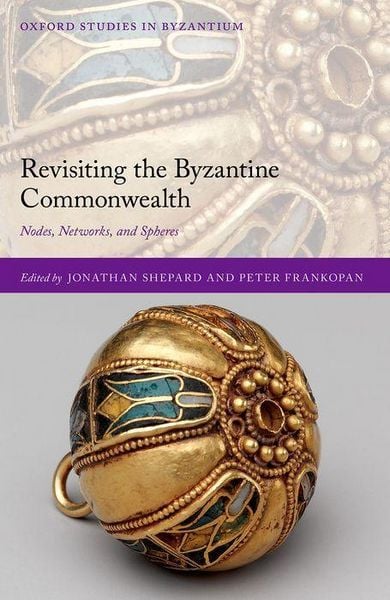
Produktbild: Revisiting the Byzantine Commonwealth

Revisiting the Byzantine Commonwealth Nodes, Networks, and Spheres

214,99 €

inkl. gesetzl. MwSt., Versandkostenfrei


Beschreibung

Produktdetails

Einband

Gebundene Ausgabe

Erscheinungsdatum

13.10.2025

Abbildungen

70 colour illustrations and 25 maps

Verlag

Oxford University Press

Seitenzahl

768

Maße (L/B/H)

24,1/15,9/4,3 cm

Gewicht

1422 g

Sprache

Englisch

ISBN

978-0-19-886409-7

Beschreibung

Produktdetails

Einband

Gebundene Ausgabe

Erscheinungsdatum

13.10.2025

Abbildungen

70 colour illustrations and 25 maps

Verlag

Oxford University Press

Seitenzahl

768

Maße (L/B/H)

24,1/15,9/4,3 cm

Gewicht

1422 g

Sprache

Englisch

ISBN

978-0-19-886409-7

Herstelleradresse

Libri GmbH
Europaallee 1
36244 Bad Hersfeld
DE

Email: gpsr@libri.de

Kundinnen und Kunden meinen

0 Bewertungen

Informationen zu Bewertungen

Zur Abgabe einer Bewertung ist eine Anmeldung im Konto notwendig. Die Authentizität der Bewertungen wird von uns nicht überprüft. Wir behalten uns vor, Bewertungstexte, die unseren Richtlinien widersprechen, entsprechend zu kürzen oder zu löschen.

Die Bewertungen sind nach Format, Anzahl Sterne und Datum sortiert.

Verfassen Sie die erste Bewertung zu diesem Artikel

Helfen Sie anderen Kund*innen durch Ihre Meinung

Kundinnen und Kunden meinen

0 Bewertungen filtern

  • Produktbild: Revisiting the Byzantine Commonwealth
    • 1: The Byzantine Phenomenon

    • Part I. WHO DO THEY THINK THEY ARE?

    • 2: Byzantine Globalism: The Power of Attraction

    • 3: Commonwealth, Empire, or Nation-State?

    • 4: What Did It Mean to Be 'Roman' in Byzantium?

    • 5: Commonwealth of Elect Nations: A Contradiction in Terms?

    • 6: Identity through Language in the Byzantine Commonwealth

    • 7: Keeping Up Appearances: Byzantine Perspectives of 'Legality' and the Italians

    • Part II. HOW DO THEY DO IT?

    • 8: Laying Down the Law in Byzantium: Law-Making and Adjudication

    • 9: Identity, Law, and Beards: Judicial Shaving in Byzantium, c.600-900

    • 10: A Taktikal Retreat?: Middle Byzantine Provincial Administration Revisited

    • 11: Byzantium's Empires of Gold

    • 12: The Patriarchate of Constantinople and Its Register: Documents, Agents, and Interconnectivity

    • 13: The Byzantine Visual Commonwealth

    • BORDERLINE CASES

    • 14: Attracting Elites from the Empire's Periphery

    • 15: Byzantine 'Zomia'?: Spaces of Refusal between Centre and Periphery, 500-1200

    • 16: 'As Though from India Itself': Stories of Byzantium

    • 17: Byzantino-Turkish Diplomacy and the Loss of Western Asia Minor, 1260-1335

    • 18: Agents of Commercial and Diplomatic Exchange: Amalfitans in Byzantium in the Tenth to Twelfth Centuries

    • 19: Imagining Byzantium in Norse Romance

    • The Latin West

    • 20: Frankish Commonwealth or Imperium Romanum?: The Empire in the West, 750-1500

    • 21: Parallel Spheres: Monasticism East and West c.1000-1500

    • 22: Alignment, Entanglement, and Antagonism: Byzantium and the West

    • 23: The Byzantinization of the Roman Church under Innocent II (1130-1143)

    • 24: Byzantium and the Crusades

    • PART V. THE ISLAMIC-CHRISTIAN EAST AND BEYOND

    • 25: Byzantium, Rum, and the bilad al-Islam

    • 26: Looking East: Early Christian Art beyond Christian Hegemony

    • 27: Melkite Translations of Byzantine Law-Books into Arabic

    • 28: Art and Eschatological Empire between the Islamic East, Byzantium, and Latin Christendom: Sultan Baybars I's Mausoleum in Damascus

    • 29: Romans, Egyptians, and the Second Arab Siege of Constantinople (717/18)

    • 30: The Byzantine Commonwealth: A View from the East

    • Part VIA. Obolensky's Commonwealth

    • 31: Reclaiming the Balkans: A Study in Byzantine Soft Power

    • 32: Bulgaria-Prime Candidate for Byzantine Commonwealth Membership?

    • 33: A Virtual Empire?: Byzantium and the Eastern Adriatic Coast

    • 34: Before Byzance après Byzance: The Making of Wallachia and the Byzantine Political Toolkit

    • 35: Languages of Art

    • 36: Finding the Frontiers of the Commonwealth

    • Part VIb. Obolensky's Commonwealth

    • 37: On Rus and the Commonwealth: Old Questions in the Light of Some New Studies

    • 38: Early Rus Political Culture versus Byzantine Law: Reconciling Two Contradictory Ideologies

    • 39: The Reluctant Empire

    • 40: Byzantine Literature in the Slav World: Serendipity or Intention?

    • 41: Non-elite Church Contacts between Byzantium and Rus in the Palaiologan Period

    • Part VII. Steppe Changes

    • 42: The Typology of the Nomad State in Western Eurasia

    • 43: From War to Peace in Medieval Steppe Empires

    • 44: Boundaries and Bonds: Khazaria and the Commonwealth

    • 45: Bargaining with Byzantium: The North Caucasian Kingdom of Alania and the Empire

    • 46: Triangles into Spheres: Trade, Faith, and the Palaiologan Balancing Act after 1261

    • 47: Epilogue