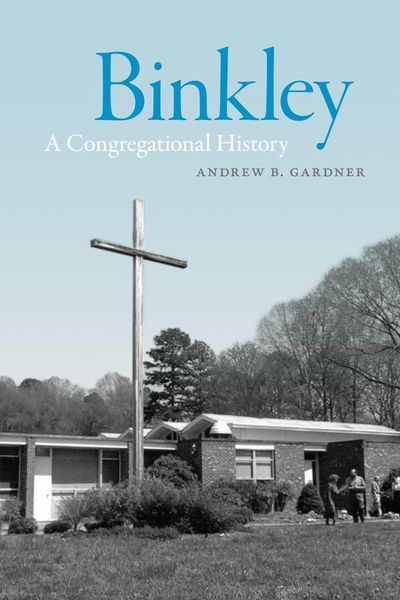
Binkley A Congregational History
28,30 €
inkl. gesetzl. MwSt.Beschreibung
Produktdetails
Format
Kopierschutz
Nein
Family Sharing
Nein
Text-to-Speech
Nein
Erscheinungsdatum
21.07.2023
Verlag
University Of Tennessee PressSeitenzahl
232 (Printausgabe)
Sprache
Englisch
EAN
9781621908043
What makes a Baptist church Baptist? Casual observers might be tempted to stereotype the churches of the American South, but scholar Andrew B. Gardner paints a portrait of one North Carolina congregation that defies easy categorization.
Established in 1958 in the college town of Chapel Hill, North Carolina, the Olin T. Binkley Memorial Baptist Church immediately sought to establish a welcoming religious community-focusing initially on bringing in both Black and White congregants and, as ideas about inclusivity developed, on accepting all people, regardless of identity. By naming itself for a theologically progressive preacher and professor, the fledgling church signaled a perspective unfamiliar to Baptists in the South, which gave the church a radical edge. The church's first pastor, Robert Seymour, also possessed a progressive vision that resonated with his congregants and pushed them to commit to justice and equality. Soon after its founding, the church strived to challenge inequality in segregated Chapel Hill. Although it remained predominantly White well into the twenty-first century, Binkley evolved to become increasingly aware of issues of gender equality, equity, LGBTQ inclusion, and climate justice. Addressing these issues was Binkley's way of building God's kingdom on earth as it is in heaven.
Binkley: A Congregational History tells the story of a single church with a complicated past, demonstrating that, while liberal in heritage, it operated with an unconsciously White, heteronormative worldview that slowly evolved into a distinct expression of faith. The author also draws on scholarship within the broader field of American religious history to position Binkley-with all its complexities, conflicts, and nuances-within the broader context of twentieth-century liberal Protestantism. Perhaps most importantly, Gardner tells the story of a place animated by a vision of Christianity that is often overlooked or drowned out by larger and louder Christian groups. He compellingly shows how this progressive vision of Christianity has shaped Binkley's commitment to its community and beyond.
Kundinnen und Kunden meinen
Verfassen Sie die erste Bewertung zu diesem Artikel
Helfen Sie anderen Kund*innen durch Ihre Meinung
Kurze Frage zu unserer Seite
Vielen Dank für Ihr Feedback
Wir nutzen Ihr Feedback, um unsere Produktseiten zu verbessern. Bitte haben Sie Verständnis, dass wir Ihnen keine Rückmeldung geben können. Falls Sie Kontakt mit uns aufnehmen möchten, können Sie sich aber gerne an unseren Kund*innenservice wenden.
zum Kundenservice