Gutscheinbedingungen

**Gültig bis 14.09.2026 auf Spielzeug, Schreibwaren, Filme, Geschenke & Trends, Musik, tolino eReader & Zubehör, Hörbücher, nicht preisgebundene Bücher und Kalender in der Thalia App. Einzelne Artikel können ausgeschlossen sein. Aufgrund der Buchpreisbindung sind deutschsprachige Bücher und eBooks ausgenommen. Zusätzlich ausgenommen sind Abos & Flatrates, Games, Geschenkkarten/-boxen, Shelfies, Software, Zeitschriften sowie einzelne Artikel von tonies®. Pro Einkauf einmal einlösbar. Nur gültig mit im Onlineshop hinterlegter Bonuscard. Click & Collect nur bei Onlinevorabzahlung möglich. Keine Barauszahlung. Nicht kombinierbar mit anderen Aktionen und Gutscheinen. Gutschein wird auf max. 500€ Bestellwert angerechnet. Nicht gültig für Versandkosten und Services.

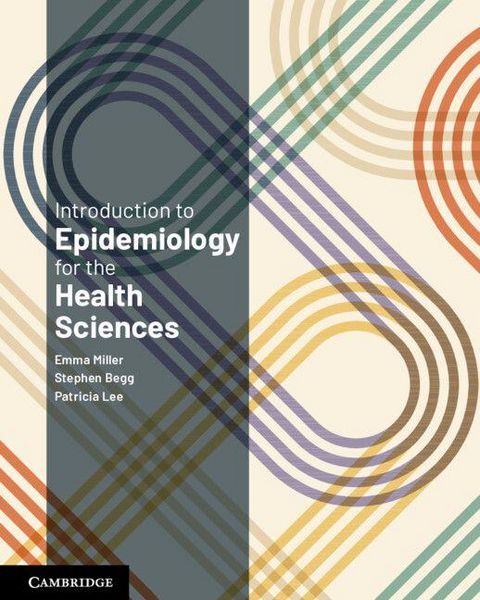
  • Produktbild: Introduction to Epidemiology for the Health Sciences
  • Produktbild: Introduction to Epidemiology for the Health Sciences

Introduction to Epidemiology for the Health Sciences

69,99 €

inkl. gesetzl. MwSt., Versandkostenfrei


Produktdetails

Einband

Taschenbuch

Erscheinungsdatum

25.03.2025

Verlag

Cambridge University Press

Seitenzahl

430

Maße (L/B/H)

25,4/20,3/2,4 cm

Gewicht

917 g

Sprache

Englisch

ISBN

978-1-00-952236-6

Produktdetails

Einband

Taschenbuch

Erscheinungsdatum

25.03.2025

Verlag

Cambridge University Press

Seitenzahl

430

Maße (L/B/H)

25,4/20,3/2,4 cm

Gewicht

917 g

Sprache

Englisch

ISBN

978-1-00-952236-6

Herstelleradresse

Libri GmbH
Europaallee 1
36244 Bad Hersfeld
DE

Email: gpsr@libri.de

Noch keine Bewertungen vorhanden

Verfassen Sie die erste Bewertung zu diesem Artikel

Helfen Sie anderen Kundinnen und Kunden durch Ihre Meinung.

Kundinnen und Kunden meinen

Bewertungen (0)

Die Leseprobe wird geladen.
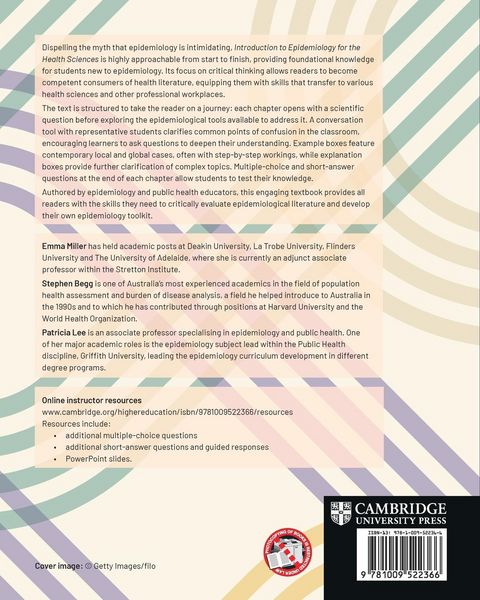
  • Produktbild: Introduction to Epidemiology for the Health Sciences
  • Produktbild: Introduction to Epidemiology for the Health Sciences
  • Part I. Thinking Like an Epidemiologist: 1. Thinking critically, problem solving and setting priorities in epidemiology; Part II. Analysing: How Big is the Health Issue?: 2. Talking like an epidemiologist; 3. Making comparisons; Part III. Reasoning: How to Investigate Causes of Death and Ill-health: 4. Opening the epidemiological toolbox; 5. Describing the problem; Part IV. Problem-solving: Why Do Some People Get a Disease, Become Ill, or Get Better?: 6. Measuring exposure and the outcome together; 7. Starting with the outcome; 8. Starting with exposure; 9. Controlling exposure; Part V. Evaluating: Is There a Relationship between Exposure and the Outcome?: 10. Detecting a relationship; Part VI. Decision-making: Could the Relationship be True?: 11. Considering the effect of bias and confounding; 12. Bringing it together.