• Produktbild: Insect Anatomy
  • Produktbild: Insect Anatomy
  • Produktbild: Insect Anatomy
  • Produktbild: Insect Anatomy
  • Produktbild: Insect Anatomy

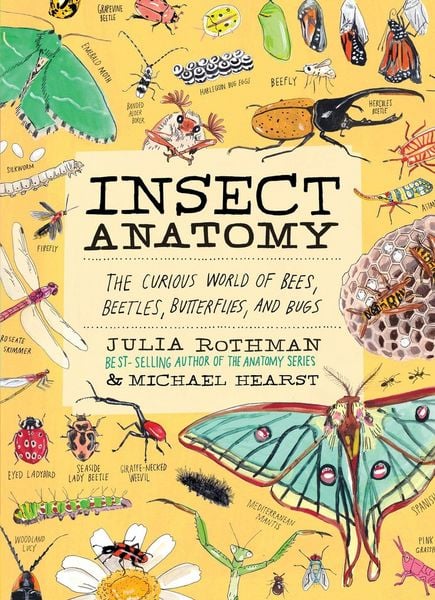
Insect Anatomy The Curious World of Bees, Beetles, Butterflies, and Bugs

14,89 €

inkl. gesetzl. MwSt., zzgl. Versandkosten


  • Kostenlose Lieferung ab 30 € Einkaufswert
  • Versandkostenfrei für Bonuscard-Kund*innen

Beschreibung

Produktdetails

Einband

Taschenbuch

Erscheinungsdatum

02.09.2025

Abbildungen

Full-colour illustrations throughout

Verlag

Workman Publishing

Seitenzahl

208

Maße (L/B/H)

22,8/16,3/2 cm

Gewicht

590 g

Sprache

Englisch

ISBN

978-1-63586-878-4

Beschreibung

Produktdetails

Einband

Taschenbuch

Erscheinungsdatum

02.09.2025

Abbildungen

Full-colour illustrations throughout

Verlag

Workman Publishing

Seitenzahl

208

Maße (L/B/H)

22,8/16,3/2 cm

Gewicht

590 g

Sprache

Englisch

ISBN

978-1-63586-878-4

Herstelleradresse

Libri GmbH
Europaallee 1
36244 Bad Hersfeld
DE

Email: gpsr@libri.de

Kundinnen und Kunden meinen

0 Bewertungen

Informationen zu Bewertungen

Zur Abgabe einer Bewertung ist eine Anmeldung im Konto notwendig. Die Authentizität der Bewertungen wird von uns nicht überprüft. Wir behalten uns vor, Bewertungstexte, die unseren Richtlinien widersprechen, entsprechend zu kürzen oder zu löschen.

Die Bewertungen sind nach Format, Anzahl Sterne und Datum sortiert.

Verfassen Sie die erste Bewertung zu diesem Artikel

Helfen Sie anderen Kund*innen durch Ihre Meinung

Kundinnen und Kunden meinen

0 Bewertungen filtern

Weitere Artikel finden Sie in

Die Leseprobe wird geladen.
  • Produktbild: Insect Anatomy
  • Produktbild: Insect Anatomy
  • Produktbild: Insect Anatomy
  • Produktbild: Insect Anatomy
  • Produktbild: Insect Anatomy
  • Outline for Insect Anatomy
     
    Chapter 1: Bugging Out
    What is an arthropod? / Page of statistics (include difference between insect/bug/others)
    Arthropod family tree / classification
    Timeline of Bugs / Escaping Extinction
    Parts of an Insect / Interior anatomy
    Kinds of Wings / flight patterns 
    Kinds of eyes
    How bugs hear
    Ways of eating (2 spreads)
    What bugs eat / eating toxins 
    Legs and walking 
    Sense of touch / antennae
    Actual sizes
    Where bugs live
    One acacia tree
    Colors
    About beetles
    Importance of bugs to ecosystem
    Sample ecosystem disrupted
    Climate change
     
    Chapter 2: Way of Life
    Simple growth / incomplete metamorphosis
    Bug eggs / shedding bugs
    Larvae vs adult
    Butterflies (3 spreads)
    Monarchs' journey
    Moth vs butterfly
    Moths (2 spreads)
    Silkworm 
     
    Chapter 3: Community Building 
    Anatomy of an ant / ant jobs
    Ant species / facts
    Leaf cutter ants
    Anatomy of a bee / kinds of bees
    Bee facts
    How a hive works
    Wasps
    Wasp nests
    Termites / termite mounds
    Decomposers
     
    Chapter 4: Buzzworthy Features
    Camouflage (2 spreads)
    Bugs with faces/eyespots
    Mimicking / playing dead
    Stingers
    Venom
    Armor
    Anatomy of a grasshopper / big jumpers
    Walking on water / extreme temperature adaptations
    Smells
     
    Chapter 5: Social Butterflies (communication)
    Body language and poses
    Noisy bugs
    Pheromones
    Fireflies
    Courtship dances / gift giving
    Mating
     
    Chapter 6: Superlatives
    Weirdest (2 spreads)
    Most colorful (2 spreads)
    Largest (2 spreads)
    Smallest / fastest
    Longest lived / cicadas
    Shortest lived
    Strongest / loudest
    Longest migration
     
    Chapter 7: Not Bugs Insects but Close
    Intro / parts of a spider
    Spider facts
    Spider webs
    Centipede and millepede
    Worms
    Slugs / snails
     
    Chapter 8: Humans and Bugs
    People Eat Bugs
    Indoor insect pests around the world
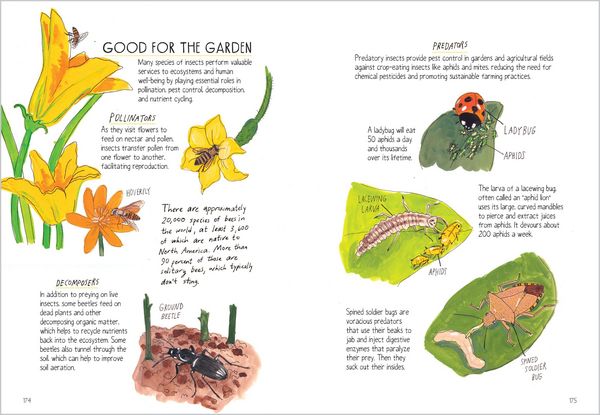
    Outdoor insect pests / garden beneficials (2 spreads)
    Making dye / candy coating
    Fruit fly research / maggots for wound healing
    Silkworm to your shirt 
    Bugs that Bite People 
    Critically endangered
    Insect fossils
    Scientists studying bugs (2 spreads)
    Ways to attract butterflies 
    Go on a bug hunt
    9 things you can do to help insects

    SAMPLE TEXT
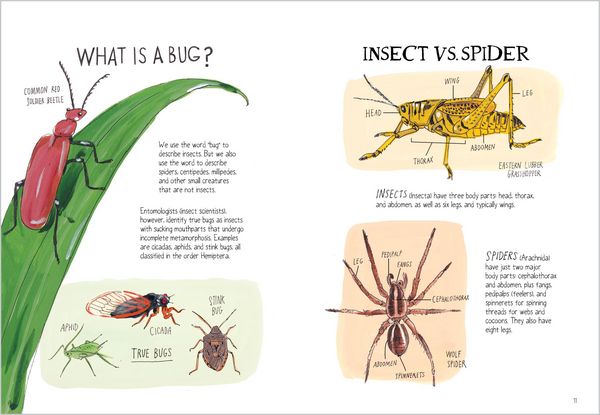
    An insect has three body parts (head, thorax, and abdomen), six legs, and typically wings.

    Spiders have just two body parts, plus fangs, as well as spinnerets for spinning threads for webs and cocoons. Also, they have 8 legs.

    A “true bug” is a small insect that has sucking mouthparts and forewings and undergoes incomplete metamorphosis.

    People Eating Bugs
    It’s been estimated that people ingest nearly two pounds of bugs every year without knowing it. On the other hand, many bugs are safe to eat and even provide lots of nutrients. In fact, Europe and North America are among the only places where bug-eating is not common practice.
    Some types of bugs that are regularly (and purposefully) consumed by humans around the world include ants, beetles, caterpillars, centipedes, cicadas, cockroaches, crickets, dragonflies, earthworms, grasshoppers, June bugs, locusts, mealworms, midge flies, pillbugs, scorpions, stink bugs, tarantulas, termites, walking sticks, and wasps.

    Lemon Ants - In China, boiled ants make a delicious soup. In the Amazon, people simply scrape the ants from a tree and crush them on their teeth.
    Grasshoppers (also known as Chapulines) are common fare in Oaxaca. They’re often eaten as snacks, or crushed and sprinkled on top of dishes to enhance the flavor.