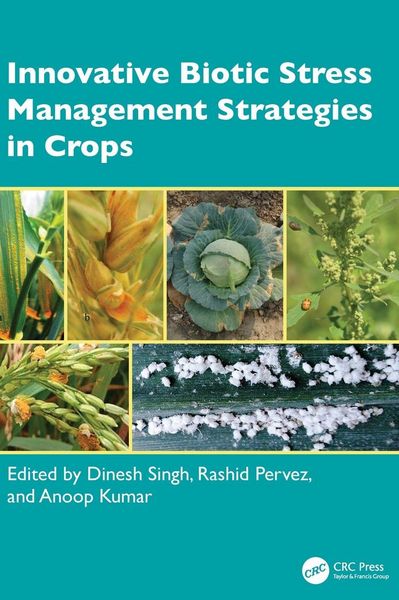
Innovative Biotic Stress Management Strategies in Crops
131,99 €
inkl. gesetzl. MwSt.,
Beschreibung
Produktdetails
Einband
Gebundene Ausgabe
Erscheinungsdatum
28.07.2025
Abbildungen
109 SW-Abb., 98 SW-Fotos, 11 SW-Zeichn., 42 Tabellen
Herausgeber
Singh Dinesh + weitereVerlag
Taylor & FrancisSeitenzahl
436
Maße (L/B/H)
26/18,3/2,8 cm
Gewicht
1010 g
Sprache
Englisch
ISBN
978-1-03-263154-7
Crops suffer from biotic and abiotic stress during their growing period. Biotic stress in crops is caused by living organisms, specifically viruses, bacteria, fungi, nematodes, insects, arachnids, phanerogamic plants, and weeds. They directly deprive their host of its nutrients leading to reduced plant vigor and, in extreme cases, death of the host plant causing up to 40% yield losses and significantly reducing the quality of the produce annually. This has led to increased concern over food safety and nutritional security in India as well as abroad. Climate change and human interventions have altered ecosystems, reducing biodiversity and creating new niches where pests and pathogens can thrive, and new pests and diseases of crops. The integrative strategies for the management of biotic stresses of crops include managing pests by enhancing the resistance of host plants. Biological, cultural, physical, and chemical methods are needed.
In this book, 29 chapters are included covering the general topic and specific crop-based strategies to manage the stresses caused by insect pests and diseases of different crops such as cereals, pulses, oilseeds, vegetables, fruits, cash crops, medicinal and aromatic plants, spices, and plantation crops by using different approaches with the latest information. At the end of each chapter, references are cited which may facilitate the reader to get more detailed information. The book also focuses more on diagnosis of biotic stresses and management by adding recent information, which has practical utility.
The purpose of this book is to provide recent information in the field of biotic stress management in crops to students, researchers, teachers, extension workers and farmers, and those who deal with crops that are vulnerable to biotic stress.
Noch keine Bewertungen vorhanden
Verfassen Sie die erste Bewertung zu diesem Artikel
Helfen Sie anderen Kundinnen und Kunden durch Ihre Meinung.
Kurze Frage zu unserer Seite
Vielen Dank für Ihr Feedback
Wir nutzen Ihr Feedback, um unsere Produktseiten zu verbessern. Bitte haben Sie Verständnis, dass wir Ihnen keine Rückmeldung geben können. Falls Sie Kontakt mit uns aufnehmen möchten, können Sie sich aber gerne an unseren Kund*innenservice wenden.
zum Kundenservice