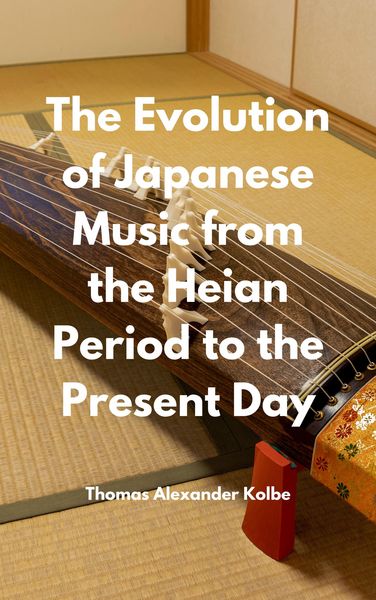
The Evolution of Japanese Music from the Heian Period to the Present Day
-
- Einzelkauf Download ausgewählt
-
Sprache:Englisch
1,49 €
inkl. gesetzl. MwSt.Beschreibung
Produktdetails
Format
ePUB
Kopierschutz
Nein
Family Sharing
Ja
Text-to-Speech
Ja
Erscheinungsdatum
09.01.2025
Verlag
Ah15 PublishingSeitenzahl
20 (Printausgabe)
Dateigröße
784 KB
Sprache
Englisch
EAN
9783689954727
The ebook "The Evolution of Japanese Music from the Heian Period to the Present Day" covers the rich history and transformation of Japanese music across multiple periods. It explores key eras such as the Heian, Muromachi, Edo, and modern periods, focusing on how historical, political, and cultural shifts shaped musical forms.
During the Heian period (794-1185), Gagaku (court music) and Bugaku (dance) dominated the scene, representing the pinnacle of classical Japanese music tied to the imperial court. Instruments like the biwa and koto became central to these traditions. As Japan entered the Muromachi period (1336-1573), new musical influences from Zen Buddhism emerged, particularly through the use of the shakuhachi, a bamboo flute used by monks for meditation. Popular and folk music such as *dengaku* and *sarugaku* also evolved, becoming the foundation for future theatrical traditions like Noh.
The Azuchi-Momoyama period (1573-1603) saw continued development in Noh theater and the rise of Kabuki, a dynamic theatrical form combining music, dance, and drama. The introduction of Western music through European contact during this time brought new instruments like the guitar and harpsichord to Japan, although traditional instruments such as the shamisen became key to the emerging Bunraku puppet theater.
By the Edo period (1603-1868), Japan's isolationist policies preserved and refined its musical traditions. Kabuki and Bunraku became major cultural forces, heavily integrating music into their performances. The shamisen played a central role in both forms. Gagaku and other courtly traditions persisted but gradually became more ceremonial.
In the modern era, Western influences grew stronger, leading to a blending of traditional and contemporary styles, from classical Japanese music to the introduction of genres like J-pop and Enka, while maintaining the distinctiveness of traditional Japanese sound.
This historical journey shows how Japanese music continuously adapted to external influences while preserving its ancient roots.
During the Heian period (794-1185), Gagaku (court music) and Bugaku (dance) dominated the scene, representing the pinnacle of classical Japanese music tied to the imperial court. Instruments like the biwa and koto became central to these traditions. As Japan entered the Muromachi period (1336-1573), new musical influences from Zen Buddhism emerged, particularly through the use of the shakuhachi, a bamboo flute used by monks for meditation. Popular and folk music such as *dengaku* and *sarugaku* also evolved, becoming the foundation for future theatrical traditions like Noh.
The Azuchi-Momoyama period (1573-1603) saw continued development in Noh theater and the rise of Kabuki, a dynamic theatrical form combining music, dance, and drama. The introduction of Western music through European contact during this time brought new instruments like the guitar and harpsichord to Japan, although traditional instruments such as the shamisen became key to the emerging Bunraku puppet theater.
By the Edo period (1603-1868), Japan's isolationist policies preserved and refined its musical traditions. Kabuki and Bunraku became major cultural forces, heavily integrating music into their performances. The shamisen played a central role in both forms. Gagaku and other courtly traditions persisted but gradually became more ceremonial.
In the modern era, Western influences grew stronger, leading to a blending of traditional and contemporary styles, from classical Japanese music to the introduction of genres like J-pop and Enka, while maintaining the distinctiveness of traditional Japanese sound.
This historical journey shows how Japanese music continuously adapted to external influences while preserving its ancient roots.
Kundinnen und Kunden meinen
Verfassen Sie die erste Bewertung zu diesem Artikel
Helfen Sie anderen Kund*innen durch Ihre Meinung
Kurze Frage zu unserer Seite
Vielen Dank für Ihr Feedback
Wir nutzen Ihr Feedback, um unsere Produktseiten zu verbessern. Bitte haben Sie Verständnis, dass wir Ihnen keine Rückmeldung geben können. Falls Sie Kontakt mit uns aufnehmen möchten, können Sie sich aber gerne an unseren Kund*innenservice wenden.
zum Kundenservice