KI-Beratung Beta

Gutscheinbedingungen

**Gültig bis 18.11.2026 auf englischsprachige Klassiker (klassiker-32728) online auf thalia.at und in der Thalia App. Einzelne Artikel können ausgeschlossen sein. Ausgenommen sind preisgebundene Artikel & eBooks. Pro Einkauf einmal einlösbar. Click & Collect nur bei Onlinevorabzahlung möglich. Keine Barauszahlung. Nicht kombinierbar mit anderen Aktionen und Gutscheinen. Gutschein wird auf max. 500€ Bestellwert angerechnet. Nicht gültig für Geschenkkarten, Versandkosten und Services.

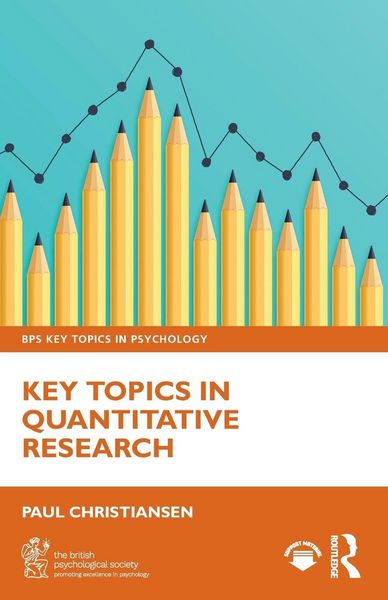
Produktbild: Key Topics in Quantitative Research

Key Topics in Quantitative Research

29,99 €

inkl. gesetzl. MwSt., zzgl. Versandkosten


  • Kostenlose Lieferung ab 30 € Einkaufswert
  • Versandkostenfrei für Bonuscard-Kund*innen

Beschreibung

This book gives an overview of the key topics in quantitative methods. Written by an academic who has specialised in quantitative methods in Psychology across a range of sub disciplines, it highlights how crucial understanding quantitative methods is to understanding research in psychology and beyond....

Beschreibung

This book gives an overview of the key topics in quantitative methods. Written by an academic who has specialised in quantitative methods in Psychology across a range of sub disciplines, it highlights how crucial understanding quantitative methods is to understanding research in psychology and beyond.

First, it briefly considers the history of quantitative methods in psychology citing some key figures in both psychology and statistics. Following this it will describe how we apply models of scientific investigation to psychology to generate reliable knowledge. It will then go on to consider key models we use in quantitative research, from experimental designs to quasi-experimental and correlational designs. Next it introduces sampling theory, and its role in understanding who our findings apply to. The final theoretical consideration is a concise description of null hypothesis significance testing and how we can use it to make inferences about psychological phenomena. In the next part of the book there will be a focus on some core methods. Starting with a discussion of we sample participants before exploring statistics in detail. Next, the book looks at how robust quantitative research can impact other fields and policy through improving ecological validity and reliability. Finally, the book gets to grips with key challenges in the future of quantitative research with a discussion of the replication crisis and solutions to it and then exploring how we can improve inclusivity.

This book is an essential text for all students of quantitative methodology.

Produktdetails

Einband

Taschenbuch

Erscheinungsdatum

15.09.2025

Abbildungen

43 SW-Abb., 43 SW-Zeichn., 53 Tabellen

Verlag Taylor & Francis

Produktdetails

Einband

Taschenbuch

Erscheinungsdatum

15.09.2025

Abbildungen

43 SW-Abb., 43 SW-Zeichn., 53 Tabellen

Verlag Taylor & Francis
Seitenzahl

230

Maße (L/B/H)

21,6/14/1,3 cm

Gewicht

296 g

Sprache

Englisch

ISBN

978-1-03-261238-6

EU-Ansprechpartner

Taylor & Francis Verlag GmbH
Kaufingerstraße 24
80331 München
DE
GPSR@taylorandfrancis.com

Herstelleradresse

Taylor & Francis Group
5 Howick Place
SW1P 1WG London
UK
GPSR@taylorandfrancis.com

Noch keine Bewertungen vorhanden

Verfassen Sie die erste Bewertung zu diesem Artikel

Helfen Sie anderen Kundinnen und Kunden durch Ihre Meinung.

Kundinnen und Kunden meinen

Bewertungen (0)

  • Produktbild: Key Topics in Quantitative Research
  • Section 1: Key Foundations

    1.1. Introduction
    1.2. Key Early Figures in Quantitative Methods
    1.3. Understanding Psychological Phenomena Through Numbers
    1.4. The Types of Numerical Data We Encounter and Their Properties

    Section 2: Key Theories: An Overview of the Key Theories and Models Relevant to the Topic
    2.1. Experimental Models
    2.2. Quasi Experimental Models
    2.3. Correlational Models
    2.4. Sampling Theory
    2.5. Null Hypothesis Significance Testing

    Section 3: Key Methodologies: Which Research Techniques Are Typically Used for Research on this Topic
    3.1. Sampling Methods
    3.2. Testing Associations
    3.3. Comparing Differences

    Section 4: Key Impacts on Research or Practice and Policy: What Wider Impact Has This Topic Had on the Field/Other Fields/Practice/Policy
    4.1. Robust Quantitative Methods and Ecological Validity of Studies
    4.2. Robust Quantitative Methods and Reliability of Studies

    Section 5: Key Emerging Areas: Where Is the Research Headed
    5.1. Reproducibility Crisis
    5.2. Increasing Reproducibility
    5.3. Inclusivity in Research