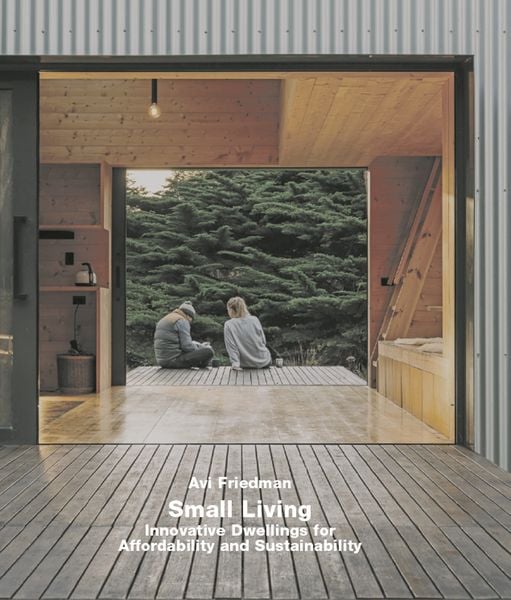
Small Living. Innovative Dwellings for Affordability and Sustainability Innovative Dwellings for Affordability and Sustainability
-
- Englisch ausgewählt
71,00 €
inkl. gesetzl. MwSt.,
Beschreibung
Produktdetails
Verkaufsrang
26179
Einband
Gebundene Ausgabe
Erscheinungsdatum
01.02.2025
Abbildungen
mit 230 Abbildungen
Verlag
Edition Axel MengesSeitenzahl
180
Maße (L/B/H)
28,9/24/1,8 cm
Gewicht
1143 g
Auflage
1
Sprache
Englisch
ISBN
978-3-86905-043-0
In recent decades demographic shifts have significantly
influenced young peoples’ residential preference.
Due to the rise of single-person households,
smaller family sizes, and the desire for lower maintenance
and utility costs, many young individuals
are choosing to live in smaller, efficient spaces in
proximity to work and urban amenities. These
changes have led to an increase demand for multi-
functional, space-efficient designs.
As people’s daily routines and expectations
evolve, the design of living spaces must adapt accordingly.
The need for multifunctional rooms has
become apparent; a living room that seamlessly
transitions into a home office represents just one
of the many adaptations that modern dwellers require.
Architects, interior designers, and homebuilders
are responding with innovative solutions
like convertible furniture, built-in storage, and
open-plan layouts that facilitate a compact but
comfortable living environment.
An often-discussed notion in design and construction
is sustainability. Its origin and widespread
use of the term sustainable development can be
attributed to events and circumstances that occurred
several decades ago. The 1992 United Nations
Conference on the Human Environment in
Stockholm addressed concerns regarding humanity’s
potential overuse of the earth’s »carrying capacity«.
As people’s awareness of protecting our living
environment increases, the choice of smaller
homes is becoming a more common and environmentally
responsible decision. This shift is driven
by the need to reduce resource consumption, as
smaller homes require fewer materials for construction,
maintenance, and repairs. Moreover, smaller
homes are inherently more energy-efficient due to
their reduced space, which requires less energy for
heating and cooling. Additionally, the smaller footprint
means using less land per dwelling unit.
influenced young peoples’ residential preference.
Due to the rise of single-person households,
smaller family sizes, and the desire for lower maintenance
and utility costs, many young individuals
are choosing to live in smaller, efficient spaces in
proximity to work and urban amenities. These
changes have led to an increase demand for multi-
functional, space-efficient designs.
As people’s daily routines and expectations
evolve, the design of living spaces must adapt accordingly.
The need for multifunctional rooms has
become apparent; a living room that seamlessly
transitions into a home office represents just one
of the many adaptations that modern dwellers require.
Architects, interior designers, and homebuilders
are responding with innovative solutions
like convertible furniture, built-in storage, and
open-plan layouts that facilitate a compact but
comfortable living environment.
An often-discussed notion in design and construction
is sustainability. Its origin and widespread
use of the term sustainable development can be
attributed to events and circumstances that occurred
several decades ago. The 1992 United Nations
Conference on the Human Environment in
Stockholm addressed concerns regarding humanity’s
potential overuse of the earth’s »carrying capacity«.
As people’s awareness of protecting our living
environment increases, the choice of smaller
homes is becoming a more common and environmentally
responsible decision. This shift is driven
by the need to reduce resource consumption, as
smaller homes require fewer materials for construction,
maintenance, and repairs. Moreover, smaller
homes are inherently more energy-efficient due to
their reduced space, which requires less energy for
heating and cooling. Additionally, the smaller footprint
means using less land per dwelling unit.
Kundinnen und Kunden meinen
Verfassen Sie die erste Bewertung zu diesem Artikel
Helfen Sie anderen Kund*innen durch Ihre Meinung
Kurze Frage zu unserer Seite
Vielen Dank für Ihr Feedback
Wir nutzen Ihr Feedback, um unsere Produktseiten zu verbessern. Bitte haben Sie Verständnis, dass wir Ihnen keine Rückmeldung geben können. Falls Sie Kontakt mit uns aufnehmen möchten, können Sie sich aber gerne an unseren Kund*innenservice wenden.
zum Kundenservice