KI-Beratung Beta

Gutscheinbedingungen

**Gültig bis 18.11.2026 auf englischsprachige Klassiker (klassiker-32728) online auf thalia.at und in der Thalia App. Einzelne Artikel können ausgeschlossen sein. Ausgenommen sind preisgebundene Artikel & eBooks. Pro Einkauf einmal einlösbar. Click & Collect nur bei Onlinevorabzahlung möglich. Keine Barauszahlung. Nicht kombinierbar mit anderen Aktionen und Gutscheinen. Gutschein wird auf max. 500€ Bestellwert angerechnet. Nicht gültig für Geschenkkarten, Versandkosten und Services.

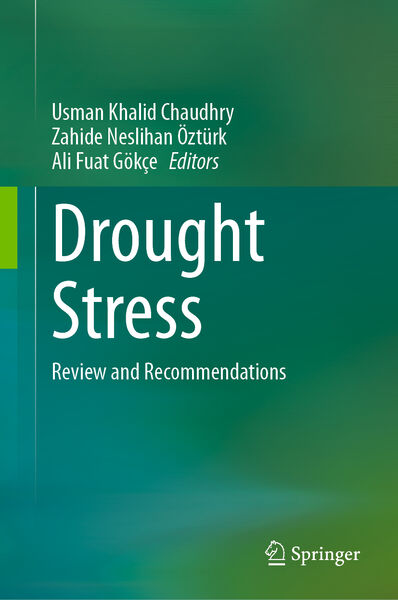
Produktbild: Drought Stress
- 20%

Drought Stress Review and Recommendations

20% sparen

192,99 € UVP 241,99 €

inkl. gesetzl. MwSt., Versandkostenfrei


Beschreibung

This book offers a thorough examination of how drought stress impacts various facets of a plant's physiology, ecology, and agricultural systems. It delves into the challenges posed by drought stress, a critical issue exacerbated by climate change and its impact on water availability. By employing a multidisciplinary...

Beschreibung

This book offers a thorough examination of how drought stress impacts various facets of a plant's physiology, ecology, and agricultural systems. It delves into the challenges posed by drought stress, a critical issue exacerbated by climate change and its impact on water availability. By employing a multidisciplinary methodology, the book endeavours to furnish a thorough comprehension of the intricate interplay between plants and their surroundings when faced with water scarcity. It proves to be an invaluable asset for scholars, students, policymakers, and experts who are keen on comprehending the intricate array of issues that drought stress poses. Moreover, it serves as a repository of effective strategies to tackle the consequences of drought stress in a world undergoing transformation. The book's multidisciplinary orientation guarantees a comprehensive exploration of the subject, encompassing the physiological, agricultural, and molecular reactions of plants.

Portrait


Dr. Usman Khalid Chaudhry
is a Plant Molecular Stress Physiologist with over a decade of research and teaching experience in Agriculture. He holds a Ph.D. in Agricultural Genetic Engineering from Niğde Ömer Halisdemir University and has a rich publication history, particularly in areas concerning climate change and the adaptive responses of various crops to abiotic stresses. Currently, he also serves as the Deputy Director (Technical) at the Pakistan Environmental Protection Agency, Ministry of Climate Change & Environmental Coordination, Islamabad. Dr. Chaudhry is deeply committed to identifying practical solutions for global climate-related challenges, and he contributes his wealth of expertise to this book in his role as an editor.


Prof. Dr. Zahide Neslihan Öztürk 
is a Plant Molecular Biologist. She completed her doctoral studies at Ruprecht-Karls-Universitaet Heidelberg, demonstrating her dedication to academic excellence. Dr. Öztürk has a vast and impressive track record in the fields of transcriptomics and functional molecular biology of plants, where her research has contributed significantly to plant genetics. Additionally, her proficiency in bioinformatics enhances her capacity to analyze complex biological data. She also successfully secured and executed numerous projects focused on the screening of vegetables for abiotic stress tolerance, particularly in anticipation of the looming challenges posed by drought conditions. With a rich history of teaching experience, Dr. Öztürk's role as a co-editor for this book enhances the understanding of crop resilience in the face of environmental stresses.


Dr. Ali Fuat Gökçe
 is a distinguished Plant Breeder and Geneticist, holding a Ph.D. from the esteemed University of Wisconsin. As a co-editor of this book, Dr. Gökçe contributes his extensive expertise in plant breeding, with a focus on developing vegetable crops resilient to abiotic stresses. His recent accomplishments include securing and executing multiple high-impact projects on stress tolerance screening. Furthermore, his impressive portfolio of peer-reviewed publications has significantly advanced our understanding of crop resilience under environmental stress.

Produktdetails

Einband

Gebundene Ausgabe

Erscheinungsdatum

29.01.2025

Abbildungen

VII, 494 p. 50 illus., 48 illus. in color.

Herausgeber Usman Khalid Chaudhry + weitere

Produktdetails

Einband

Gebundene Ausgabe

Erscheinungsdatum

29.01.2025

Abbildungen

VII, 494 p. 50 illus., 48 illus. in color.

Herausgeber
Verlag Springer
Seitenzahl

494

Maße (L/B/H)

24,1/16/3,3 cm

Gewicht

864 g

Sprache

Englisch

ISBN

978-3-031-80609-4

Herstelleradresse

Springer-Verlag KG
Sachsenplatz 4-6
1201 Wien
AT

Email: ProductSafety@springernature.com

Noch keine Bewertungen vorhanden

Verfassen Sie die erste Bewertung zu diesem Artikel

Helfen Sie anderen Kundinnen und Kunden durch Ihre Meinung.

Kundinnen und Kunden meinen

Bewertungen (0)

  • Produktbild: Drought Stress

  • Chapter 1. Reframing plant stress tolerance in the era of climate change.- Chapter 2. The impact of climate change on drought occurrence.- Chapter 3. Drought stress responses in plants and biotechnological interventions for its mitigation.- Chapter 4. The impact of drought stress on vegetables.- Chapter 5. The impact of drought stress on the nutritional quality of vegetables.- Chapter 6. The impact of drought stress on plant disease dynamics.- Chapter 7. The impact of drought stress on nutrient and heavy metal uptake by vegetables.- Chapter 8. The influence of drought stress on tomatoes: A brief understanding.- Chapter 9. An overview of the impact of drought stress on potatoes in the era of climate change.- Chapter 10. microRNA-mediated regulation of drought stress responses in potatoes: Implications for climate resilience.- Chapter 11. Drought stress and the role of nac transcription factors in drought response.- Chapter 12. Drought-responsive miRNAs in vegetables.- Chapter 13. CRISPR/CAS-mediated genetic improvements in vegetable crops.- Chapter 14. QTL mapping for drought tolerance in vegetables.- Chapter 15. Radiation-induced mutation for drought tolerance in vegetables.- Chapter 16. An overview of doubled haploid plant production to improve drought tolerance.- Chapter 17. A hydroponic approach to overcome the drought stress problem for vegetable production.- Chapter 18. An alternative tool against drought stress: Nanotechnology.- Chapter 19. A novel potential resource for drought tolerance: Antarctic plants.