• Produktbild: Rethinking Psychology
  • Produktbild: Rethinking Psychology

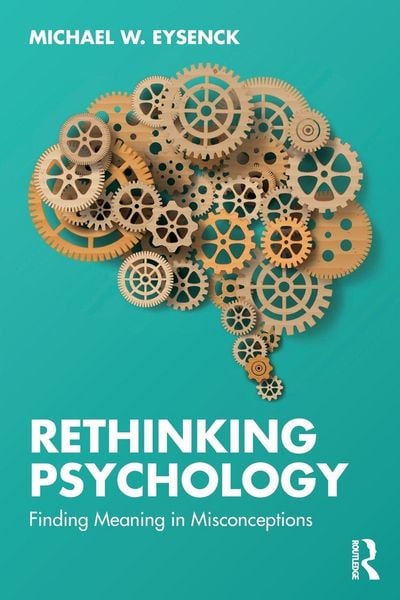
Rethinking Psychology Finding Meaning in Misconceptions

24,99 €

inkl. gesetzl. MwSt., zzgl. Versandkosten


  • Kostenlose Lieferung ab 30 € Einkaufswert
  • Versandkostenfrei für Bonuscard-Kund*innen

Beschreibung

Produktdetails

Einband

Taschenbuch

Erscheinungsdatum

07.05.2025

Verlag

Taylor & Francis

Seitenzahl

388

Maße (L/B/H)

23,4/15,6/2,1 cm

Gewicht

640 g

Sprache

Englisch

ISBN

978-1-03-297818-5

Beschreibung

Produktdetails

Einband

Taschenbuch

Erscheinungsdatum

07.05.2025

Verlag

Taylor & Francis

Seitenzahl

388

Maße (L/B/H)

23,4/15,6/2,1 cm

Gewicht

640 g

Sprache

Englisch

ISBN

978-1-03-297818-5

EU-Ansprechpartner

Taylor & Francis Verlag GmbH
Kaufingerstraße 24
80331 München
DE
GPSR@taylorandfrancis.com

Herstelleradresse

Taylor & Francis Group
5 Howick Place
SW1P 1WG London
UK
GPSR@taylorandfrancis.com

Noch keine Bewertungen vorhanden

Verfassen Sie die erste Bewertung zu diesem Artikel

Helfen Sie anderen Kundinnen und Kunden durch Ihre Meinung.

Kundinnen und Kunden meinen

Bewertungen (0)

Die Leseprobe wird geladen.
  • Produktbild: Rethinking Psychology
  • Produktbild: Rethinking Psychology
  • Preface

    Chapter 1: Is psychology a science?

    "Psychology is an inferior kind of science"

    Reproducibility and the 'replication crisis'

    Highly controlled experimental conditions

    Clearly defined terminology

     Predictability and testability: the 'theory crisis'

    What should psychologists do?

    Psychology is a different kind of science

     Myths in psychology


    Chapter 2: Visual perception

    Myth: subliminal messages can motivate people's behaviour without their awareness

    Myth: we generally detect changes in objects

    Myth: visual perception provides us with very rich and accurate information about the environment at a glance

    Myth: everyone agrees on the colour of a dress (or #theDress)

    Myth: most people are 'face experts'

    Why do we believe so many myths about visual perception?

    Chapter 3: Mysteries of memory

    Myth: "Memory is like a video camera"

    Myth: memories do not change over time: they are permanent

    Myth: repression and 'return of the repressed' are very common

    Myth: amnesic patients have forgotten their pasts

    Myth: the only function of (episodic) memory is to provide access to our past experiences

    Myth: forgetting is a bad thing

    Chapter 4: Thinking and cognition

    Myth: 10,000 hours of practice produce outstanding performance

    Myth: brain training improves your brain functioning and intelligence

    Myth: we only use 10% of our brains

    Myth: Artificial Intelligence (AI) will soon be much more intelligent than humans

    Myth: nudges are very effective at changing people's behaviour

    Chapter 5: Intelligence

    Myth: there are multiple intelligences in the human mind

    Myth: it is important to match teaching methods to learning styles

    Myth: emotional intelligence is helpful in life

    Myth: IQ scores only measure how good someone is at taking intelligence tests

    Myth: intelligence does not depend on genetic factors

    Chapter 6: Personality

    Myth: high self-esteem is highly desirable (and low self-esteem very undesirable)

    Myth: situational factors overwhelm personality when predicting behaviour

    Myth: personality measures do not predict consequential outcomes (like health, wealth and divorce) well enough to be useful

    Myth: parenting practices are a major source of personality differences

    Myth: men are from Mars, women are from Venus (men and women have dramatically different personalities)

    Chapter 7: Social psychology

    Myth: Milgram proved that most people will obey immoral orders

    Myth: crowds typically panic in threatening situations

    Myth: Zimbardo proved that the power structure in prisons makes guards aggressive and violent

    Myth: individual differences in attitudes are mostly learned

    Myth: happiness is influenced most strongly by what happens to us

    Chapter 8: Mental disorders and their treatment

    Myth: mental illnesses are due almost entirely to people's life experiences

    Myth: psychiatric diagnoses or labels stigmatise people

    Myth: The Rorschach Inkblot test is a very useful way of diagnosing most mental illnesses

    Myth: people with multiple personality disorder (dissociative identity disorder) have more than one distinct personality

    Myth: most psychotherapy requires lying on a couch and recalling one's childhood

    Myth: antidepressants are much more effective than psychotherapy for treating depression

    Chapter 9: Psychology and the law

    Myth: an eyewitness's confidence is never a good predictor of their identification accuracy

    Myth: experts can nearly always identify the culprit from fingerprinting evidence

    Myth: DNA tests are almost infallible for identifying culprits

    Myth: the polygraph test is very good at detecting lying

    Myth: hypnosis enhances eyewitnesses' memory

    Myth: Offender profiling is (very) useful in identifying culprits

    Chapter 10: How to become a mythbuster

    Why do people subscribe to myths?

    Distorted research: biased experimental design, reporting and interpretations of findings

    Biased textbook coverage

    Members of the public: confirmation bias or wishful thinking

    Members of the public: deficient thinking about intrinsically improbable beliefs

    Members of the public: mistaken extrapolation from limited personal experience

    Members of the public: plausible beliefs based on general knowledge (kernel of truth)

    Conclusions

    Chapter 11: Brave new world

    Experiments: the gold standard?

    Developing new methods

    Experimenter bias

    The jingle-jangle fallacies

    Granularity problem

    Scientific analysis: meta-analysis

    Scientific reporting

    Psychology as a cumulative science

    Conclusions

    References