Gutscheinbedingungen

**Gültig bis 06.07.2026 auf fremdsprachige Bücher online auf thalia.at, in der Thalia App ab einem Mindestbestellwert von 30€ und in allen Thalia Buchhandlungen in Österreich. In den Buchhandlungen nur gültig auf lagernde Ware. Einzelne Artikel können ausgeschlossen sein. Ausgenommen sind preisgebundene Artikel & eBooks. Pro Einkauf einmal einlösbar. Nur gültig gegen Vorlage oder im Onlineshop hinterlegter Bonuscard. Infos zur Einlösung in der Buchhandlung sind auf der Bonuscard-Vorteilspreisseite zu finden. Click & Collect nur bei Onlinevorabzahlung möglich. Keine Einlösung bei Scan & Go-Bezahlung. Keine Barauszahlung. Nicht kombinierbar mit anderen Aktionen und Gutscheinen. Gutschein wird auf max. 500€ Bestellwert angerechnet. Nicht gültig für Versandkosten und Services.

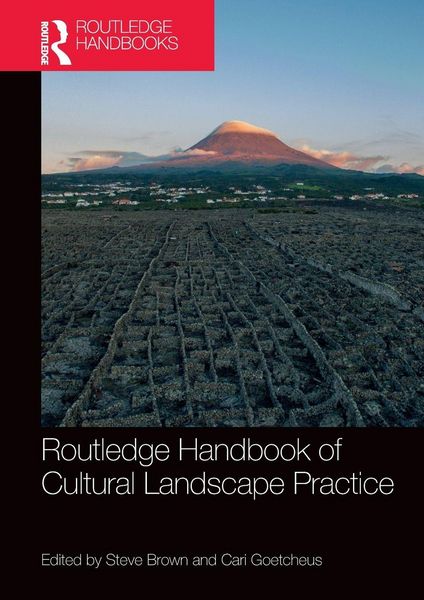
Produktbild: Routledge Handbook of Cultural Landscape Practice

Routledge Handbook of Cultural Landscape Practice

54,99 €

inkl. gesetzl. MwSt., Versandkostenfrei


Beschreibung

Produktdetails

Einband

Taschenbuch

Erscheinungsdatum

19.12.2024

Abbildungen

schwarz-weiss Illustrationen, Raster, schwarz-weiss, Zeichnungen, schwarz-weiss, Tabellen, schwarz-weiss

Herausgeber

Steve Brown + weitere

Verlag

Taylor & Francis

Seitenzahl

544

Maße (L/B/H)

24,6/17,4/2,9 cm

Gewicht

1010 g

Sprache

Englisch

ISBN

978-1-03-241514-7

Beschreibung

Rezension

"Cultural landscapes are complex systems that have received much attention - both as heritage places and as the basis for the daily life of communities. However, understanding and managing their complexity, including space-time relations, remains a challenge. This outstanding publication provides an incredible resource that includes both theoretical and practical aspects explored from global, regional, and local perspectives. Theory, practice, a protection and management cycle, and case studies are presented by leading experts and practitioners in the field of cultural landscapes. Who can ask for more? The thematic sections offer a rich diversity of approaches and illustrate methods and instruments that contribute to the understanding and application of the subject. This book is an essential resource for those working to respond to global challenges such as sustainability, climate change, and human rights, as well as 'bridging the divide' between natural and cultural heritage. The book contributes to 'learning-by-doing' and people-centred approaches to understanding, caring for, and safeguarding those many special heritage landscapes loved by different communities and cultural groups."

Mónica Luengo Añón, ATP Arquitectura · Territorio · Paisaje, Madrid

"With the Routledge Handbook of Cultural Landscape Practice, Steve Brown and Cari Goetcheus provide scholars and practitioners an excellent tool with fundamental knowledge and methodological guidance based on collective reflection on theory, policy, and practice. Drawing on a rich diversity of case studies and contributions by renowned members of the international cultural landscapes community, this book synthesises almost thirty years of evolution in the application of this groundbreaking concept in the heritage field since its inclusion as a World Heritage category."

Maya Ishizawa, Heritage Researcher and Consultant, Germany

"The literature in the conservation field around cultural landscapes has been accelerating over the last decade, as have the jurisdictions adopting the concept for application. As a result, sites now being named 'cultural landscapes', from the local to the global, have proliferated. The arrival of this Routledge Handbook of Cultural Landscape Practice is thus timely. It will fast become an invaluable resource for educators, practitioners, site managers, or citizens. The handbook, like cultural landscapes, approaches the subject with a multiplicity of voices and demonstrates the evolution of the concept over time. It also demonstrates why it has persisted despite its ambiguities and challenges in application. The essays come from experts from around the world and range from the applied to the theoretical. In doing so, this compilation covers an impressive spectrum of understanding, approaches and practice. As such this Routledge Handbook will become a classic in the conservation field."

Nancy Pollock-Ellwand, PhD, FCSLA, Dean and Professor, College of Architecture, Planning and Landscape Architecture, University of Arizona

Produktdetails

Einband

Taschenbuch

Erscheinungsdatum

19.12.2024

Abbildungen

schwarz-weiss Illustrationen, Raster, schwarz-weiss, Zeichnungen, schwarz-weiss, Tabellen, schwarz-weiss

Herausgeber

Verlag

Taylor & Francis

Seitenzahl

544

Maße (L/B/H)

24,6/17,4/2,9 cm

Gewicht

1010 g

Sprache

Englisch

ISBN

978-1-03-241514-7

EU-Ansprechpartner

Taylor & Francis Verlag GmbH
Kaufingerstraße 24
80331 München
DE
GPSR@taylorandfrancis.com

Herstelleradresse

Taylor & Francis Group
5 Howick Place
SW1P 1WG London
UK
GPSR@taylorandfrancis.com

Noch keine Bewertungen vorhanden

Verfassen Sie die erste Bewertung zu diesem Artikel

Helfen Sie anderen Kundinnen und Kunden durch Ihre Meinung.

Kundinnen und Kunden meinen

Bewertungen (0)

Die Leseprobe wird geladen.
  • Produktbild: Routledge Handbook of Cultural Landscape Practice
  • Introduction  PART 1 CONCEPTS AND ORIGINS  1.1 From sites as materials to landscape as process  1.2 From preservation to change management and transformation  1.3 From culture and nature as separate to interconnected naturecultures  1.4 From difficult dualisms to entangled complexity  PART 2 DOCTRINE AND REGIONAL APPROACHES  2.1 Global doctrines and regional approaches  2.2 The polar regions  2.3 Russian cultural landscape policy and practice  2.4 A Southern African cultural landscape approach: The Stellenbosch heritage inventory  2.5 The legal and legislative framework of the cultural landscapes of North Africa and Southwest Asia  2.6 A critique on policies related to cultural landscapes in India  2.7 Cultural Landscapes in northeast Asia  2.8 Central Asian cultural landscapes: Practices and policies  2.9 Cultural Landscapes in southeast Asia  2.10 Australian cultural landscape approaches  2.11 Europe - and its landscape convention  2.12 Cultural landscapes in Latin America and the Caribbean  2.13 Cultural landscape policy and practice in Canada  2.14 United States of American cultural landscape policy and practice  PART 3 FRAMING CULTURAL LANDSCAPE PRACTICE  3.1 Cultural landscapes: Toward an integrated management framework  3.2 Identifying cultural landscapes: The Indigenous cultural landscape of Taputapuatea and the historic goldmining landscape of central Victoria  3.3 Documenting cultural landscapes  3.4 Assessing the heritage significance of landscapes - some reflections from Australia  3.5 Social value: Identifying, documenting, assessing community connections  3.6 A legal framework for cultural landscape protection utilising the United States as an example  3.7 Stewardship of cultural landscapes: Management and governance 3.8 Presenting cultural landscapes: Getting to the truth of ourselves?  PART 4 CASE STUDIES  4.1 Case studies: Learning-by-doing  4.2 Cultural landscapes in outer space  4.3 Cultural heritage, cultural landscape: Protecting the SOUL of Aotearoa, New Zealand  4.4 Mangyol Village, Yap: A Micronesian social landscape  4.5 Culture, contingency and queerness in a reclaimed landscape  4.6 Pastoral cultural landscapes, working the country for stock grazing: An Australian case study 4.7 Aquaculture: Budj Bim Cultural Landscape, Australia 4.8 Joseon literati's garden as a nature-friendly and place-oriented cultural landscape of Korea 4.9 Community participation in heritage conservation: Longan cultural landscape, Taiwan 4.10 West Lake Cultural Landscape of Hangzhou: 'Oriental lake with cultural meanings' 4.11 'The First Celestial Mountain in the World': Wudang Mountains Scenic and Historic Interest Area, China  4.12 Conceptualising spiritscapes: The Petroglyphic Complexes of the Mongolian Altai World Heritage site and the wider biocultural landscape  4.13 A landscape approach to reviving traditional water systems in a historic town in India  4.14 Constructed emptiness: The Namib Desert as terra nullius 1786-2018 4.15 Urban landscape as ecosystem: Berlin  4.16 The Burren, Ireland: Land of paradox  4.17 The Pico and Santa Maria vineyards: 'heroic viticulture' in The Azores  4.18 Registers of transience: Heritage and urban change 4.19 Chinampa: A Mesoamerican-prehispanic cultivation system of Xochimilco, Mexico  PART 5 CHALLENGES, OPPORTUNITIES, AND FUTURE DIRECTIONS  5.1 Visualising heritage landscapes in future: aesthetics, embodiment, and meaning  5.2 Cultural landscapes: Tackling the challenges of climate change  5.3 Digital technologies in heritage practice  5.4 Sustainability, landscape, and heritage futures  5.5 Challenges, opportunities, and future directions: Conflict and resolution  5.6 Changing economies, changing politics: A perspective from the United Kingdom