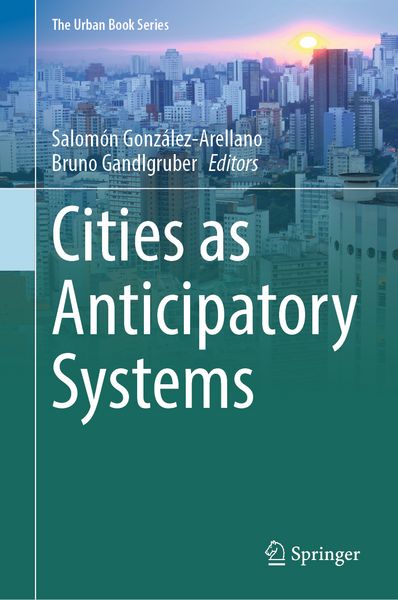
Cities as Anticipatory Systems
-
- Hardcover ausgewählt
- Taschenbuch
- eBook
-
Sprache:Englisch
144,99 €
UVP
175,99 €
inkl. gesetzl. MwSt.,
Beschreibung
Produktdetails
Einband
Gebundene Ausgabe
Erscheinungsdatum
18.02.2025
Abbildungen
X, 257 p. 22 illus., 17 illus. in color.
Herausgeber
Salomón González-Arellano + weitereVerlag
SpringerSeitenzahl
257
Maße (L/B/H)
24,1/16/2 cm
Gewicht
617 g
Sprache
Englisch
ISBN
978-3-031-78161-2
The theory of anticipation suggests that systems, both biological and social, can adapt and update based on predictive models. Cities, which can be seen as complex systems that are associated with innovation, are undergoing changes in response to current socio-ecological transitions. Therefore, cities can be viewed as anticipatory systems that may signal future transformations that arise in response to the challenges posed by these ongoing socio-ecological transitions.
This book combines futures studies and anticipation theories with urban studies and theories of urban transition. Chapters address theoretical and empirical aspects of both fields and present case studies from a wide array of international perspectives. These diverse examples demonstrate how cities implement arrangements and strategies to allow their actors of all kinds to anticipate change. As such, contributions in this edited volume explore possible scenarios and proposals for strengthening anticipatory competences in urban areas and examine the potential consequences of these innovations in the cities of the future.
Noch keine Bewertungen vorhanden
Verfassen Sie die erste Bewertung zu diesem Artikel
Helfen Sie anderen Kundinnen und Kunden durch Ihre Meinung.
Kurze Frage zu unserer Seite
Vielen Dank für Ihr Feedback
Wir nutzen Ihr Feedback, um unsere Produktseiten zu verbessern. Bitte haben Sie Verständnis, dass wir Ihnen keine Rückmeldung geben können. Falls Sie Kontakt mit uns aufnehmen möchten, können Sie sich aber gerne an unseren Kund*innenservice wenden.
zum Kundenservice