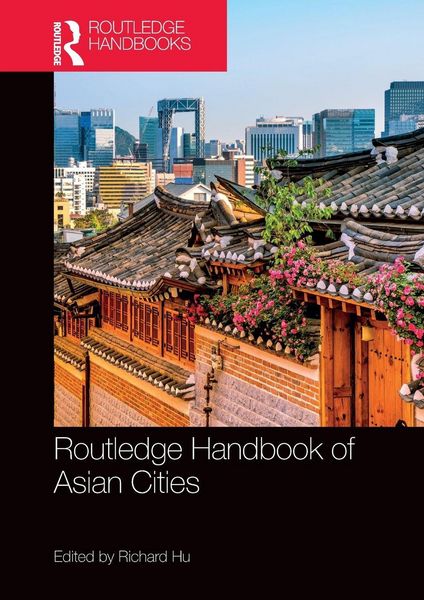
Produktbild: Routledge Handbook of Asian Cities

Routledge Handbook of Asian Cities

55,99 €

inkl. gesetzl. MwSt., Versandkostenfrei


Beschreibung

Produktdetails

Einband

Taschenbuch

Erscheinungsdatum

29.11.2024

Abbildungen

60 SW-Abb., 57 SW-Fotos, 3 SW-Zeichn., 22 Tabellen

Herausgeber

Richard Hu

Verlag

Taylor & Francis

Seitenzahl

548

Maße (L/B/H)

24,6/17,4/2,9 cm

Gewicht

964 g

Sprache

Englisch

ISBN

978-1-03-218841-6

Beschreibung

Produktdetails

Einband

Taschenbuch

Erscheinungsdatum

29.11.2024

Abbildungen

60 SW-Abb., 57 SW-Fotos, 3 SW-Zeichn., 22 Tabellen

Herausgeber

Richard Hu

Verlag

Taylor & Francis

Seitenzahl

548

Maße (L/B/H)

24,6/17,4/2,9 cm

Gewicht

964 g

Sprache

Englisch

ISBN

978-1-03-218841-6

EU-Ansprechpartner

Taylor & Francis Verlag GmbH
Kaufingerstraße 24
80331 München
DE
GPSR@taylorandfrancis.com

Herstelleradresse

Taylor & Francis Group
5 Howick Place
SW1P 1WG London
UK
GPSR@taylorandfrancis.com

Noch keine Bewertungen vorhanden

Verfassen Sie die erste Bewertung zu diesem Artikel

Helfen Sie anderen Kundinnen und Kunden durch Ihre Meinung.

Kundinnen und Kunden meinen

Bewertungen (0)

Die Leseprobe wird geladen.
  • Produktbild: Routledge Handbook of Asian Cities
  • Part I: Introduction  1. Urban Asia in perspective  2. Smart cities in Asia: Ambiguity, innovation, and evolution  3. Asian cities in and beyond COVID-19  4. Vulnerable resilience in COVID-19: Invisibility and adaptability of the 'informal' cities of Southeast Asia  5. Making liveable cities: Experiences from Asia and the Pacific  Part II: East Asian cities  6. East Asian cities: Deindustrialisation, greening, and the new geography of urbanisation  7. Hong Kong: One city, three spatial forms, and two possible fates?  8. Pyongyang: An urban metamorphosis under the power of marketisation  9. Seoul: Pursuing and sharing a global city  10. Shanghai: New directions in Chinese metropolitan planning  11. Taipei: Towards a liveable and sustainable city  12. Tokyo: Reinventing the modern Asian metropolis through adaptive strategies  13. Ulaanbaatar: When international plans and local preferences over urban densification collide  14. Xi'an: From an ancient world city to a 21st-century global logistics centre  Part III: South Asian cities  15. South Asian cities: Informalisation of ecological and social change  16. Colombo: From colonial outpost to indigenous kleptocratic city  17. Delhi: Rethinking Indian urbanism through the capital's multi-nuclei development  18. Dhaka: Growth management challenges for a rapidly urbanising megacity  19. Kabul: The 21st century urbanism we did not expect  20. Karachi: Changing institutional landscapes, challenges, and reforms  21. Kathmandu Valley: Unrealised proposals, decades of urban chaos and planning for a better future  22. Malé: Decentralising the world's densest island capital-plans, determination, and challenges  23. Mumbai: 'Mess is more'-value and shortcomings of the city's ad hoc development process  24. Thimphu: Tranquil, peace, and happy city of the Himalayas  Part IV: Southeast Asian cities  25. Southeast Asian cities: The imbalances of urban development  26. Bandar Seri Begawan: Why is Brunei's capital chasing foreign dollars?  27. Bangkok: Creative disorder and the military imagination  28. Dili: Hurdles in constructing the urban from the ground  29. Ho Chi Minh City: Can it avoid the path dependence with Thu Duc City?  30. Jakarta: Seeking the sustainable megacity region  31. Kuala Lumpur: Post-Vision 2020 and post-pandemic futures  32. Manila: Aspiring to be an inclusive, resilient, and sustainable city amidst climate and disaster risks  33. Phnom Penh: Towards a post-dependency metropolisation?  34. Singapore: Planning for healthy ageing  35. Vientiane: Challenges in the policies and practices for sustainable urban development in a 'least developed' city  36. Yangon: Displacement urbanism, housing provisionality, and feminist spatial practices-an infrastructure of care at the urban margin  Part V: Central Asian cities  37. Central Asian cities: Challenges in balancing global, national, and local development needs  38. Almaty: Modernisation through spatial reordering-urban networks, transport sector reforms, and Eurasianism  39. Ashgabat: The architecture as a showcase of a personal regime  40. Bishkek: Searching for Asianness in a post-Soviet city  41. Dushanbe: Urban transformation, changing spaces, and identities in Tajikistan  42. Tashkent: Aspiring for entrepreneurship and innovation hub  Part VI: Conclusion  43. The Asian city in a new urban age