KI-Beratung Beta

Gutscheinbedingungen

**Gültig bis 18.11.2026 auf englischsprachige Klassiker (klassiker-32728) online auf thalia.at und in der Thalia App. Einzelne Artikel können ausgeschlossen sein. Ausgenommen sind preisgebundene Artikel & eBooks. Pro Einkauf einmal einlösbar. Click & Collect nur bei Onlinevorabzahlung möglich. Keine Barauszahlung. Nicht kombinierbar mit anderen Aktionen und Gutscheinen. Gutschein wird auf max. 500€ Bestellwert angerechnet. Nicht gültig für Geschenkkarten, Versandkosten und Services.

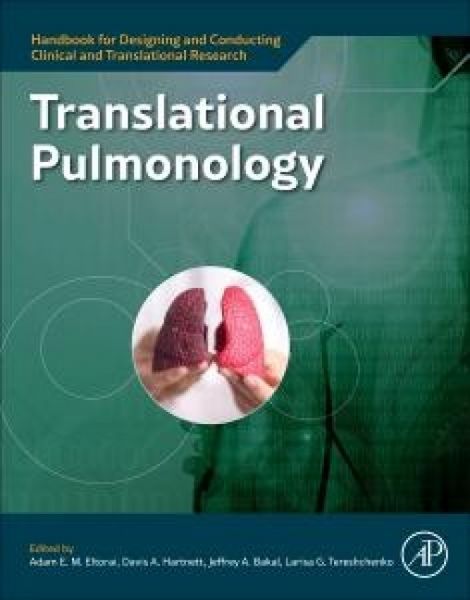
Produktbild: Translational Pulmonology
- 12%

Translational Pulmonology

12% sparen

137,99 € UVP 158,40 €

inkl. gesetzl. MwSt., Versandkostenfrei


Beschreibung

Translational research is essential to the advancement of medicine. Translational Pulmonology is an instructional guide to translational medical research serves as a practical, step-by-step roadmap for taking a biomedical device, potential therapeutic agent, or research question from idea through demonstrated...

Beschreibung

Translational research is essential to the advancement of medicine. Translational Pulmonology is an instructional guide to translational medical research serves as a practical, step-by-step roadmap for taking a biomedical device, potential therapeutic agent, or research question from idea through demonstrated clinical benefit. Fundamentally, the volume aims to help bridge the gap between current research and practice. Written by a team of expert medical, biomedical engineering, and clinical research experts in pulmonary diseases, this volume provides a clear process for understanding, designing, executing, and analyzing clinical and translational research within the field.

Portrait

Davis Hartnett, MD completed his medical degree at the Warren Alpert Medical School of Brown University and is a resident physician at Brigham and Women's Hospital in Boston, Massachusetts in the Department of Internal Medicine. He has contributed to over 40 peer reviewed publications and over 30 academic presentations on research topics including medicolegal outcomes, healthcare access disparities, and translational medicine.

Dr. Bakal is the Program Director for Provincial Research Data Services at Alberta Health Services, which operates the Alberta Strategy for Patient Oriented Research (SPOR) data platform. He also leads the Health Service Statistical and Analytics Methods teams. Over 10 years, he has worked with health services data, including randomized clinical trials. He completed his PhD jointly through the Department of Mathematics and Statistics and the School of Physical Health and Education at Queen's University. His work includes methodological contributions and analyses supporting international studies spanning business strategy, ophthalmology, cardiology, and geriatric medicine, as well as analyses of kinematic data, through peer-reviewed publications and conference presentations. Current interests include developing statistical methodology for time-to-event data and building classification tools to support patient decision-making processes.

Dr Adam E. M. Eltorai, MD, PhD completed his graduate studies in Biomedical Engineering and Biotechnology along with his medical degree from Brown University. His work has spanned the translational spectrum with a focus on medical technology innovation and development. Dr. Eltorai has published numerous articles and books.

Larisa Tereshchenko is an Associate Professor of Medicine at the Cleveland Clinic Lerner College of Medicine of Case Western Reserve University and an Adjunct Associate Professor of Electrical Engineering and Computer Science at the Cleveland State University. She has a broad background in clinical investigation, cardiology, cardiac electrophysiology and electrocardiology, biomedical engineering, biophysics, randomized controlled trials, epidemiology, biostatistics, bioinformatics, and genomics. Over the past two decades, she has led clinical studies, including randomized controlled trials, cohort, and case-control studies, and has expertise in multicenter and multidisciplinary research leadership, the building of collaborative groups, and multicohort epidemiological studies. She is an author of more than 160 original peer-reviewed manuscripts, chapters, and reviews.

Produktdetails

Einband

Taschenbuch

Erscheinungsdatum

12.06.2025

Herausgeber Davis A. Hartnett + weitere
Verlag Elsevier Science & Technology

Produktdetails

Einband

Taschenbuch

Erscheinungsdatum

12.06.2025

Herausgeber
Verlag Elsevier Science & Technology
Seitenzahl

610

Maße (L/B/H)

27,2/21,4/2,9 cm

Gewicht

1624 g

Sprache

Englisch

ISBN

978-0-323-90391-2

EU-Ansprechpartner

Elsevier B.V.
Radarweg 29
1043 NX Amsterdam
NL
productsafety@elsevier.com

Herstelleradresse

Elsevier Science & Technology
London Wall 125
EC2Y 5AS London
GB
tradeorders@elsevier.com

Noch keine Bewertungen vorhanden

Verfassen Sie die erste Bewertung zu diesem Artikel

Helfen Sie anderen Kundinnen und Kunden durch Ihre Meinung.

Kundinnen und Kunden meinen

Bewertungen (0)

Die Leseprobe wird geladen.
  • Produktbild: Translational Pulmonology
  • Introduction
    1. Introduction
    2. Translational process
    3. Scientific Method

    Pre-Clinical
    4. Overview of Preclinical Research
    5. What Problem are You Solving?
    6. Types of Interventions
    7. Drug Discovery
    8. Drug Testing
    9. Device Discovery and Prototyping
    10. Device Testing
    11. Diagnostic Discovery
    12. Other Product Types
    13. Procedural Technique Development
    14. Behavioral Intervention
    15. Artificial Intelligence

    Clinical: Fundamentals
    16. Introduction to Clinical Research: What is it? Why is it Needed?
    17. The Question: Types of Research Questions and how to Development Them
    18. Study Population: Who and Why Them?
    19. Outcome Measurements: What Data is Being Collected and Why?
    20. Optimizing the Question: Balancing Significance and Feasibility

    Statistical Principles
    21. Common Issues in Analysis
    22. Basic Statistical Principles
    23. Hypotheses and Error Types
    24. Power
    25. Regression
    26. Continuous Variable Analyses
    27. Categorical Variable Analyses: Chi-square, Fisher Exact, Mantel Hanzel
    28. Correlation
    29. Biases
    30. Basic Science Statistics
    31. Sample Size
    32. Statistical Software

    Clinical: Study Types
    33. Design Principles: Hierarchy of Study Types
    34. Case Series: Design, Measures, Classic Example
    35. Case-Control Study: Design, Measures, Classic Example
    36. Cohort Study: Design, Measures, Classic Example
    37. Cross-section Study: Design, Measures, Classic Example
    38. Longitudinal Study: Design Measures, Classic Example
    39. Meta-analysis: Design, Measures, Classic Example
    40. Cost-effectiveness Study: Design, Measures, Classic Example
    41. Diagnostic Test Evaluation: Design, Measures, Classic Example
    42. Reliability Study: Design, Measures, Classic Example
    43. Database Studies: Design, Measures, Classic Example
    44. Surveys and Questionnaires: Design, Measures, Classic Example
    45. Qualitative Methods and Mixed Methods

    Clinical Trials
    46. Randomized Control: Design, Measures, Classic Example
    47. Historical Control: Design, Measures, Classic Example
    48. Cross-Over: Design, Measures, Classic Example
    49. Withdrawal Studies: Design, Measures, Classic Example
    50. Factorial Design: Design, Measures, Classic Example
    51. Group Allocation: Design, Measures, Classic Example
    52. Hybrid Design: Design, Measures, Classic Example
    53. Large, Pragmatic: Design, Measures, Classic Example
    54. Equivalence and Noninferiority: Design, Measures, Classic Example
    55. Adaptive: Design, Measures, Classic Example
    56. Phase 0 Trials: Window of Opportunity
    57. Registries
    58. Phases of Clinical Trials
    59. IDEAL Framework

    Clinical: Preparation
    60. Patient Perspectives
    61. Budgeting
    62. Ethics and Review Boards
    63. Regulatory Considerations for New Drugs and Devices
    64. Funding Approaches
    65. Conflicts of Interest
    66. Subject Recruitment
    67. Data Management
    68. Special Populations
    69. Subject Adherence
    70. Survival Analysis
    71. Monitoring Committee in Clinical Trials

    Regulatory Basics
    72. FDA Overview
    73. IND
    74. New Drug Application
    75. Devices
    76. Orphan Drugs
    77. Biologics
    78. Combination Products
    79. Foods
    80. Cosmetics
    81. CMC and GxP
    82. Non-US Regulatory
    83. Post-Market Drug Safety Monitoring
    84. Post-Market Device Safety Monitoring

    Clinical Implementation
    85. Implementation Research
    86. Design and Analysis
    87. Mixed-methods Research
    88. Population- and Setting-specific Implementation
    89. Guideline Development

    Public Health
    90. Public Health
    91. Epidemiology
    92. Factors
    93. Good Questions
    94. Population- and Environmental-specific Considerations
    95. Law, Policy, and Ethics
    96. Healthcare Institutions and Systems
    97. Public Health Institutions and Systems

    Practical Resources
    98. Presenting Data
    99. Manuscript Preparation
    100. Quality Improvement
    101. Team Science and Building a Team
    102. Patent Basics
    103. Venture Pathways
    104. SBIR/STTR
    105. Sample Forms and Templates