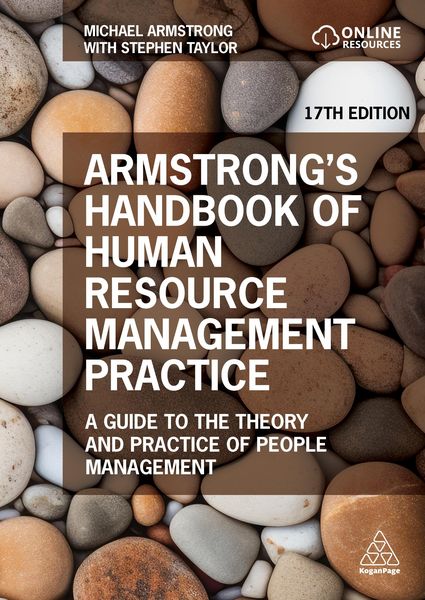
Produktbild: Armstrong's Handbook of Human Resource Management Practice

Armstrong's Handbook of Human Resource Management Practice A Guide to the Theory and Practice of People Management

69,99 €

inkl. gesetzl. MwSt., Versandkostenfrei


Beschreibung

Produktdetails

Einband

Taschenbuch

Erscheinungsdatum

03.01.2026

Verlag

Kogan Page Ltd

Seitenzahl

760

Maße (L/B/H)

24,5/18,9/3,4 cm

Gewicht

666 g

Auflage

17. Auflage

Sprache

Englisch

ISBN

978-1-398-62208-1

Beschreibung

Produktdetails

Einband

Taschenbuch

Erscheinungsdatum

03.01.2026

Verlag

Kogan Page Ltd

Seitenzahl

760

Maße (L/B/H)

24,5/18,9/3,4 cm

Gewicht

666 g

Auflage

17. Auflage

Sprache

Englisch

ISBN

978-1-398-62208-1

Herstelleradresse

Libri GmbH
Europaallee 1
36244 Bad Hersfeld
DE

Email: GPSR Kontakt

Noch keine Bewertungen vorhanden

Verfassen Sie die erste Bewertung zu diesem Artikel

Helfen Sie anderen Kundinnen und Kunden durch Ihre Meinung.

Kundinnen und Kunden meinen

Bewertungen (0)

Die Leseprobe wird geladen.
  • Produktbild: Armstrong's Handbook of Human Resource Management Practice
    • Section - ONE: Fundamentals of human resource management;
      • Chapter - 01: The essence of HRM;
      • Chapter - 02: Human capital management;
      • Chapter - 03: The context of HRM;
      • Chapter - 04: The future of work;
      • Chapter - 05: HRM and organizational performance;
      • Chapter - 06: The ethical dimension of HRM;
      • Chapter - 07: Corporate social responsibility;
    • Section - TWO: The strategic approach to HRM;
      • Chapter - 08: Strategic HRM;
      • Chapter - 09: HR strategy;
    • Section - THREE: Delivering HR;
      • Chapter - 10: The role of HR;
      • Chapter - 11: The HRM role of line managers;
    • Section - FOUR: Human resource management processes;
      • Chapter - 12: Evidence-based HRM;
      • Chapter - 13: HR analytics;
      • Chapter - 14: Digital HRM;
      • Chapter - 15: Knowledge Management;
      • Chapter - 16: AI in HRM
    • Section - FIVE: Organization;
      • Chapter - 17: Organizational behaviour;
      • Chapter - 18: Organizational design;
      • Chapter - 19: Work design;
      • Chapter - 20: Job design;
      • Chapter - 21: Organizational development;
    • Section - SIX: Factors affecting the behaviour of people at work;
      • Chapter - 22: Ability, motivation and opportunity;
      • Chapter - 23: Commitment;
      • Chapter - 24: Employee engagement;
    • Section - SEVEN: People resourcing;
      • Chapter - 25: Resourcing strategy;
      • Chapter - 26: Workforce Planning;
      • Chapter - 27: Recruitment and selection;
      • Chapter - 28: Skill-based Recruitment;
      • Chapter - 29: Talent Management;
    • Section - EIGHT: Employment practices;
      • Chapter - 30: The employee experience;
      • Chapter - 31: Managing employment;
      • Chapter - 32: Managing diversity and inclusion;
      • Chapter - 33: Managing flexibility;
      • Chapter - 34: Managing home and hybrid working;
    • Section - NINE: Learning and development;
      • Chapter - 35: The basis of learning and development;
      • Chapter - 36: Strategic learning and development;
      • Chapter - 37: Organisational learning and the learning organization;
      • Chapter - 38: Individual learning;
      • Chapter - 39: The practice of learning and development;
      • Chapter - 40: The practice of learning and development;
      • Chapter - 41: Leadership and management development;
    • Section - TEN: Performance management;
      • Chapter - 42: The basis of performance management;
      • Chapter - 43: Performance management;
      • Chapter - 44: Performance leadership;
    • Section - ELEVEN: Reward management;
      • Chapter - 45: The bases of reward management;
      • Chapter - 46: Reward strategy;
      • Chapter - 47: The practice of reward management;
      • Chapter - 48: Managing reward for special groups;
      • Chapter - 49: Reducing the gender pay gap;
    • Section - TWELVE: Employment relations;
      • Chapter - 50: The basis of employment relations;
      • Chapter - 51: Employment relations strategy;
      • Chapter - 52: The employment relationship;
      • Chapter - 53: The psychological contract;
      • Chapter - 54: The practice of industrial relations;
      • Chapter - 55: Employee voice;
      • Chapter - 56: Employee communications;
    • Section - THIRTEEN: Employee wellbeing;
      • Chapter - 57: Principles and practice of employee wellbeing;
      • Chapter - 58: Health and Safety;
    • Section - FOURTEEN: HR practices;
      • Chapter - 59: HR policies;
      • Chapter - 60: HR procedures;
      • Chapter - 61: Dealing with the legal aspects of employment;
    • Section - FIFTEEN: International HRM;
      • Chapter - 62: The basis of international HRM;
      • Chapter - 63: The practice of international HRM;
      • Chapter - 64: Managing expatriates;
    • Section - SIXTEEN: People management skills and competencies;
      • Chapter - 65: Strategic people management skills;
      • Chapter - 66: Business skills;
      • Chapter - 67: Dealing with business issues from an HR perspective;
      • Chapter - 68: Problem-solving and decision-making;
      • Chapter - 69: Analytical and critical skills;
      • Chapter - 70: Research skills;
      • Chapter - 71: Statistical skills;
      • Chapter - 72: Selection interviewing skills;
      • Chapter - 73: Job, role and skills analysis and competency modelling;
      • Chapter - 74: Learning and development skills;
      • Chapter - 75: Negotiating skills;
      • Chapter - 76: Change management;
      • Chapter - 77: Influencing skills;
      • Chapter - 78: Leadership;
      • Chapter - 79: Handling people problems;
      • Chapter - 80: Handling challenging conversations;
      • Chapter - 81: Managing conflict;
      • Chapter - 82: Recruitment-based skills;
      • Chapter - 83: Political skills;
      • Chapter - 84: Project management;
    • Section - SEVENTEEN: Conclusion;
      • Chapter - 85: Trends in HRM