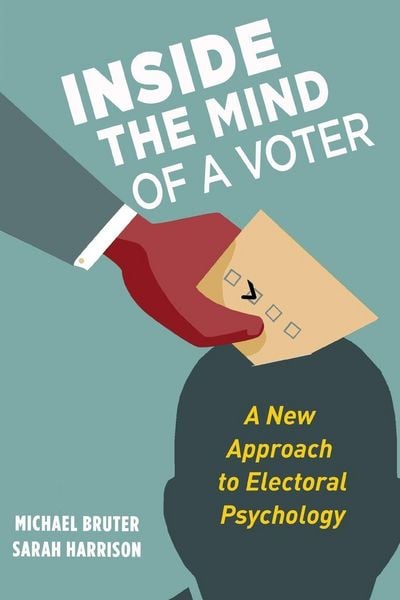
Inside the Mind of a Voter A New Approach to Electoral Psychology
-
- Taschenbuch ausgewählt
- eBook
-
Sprache:Englisch
35,99 €
inkl. gesetzl. MwSt.,
Beschreibung
Produktdetails
Einband
Taschenbuch
Erscheinungsdatum
17.06.2025
Abbildungen
40 b/w illus.
Verlag
University PressesSeitenzahl
376
Maße (L/B/H)
23,4/15,6/2,3 cm
Gewicht
639 g
Sprache
Englisch
ISBN
978-0-691-21540-2
An in-depth look into the psychology of voters around the world, how voters shape elections, and how elections transform citizens and affect their lives Could understanding whether elections make people happy and bring them closure matter more than who they vote for? What if people did not vote for what they want but for what they believe is right based on roles they implicitly assume? Do elections make people cry? This book invites readers on a unique journey inside the mind of a voter using unprecedented data from the United States, the United Kingdom, Germany, France, South Africa, and Georgia throughout a period when the world evolved from the centrist dominance of Obama and Mandela to the shock victories of Brexit and Trump. Michael Bruter and Sarah Harrison explore three interrelated aspects of the heart and mind of voters: the psychological bases of their behavior, how they experience elections and the emotions this entails, and how and when elections bring democratic resolution. The authors examine unique concepts including electoral identity, atmosphere, ergonomics, and hostility. From filming the shadow of voters in the polling booth, to panel study surveys, election diaries, and interviews, Bruter and Harrison unveil insights into the conscious and subconscious sides of citizens' psychology throughout a unique decade for electoral democracy. They highlight how citizens' personality, memory, and identity affect their vote and experience of elections, when elections generate hope or hopelessness, and how subtle differences in electoral arrangements interact with voters' psychology to trigger different emotions. Inside the Mind of a Voter radically shifts electoral science, moving away from implicitly institution-centric visions of behavior to understand elections from the point of view of voters.
Noch keine Bewertungen vorhanden
Verfassen Sie die erste Bewertung zu diesem Artikel
Helfen Sie anderen Kundinnen und Kunden durch Ihre Meinung.
Kurze Frage zu unserer Seite
Vielen Dank für Ihr Feedback
Wir nutzen Ihr Feedback, um unsere Produktseiten zu verbessern. Bitte haben Sie Verständnis, dass wir Ihnen keine Rückmeldung geben können. Falls Sie Kontakt mit uns aufnehmen möchten, können Sie sich aber gerne an unseren Kund*innenservice wenden.
zum Kundenservice