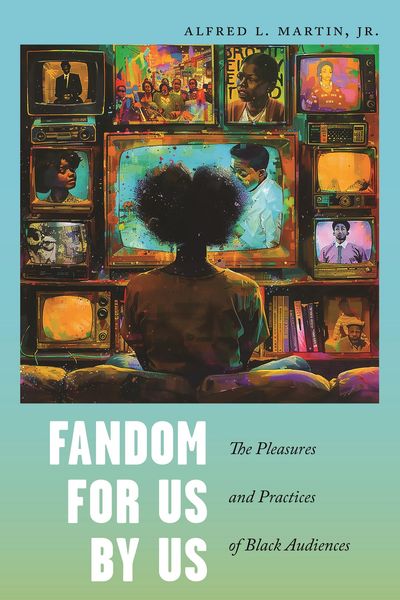
Fandom for Us, by Us The Pleasures and Practices of Black Audiences
-
- Taschenbuch
- eBook ausgewählt
-
Form:Einzelkauf Download
-
Sprache:Englisch
21,10 €
inkl. gesetzl. MwSt.Beschreibung
Produktdetails
Format
ePUB
Kopierschutz
Nein
Family Sharing
Nein
Text-to-Speech
Ja
Erscheinungsdatum
22.04.2025
Verlag
Princeton University PressSeitenzahl
(Printausgabe)
Sprache
Englisch
EAN
9781479824939
Honorable Mention, 2026 Harry Shaw and Katrina Hazzard-Donald Award for Outstanding Work in African-American Popular Culture Studies, given by the Popular Culture Association
Finalist, 2026 PROSE Award in Media and Cultural Studies, given by the Association of American Publishers
The convergence of the politics of representation and Black fan cultures
Boldly going where few fandom scholars have gone before, Fandom for Us, by Us breaks from our focus on white fandom to center Black fandoms. Alfred L. Martin, Jr., engages these fandoms through what he calls the "four C's": class, clout, canon, and comfort.
Class is a key component of how Black fandom is contingent on distinctions between white, nationally recognized cultural productions and multicultural and/or regional cultural productions, as demonstrated by Misty Copeland's ascension in American Ballet Theatre. Clout refers to Black fans' realization of their own consumer spending power as an agent for industrial change, reducing the precarity of Blackness within historically white cultural apparatuses and facilitating the production of Black blockbusters like 2018's Black Panther. Canon entails a communal fannish practice of sharing media objects, like the 1978 film The Wiz, which lead them to take on meanings outside of their original context. Comfort describes the nostalgic and sentimental affects associated with beloved fan objects such as the television show, Golden Girls, connected to notions of Black joy and signaling moments wherein Black people can just be themselves.
Through 75 in-depth interviews with Black fans, Fandom for Us, by Us argues not only for the importance of studying Black fandoms, but also demonstrates their complexities by both coupling and decoupling Black reception practices from the politics of representation. Martin highlights the nuanced ways Black fans interact with media representations, suggesting class, clout, canon, and comfort are universal to the study of all fandoms. Yet, for all the ways these fandoms are similar and reciprocal, Black fandoms are also their own set of practices, demanding their own study.
Noch keine Bewertungen vorhanden
Verfassen Sie die erste Bewertung zu diesem Artikel
Helfen Sie anderen Kundinnen und Kunden durch Ihre Meinung.
Kurze Frage zu unserer Seite
Vielen Dank für Ihr Feedback
Wir nutzen Ihr Feedback, um unsere Produktseiten zu verbessern. Bitte haben Sie Verständnis, dass wir Ihnen keine Rückmeldung geben können. Falls Sie Kontakt mit uns aufnehmen möchten, können Sie sich aber gerne an unseren Kund*innenservice wenden.
zum Kundenservice