Gutscheinbedingungen

**Gültig bis 06.07.2026 auf fremdsprachige Bücher online auf thalia.at, in der Thalia App ab einem Mindestbestellwert von 30€ und in allen Thalia Buchhandlungen in Österreich. In den Buchhandlungen nur gültig auf lagernde Ware. Einzelne Artikel können ausgeschlossen sein. Ausgenommen sind preisgebundene Artikel & eBooks. Pro Einkauf einmal einlösbar. Nur gültig gegen Vorlage oder im Onlineshop hinterlegter Bonuscard. Infos zur Einlösung in der Buchhandlung sind auf der Bonuscard-Vorteilspreisseite zu finden. Click & Collect nur bei Onlinevorabzahlung möglich. Keine Einlösung bei Scan & Go-Bezahlung. Keine Barauszahlung. Nicht kombinierbar mit anderen Aktionen und Gutscheinen. Gutschein wird auf max. 500€ Bestellwert angerechnet. Nicht gültig für Versandkosten und Services.

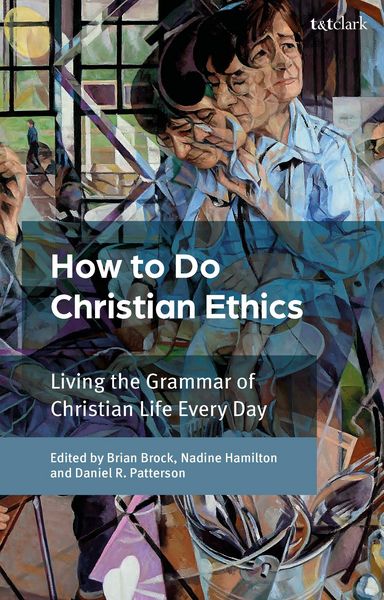
Produktbild: How To Do Christian Ethics

How To Do Christian Ethics Living the Grammar of Christian Life Every Day

35,99 €

inkl. gesetzl. MwSt., Versandkostenfrei


Beschreibung

Produktdetails

Einband

Taschenbuch

Erscheinungsdatum

26.06.2025

Herausgeber

Brian Brock + weitere

Verlag

Bloomsbury

Seitenzahl

336

Maße (L/B/H)

21,5/13,6/2,2 cm

Gewicht

426 g

Sprache

Englisch

ISBN

978-0-567-71750-4

Beschreibung

Produktdetails

Einband

Taschenbuch

Erscheinungsdatum

26.06.2025

Herausgeber

Verlag

Bloomsbury

Seitenzahl

336

Maße (L/B/H)

21,5/13,6/2,2 cm

Gewicht

426 g

Sprache

Englisch

ISBN

978-0-567-71750-4

Herstelleradresse

Libri GmbH
Europaallee 1
36244 Bad Hersfeld
DE

Email: gpsr@libri.de

Noch keine Bewertungen vorhanden

Verfassen Sie die erste Bewertung zu diesem Artikel

Helfen Sie anderen Kundinnen und Kunden durch Ihre Meinung.

Kundinnen und Kunden meinen

Bewertungen (0)

  • Produktbild: How To Do Christian Ethics
  • Introduction (Brian Brock, University of Aberdeen, UK; Nadine Hamilton, FAU Erlangen- Nürnberg, Germany; Daniel R. Patterson, St Trivelius Institute, Bulgaria) Chapter 1 “Garbage: An Invitation to Face our Creaturely State” (Brian Brock, University of Aberdeen, UK) Chapter 2 “Meat Consumption and the Messianic Contours of ‘The Peaceable Kingdom’” (Marco Hofheinz, Leibniz University, Hannover, Germany) Chapter 3 “What belongs to Whom?: Property and sustainability” (Cornelius van der Kooi, Free University of Amsterdam, The Netherlands) Chapter 4 “In Our Image and Likeness: Theological Ethics and Artificial Intelligence” (Ad de Bruijne, Theological University Kampen/Utrecht, The Netherlands) Chapter 5 “The Spirit and Surveillance: Examining Forms of Knowledge, Power, and Discernment in the Church” (Emily Hill, InterVarsity, USA) Chapter 6 “The ‘Risk of Faith’ and the Desire for Safety in a Security Society” (Pieter Vos, Protestant Theological University, The Netherlands) Chapter 7 “The Politics of Truth-telling in the ‘Post-truth’ Age of ‘Fake News’” (Michael Laffin, University of Aberdeen, UK) Chapter 8 “Christ, Culpability, and Social Deprivation” (Michael Banner, University of Cambridge, UK) Chapter 9 “Cancel Culture: Mobilising Christian Ethics at the Scene of Judgment” (Daniel R. Patterson, St. Trivelius Institute, Bulgaria) Chapter 10 “The Grammar of Christian Ethics in Human Rights” (Christine Schliesser, University of Fribourg, Switzerland) Chapter 11 “The Trunk of the Cross is the Tree of Life: The Frailty of the Risen Christ and Theology of Disability” (Nadine Hamilton, Friedrich Alexander University of Erlangen-Nürnberg, Germany) Chapter 12 “Who Cares? On Frameworks, Networks, and Good Works” (Stefan Heuser, Nuremberg Institute of Technology, Germany) Chapter 13 “Stress or Vocation: Ethics and/in work” (Edward van’t Slot, Protestant Theological University, The Netherlands) Chapter 14 “Family as Mystery: Theological Ethics Beyond Polarisation” (Petruschka Schaafsma, Protestant Theological University, Germany) Chapter 15 “Saved in God’s Story of God: On the Ethics of End-of-life Care” (Hans Ulrich, Friedrich-Alexander-Universität Erlangen-Nürnberg, Germany) Bibliography Index