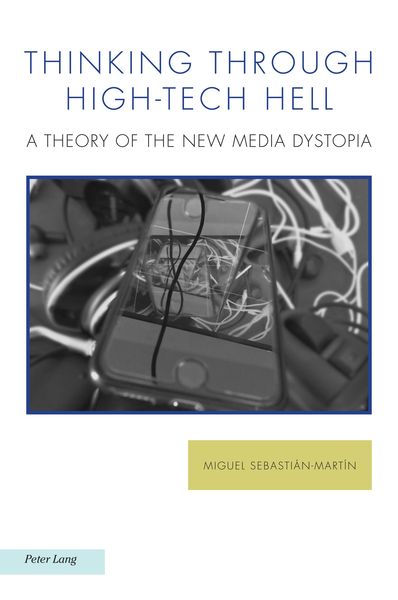
Thinking through High-Tech Hell A Theory of the New Media Dystopia
-
- Taschenbuch
- eBook ausgewählt
-
Form:Einzelkauf Download
-
Sprache:Englisch
-
eBook Format:PDF
- PDF 54,34 € ausgewählt
- ePUB 54,34 €
54,34 €
61,20 €
*
Beschreibung
Produktdetails
Format
Kopierschutz
Ja
Family Sharing
Nein
Text-to-Speech
Nein
Erscheinungsdatum
29.08.2024
Verlag
Peter Lang Ltd, International Academic PublishersSeitenzahl
398 (Printausgabe)
Dateigröße
5385 KB
Auflage
1. Auflage
Sprache
Englisch
EAN
9781803744636
«New media determine our dystopian situation. Miguel Sebastián-Martín maps the new media hell. Read this book to understand how SF reproduces our dystopian present and to find the cracks where the light gets in.»
(J. Jesse Ramírez, Eastern Switzerland University of Applied Sciences)
«In Thinking through High-Tech Hell, Miguel Sebastián-Martín defines a 'dystopian structure of feeling' among SF and new media that, contrary to much recent theorizing, is ambivalent about its sense of dystopianness. Through a series of textual examples, Sebastián-Martín demonstrates how the dystopian structure of feeling both critiques and embraces the current neoliberal capitalist state of technology and new media. The book is impressively researched and thoughtfully written, moving easily from broad theoretical/philosophical discussions to pinpoint analysis, making it a relevant new contribution to new media studies and SF research.»
(Liz W. Faber, Assistant Professor of English and Communication, Dean College)
Examining a cluster of British and Anglo-American series from the 2010s, this book theorizes them - and, indirectly, the epochal reality that they represent - as «new media dystopias.» With this term, the author conceptualizes an emergent sub-genre of audio-visual SF which is thematically concerned with the worst effects of developments in media technologies under digital capitalism and is, ironically, produced for and distributed through digital-capitalist platforms. Across the book's chapters, the new media dystopia is approached as an epochal structure of feeling, as a narratively reflexive sub-genre, as an aesthetically ambivalent form, and as a locale for a new kind of quixotism. Combining these perspectives, the book's interest lies in gauging the ways and the extent to which these dystopias contribute to the historical hopelessness that seems to define the terms of our relationship with new media technologies - as well as our position within and towards contemporary capitalism.
Noch keine Bewertungen vorhanden
Verfassen Sie die erste Bewertung zu diesem Artikel
Helfen Sie anderen Kundinnen und Kunden durch Ihre Meinung.
Kurze Frage zu unserer Seite
Vielen Dank für Ihr Feedback
Wir nutzen Ihr Feedback, um unsere Produktseiten zu verbessern. Bitte haben Sie Verständnis, dass wir Ihnen keine Rückmeldung geben können. Falls Sie Kontakt mit uns aufnehmen möchten, können Sie sich aber gerne an unseren Kund*innenservice wenden.
zum Kundenservice