• Produktbild: Technology Innovation in Manufacturing
  • Produktbild: Technology Innovation in Manufacturing

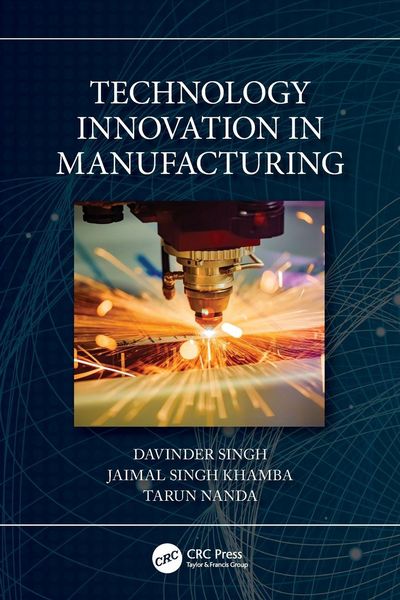
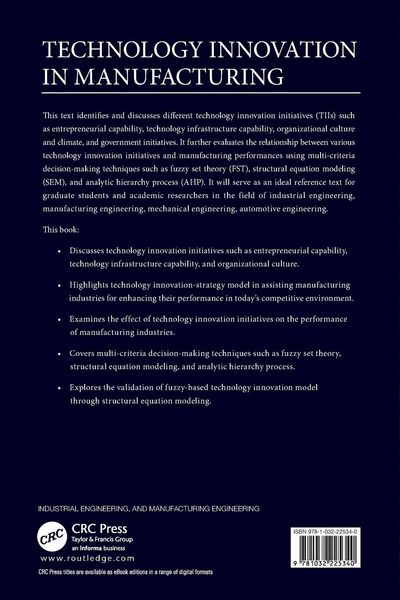
Technology Innovation in Manufacturing

81,99 €

inkl. gesetzl. MwSt., Versandkostenfrei


Beschreibung

Produktdetails

Einband

Taschenbuch

Erscheinungsdatum

08.10.2024

Abbildungen

farbige Illustrationen, Raster, schwarz-weiss, Zeichnungen, schwarz-weiss, Tabellen, schwarz-weiss

Verlag

Taylor & Francis

Seitenzahl

162

Maße (L/B/H)

23,4/15,6/0,9 cm

Gewicht

257 g

Sprache

Englisch

ISBN

978-1-03-222534-0

Beschreibung

Produktdetails

Einband

Taschenbuch

Erscheinungsdatum

08.10.2024

Abbildungen

farbige Illustrationen, Raster, schwarz-weiss, Zeichnungen, schwarz-weiss, Tabellen, schwarz-weiss

Verlag

Taylor & Francis

Seitenzahl

162

Maße (L/B/H)

23,4/15,6/0,9 cm

Gewicht

257 g

Sprache

Englisch

ISBN

978-1-03-222534-0

Herstelleradresse

Libri GmbH
Europaallee 1
36244 Bad Hersfeld
DE

Email: gpsr@libri.de

Noch keine Bewertungen vorhanden

Verfassen Sie die erste Bewertung zu diesem Artikel

Helfen Sie anderen Kundinnen und Kunden durch Ihre Meinung.

Kundinnen und Kunden meinen

Bewertungen (0)

Die Leseprobe wird geladen.
  • Produktbild: Technology Innovation in Manufacturing
  • Produktbild: Technology Innovation in Manufacturing
  • Chapter 1
    TECHNOLOGY INNOVATION AND ITS SIGNIFICANCE

    1.1 Introduction
    1.2 Innovation Typology
    1.3 Technology Innovation Defined
    1.4 Important sources of Technology Innovation
    1.5 Significance of Technological Innovation
    1.6 Technological Innovation in Manufacturing Industries
    1.7 Concluding Remarks

    Chapter 2
    GLOBALIZATION AND ITS IMPACT ON TECHNOLOGY INNOVATION

    2.1 Introduction
    2.2 Globalization and Fourth Industrial Revolution
    2.3 Positive and negative consequences of Globalization
    2.4 Effect of Globalization on Technology Innovation in Manufacturing Industries
    2.5 Need for Technology Innovation in the era of Globalization
    2.6 Concluding Remarks

    Chapter 3
    TECHNOLOGY INNOVATION INITIATIVES IN MANUFACTURING INDUSTRIES

    3.1 Introduction
    3.2 Technology Innovation Initiatives (TIIs)

    3.2.1 Entrpreneurial Capability

    3.2.2 Technology Infrastructure Capability

    3.2.3 Organizational Culture and Climate

    3.2.4 Government Initiatives
    3.3 Concluding Remarks

    Chapter 4
    RELIABILITY ANALYSIS OF TECHNOLOGY INNOVATION INITIATIVES

    4.1 Introduction
    4.2 Analyses of Preliminary Data
    4.2.1 Entrepreneurial Capability (EC) Issues
    4.2.2 Technology Infrastructure Capability (TIC) Issues
    4.2.3 Organization Culture and Climate (OCC) Issues
    4.2.4 Government Initiative (GI) Issues
    4.2.5 Manufacturing Performance Parameter (MPP) issues
    4.3 Relationship between various Technology Innovation Initiatives (TIIs) and Manufacturing Performance Parameters (MPPs)
    4.4 Contribution of TIIs in achieving Manufacturing Performance Enhancement
    4.5 Concluding Remarks

    Chapter 5
    MULTI-CRITERIA DECISION-MAKING TECHNIQUES

    5.1 Introduction
    5.2 Evaluation of TIIs using Fuzzy Based Model
    5.3 Fuzzy Interface Systems
    5.3.1 Fuzzification
    5.3.2 Rule Evaluation
    5.3.3 Defuzzification
    5.3.4 Result: Checking the Suitability of TI Measures
    5.3.5 Fuzzy Evaluation Rules and Solution
    5.4 Analytic Hierarchy Process (AHP)
    5.4.1 Describing model structure: the sub–objectives for decision making
    5.4.2 Hierarchy Formulated
    5.4.3 Scale used for Pair Wise Comparison of Attributes
    5.4.4 Pair–wise Comparison of Different Attributes
    5.4.5 Normalization of Comparison Matrix
    5.4.6 Checking for Consistency
    5.4.7 Priority Weights for Alternatives
    5.5 Concluding Remarks

    Chapter 6
    STRUCTURAL EQUATION MODELING

    6.1 Introduction
    6.2 Validation of Fuzzy Based TI Model through Structural Equation Modeling (SEM)
    6.2.1 Instrument used: AMOS 22.0 software
    6.2.2 Independent and Dependent Variables
    6.2.3 Structural Equation Modeling of TI Model
    6.2.4 Screening of the Data with Preliminary Analysis
    6.2.5 Confirmatory Factor Analysis
    6.2.6 SEM_TI Model and Result Analysis
    6.2.7 Modification Indices of SEM_TI Model
    6.3 Concluding Remarks

    Chapter 7
    Case studies

    7.1 Introduction
    7.2 Introduction to Industry ‘A’
    7.2.1 Quality Policy
    7.2.2 Mission
    7.2.3 Product Range

    7.2.4 SWOT Analysis at Industry 'A'

    7.2.5 SAP Analysis of Industry 'A'

    7.2.6 LAP Synthesis of Industry 'A'
    7.3 Introduction to Industry ‘B’
    7.3.1 Milestones
    7.3.2 Product Range
    7.3.3 SWOT Analysis at Industry ‘B’
    7.3.4 SAP Analysis of Industry ‘B’
    7.3.5 LAP Synthesis of Industry ‘B’
    7.4 Suggestions and Recommendations
    7.4.1 Suggestions to the Entrepreneurs
    7.4.2 Suggestions to the Government
    7.4.1 Suggestions to the Banks and other Financial Institutes
    7.5 Concluding Remarks

    Chapter 8
    CONCLUSIONS AND RECOMMENDATIONS

    8.1 Introduction
    8.2 Summary of the Study
    8.3 Research Contribution
    8.3.1 PPS Results
    8.3.2 Statistical Analysis Results
    8.3.3 Qualitative Analysis Results
    8.3.4 Technology Innovation Implementation Model
    8.4 Major findings of the study
    8.5 Limitations of the study
    8.6 Suggestions for future research