KI-Beratung Beta

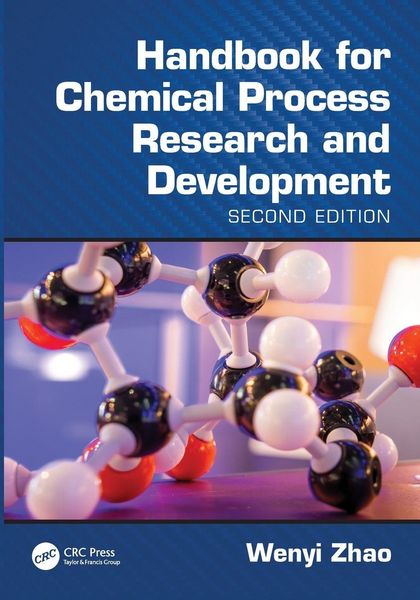
  • Produktbild: Handbook for Chemical Process Research and Development, Second Edition
  • Produktbild: Handbook for Chemical Process Research and Development, Second Edition

Handbook for Chemical Process Research and Development, Second Edition

101,99 €

inkl. gesetzl. MwSt., Versandkostenfrei


Beschreibung

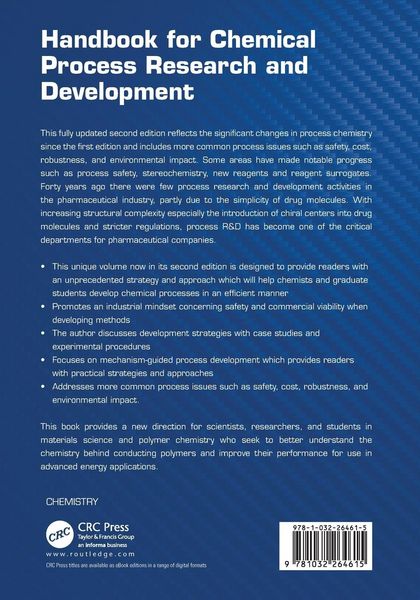
This fully updated second edition reflects the significant changes in process chemistry since the first edition and includes more common process issues such as safety, cost, robustness, and environmental impact. Some areas have made notable progress such as process safety, stereochemistry, new reagents...

Beschreibung

This fully updated second edition reflects the significant changes in process chemistry since the first edition and includes more common process issues such as safety, cost, robustness, and environmental impact. Some areas have made notable progress such as process safety, stereochemistry, new reagents and reagent surrogates. Forty years ago there were few process research and development activities in the pharmaceutical industry, partly due to the simplicity of drug molecules. With increasing structural complexity especially the introduction of chiral centers into drug molecules and stricter regulations, process R&D has become one of the critical departments for pharmaceutical companies.

Features:

  • This unique volume now in its second edition is designed to provide readers with an unprecedented strategy and approach which will help chemists and graduate students develop chemical processes in an efficient manner.
  • Promotes an industrial mindset concerning safety and commercial viability when developing methods.
  • The author discusses development strategies with case studies and experimental procedures.
  • Focuses on mechanism-guided process development which provides readers with practical strategies and approaches.
  • Addresses more common process issues such as safety, cost, robustness, and environmental impact.
  • This book provides a new direction for scientists, researchers, and students in materials science and polymer chemistry who seek to better understand the chemistry behind conducting polymers and improve their performance for use in advanced energy applications.

    Produktdetails

    Einband

    Taschenbuch

    Erscheinungsdatum

    09.10.2024

    Abbildungen

    642 SW-Abb., 2 Farbabb., 642 SW-Zeichn., 2 Farbzeichn., 24 Tabellen

    Verlag Taylor & Francis

    Produktdetails

    Einband

    Taschenbuch

    Erscheinungsdatum

    09.10.2024

    Abbildungen

    642 SW-Abb., 2 Farbabb., 642 SW-Zeichn., 2 Farbzeichn., 24 Tabellen

    Verlag Taylor & Francis
    Seitenzahl

    868

    Maße (L/B/H)

    25,4/17,8/4,6 cm

    Gewicht

    1598 g

    Auflage

    2. Auflage

    Sprache

    Englisch

    ISBN

    978-1-03-226461-5

    Herstelleradresse

    Libri GmbH
    Europaallee 1
    36244 Bad Hersfeld
    DE

    Email: gpsr@libri.de

    Noch keine Bewertungen vorhanden

    Verfassen Sie die erste Bewertung zu diesem Artikel

    Helfen Sie anderen Kundinnen und Kunden durch Ihre Meinung.

    Kundinnen und Kunden meinen

    Bewertungen (0)

    Die Leseprobe wird geladen.
    • Produktbild: Handbook for Chemical Process Research and Development, Second Edition
    • Produktbild: Handbook for Chemical Process Research and Development, Second Edition
    • 1. Reaction solvent selection

      2. Reagent selection

      3. Various reagent surrogates

      4. Modes of reagent addition -control of impurity formation

      5. Process optimization with additives

      6. Process optimization of catalytic reactions

      7. Process optimization of problematic reactions

      8. Hazards of oxidation and reduction reactions

      9. Other hazardous reactions

      10. Hazardous reagents

      11. Grignard reagent and related reactions

      12. Challenging reaction intermediates

      13. Protecting groups

      14. Telescope approach

      15. Design of new synthetic route

      16. Stereochemistry

      17. Various quenching strategies

      18. Various isolation and purification strategies

      19. Methods for residual metal removal

      20. Methods for impurity removal

      21. Pharmaceutical salts

      22. Solid form