
KI-Beratung Beta

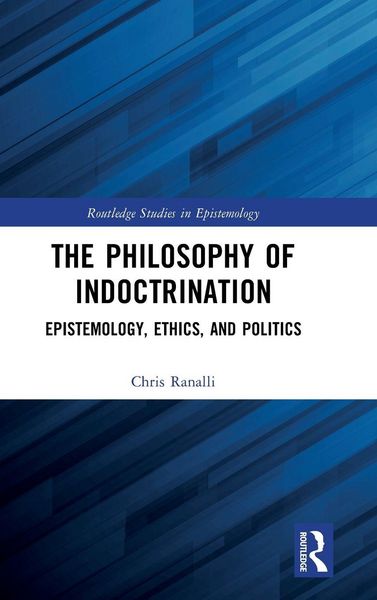
  • Produktbild: The Philosophy of Indoctrination
  • Produktbild: The Philosophy of Indoctrination

The Philosophy of Indoctrination Epistemology, Ethics, and Politics

229,99 €

inkl. gesetzl. MwSt., Versandkostenfrei


Beschreibung

This book develops and defends a novel social epistemological account of indoctrination. It answers important epistemological, ethical, and political questions about what indoctrination is, why it is epistemically harmful, how it can be practiced, and how we should talk about indoctrination.

The author...

Beschreibung

This book develops and defends a novel social epistemological account of indoctrination. It answers important epistemological, ethical, and political questions about what indoctrination is, why it is epistemically harmful, how it can be practiced, and how we should talk about indoctrination.

The author presents three views related to the epistemology of indoctrination. First, he argues that indoctrination is most fundamentally a structural epistemic phenomenon which results in closed-minded beliefs. The sources of indoctrination are diverse: institutional structures, technological systems, ideological frames, and individual actions. What unites them is that they lead to the systematic failure to consider seriously the relevant alternatives to what we are taught, whether by accident or by design.  Second, he makes the case that indoctrination is always wrong because it disrespects agents in their capacity as epistemic agents, even when it results in true belief. Third and finally, he contends that public indoctrination-ascriptions are political propaganda; they function to promote political agendas, which can, ironically, breed the conditions for indoctrination rather than forestall it.

The Philosophy of Indoctrination is an essential resource for researchers and advanced students working in social and political epistemology, ethics, political philosophy, philosophy of education, and terrorism and radicalization studies.

Rezension

"Citizens need to be educated but not indoctrinated if our political and epistemic ideals are to be realised. Chris Ranalli helps us understand the nature and harms of indoctrination and in doing so offers a major new contribution to virtue and political epistemology. In his rich and engaging book, he offers clear insights for all those concerned with the messy relationships between politics, education, and epistemology."

Ian James Kidd, University of Nottingham, UK

Produktdetails

Einband

Gebundene Ausgabe

Erscheinungsdatum

16.12.2024

Verlag Taylor & Francis
Seitenzahl

302

Produktdetails

Einband

Gebundene Ausgabe

Erscheinungsdatum

16.12.2024

Verlag Taylor & Francis
Seitenzahl

302

Maße (L/B/H)

23,5/15,7/2,1 cm

Gewicht

591 g

Sprache

Englisch

ISBN

978-1-03-219339-7

EU-Ansprechpartner

Taylor & Francis Verlag GmbH
Kaufingerstraße 24
80331 München
DE
GPSR@taylorandfrancis.com

Herstelleradresse

Taylor & Francis Group
5 Howick Place
SW1P 1WG London
UK
GPSR@taylorandfrancis.com

Noch keine Bewertungen vorhanden

Verfassen Sie die erste Bewertung zu diesem Artikel

Helfen Sie anderen Kundinnen und Kunden durch Ihre Meinung.

Kundinnen und Kunden meinen

Bewertungen (0)

Die Leseprobe wird geladen.
  • Produktbild: The Philosophy of Indoctrination
  • Produktbild: The Philosophy of Indoctrination
  • 1. The Philosophy of Indoctrination 2. Defining Indoctrination 3. What is Indoctrination? 4. A Theory of Indoctrination 5. The Ethics of Indoctrination 6. The Politics of Indoctrination Conclusion