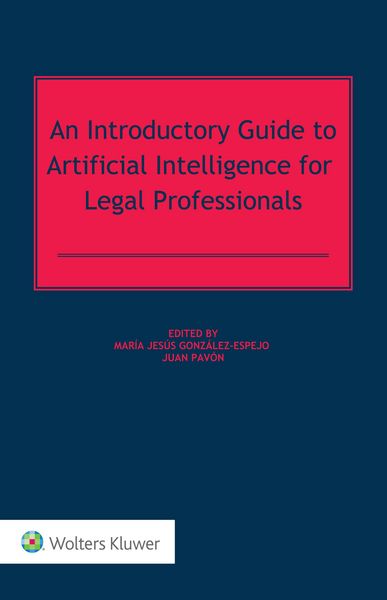
Introductory Guide to Artificial Intelligence for Legal Professionals
-
- Einzelkauf Download ausgewählt
-
Sprache:Englisch
-
eBook Format:PDF
- PDF 52,50 € ausgewählt
- ePUB 52,50 €
52,50 €
inkl. gesetzl. MwSt.Beschreibung
Produktdetails
Format
Kopierschutz
Ja
Family Sharing
Ja
Text-to-Speech
Nein
Erscheinungsdatum
14.05.2020
Herausgeber
Juan Pavon + weitereVerlag
Wolters KluwerSeitenzahl
240 (Printausgabe)
Dateigröße
2647 KB
Sprache
Englisch
EAN
9789403510309
The availability of very large data sets and the increase in computing power to process them has led to a renewed intensity in corporate and governmental use of Artificial Intelligence (AI) technologies. This groundbreaking book, the first devoted entirely to the growing presence of AI in the legal profession, responds to the necessity of building up a discipline that due to its novelty requires the pooling of knowledge and experiences of well-respected experts in the AI field, taking into account the impact of AI on the law and legal practice. Essays by internationally known expert authors introduce the essentials of AI in a straightforward and intelligible style, offering jurists as many practical examples and business cases as possible so that they are able to understand the real application of this technology and its impact on their jobs and lives.
Elements of the analysis include the following:
- crucial terms: natural language processing, machine learning and deep learning;
- regulations in force in major jurisdictions;
- ethical and social issues;
- labour and employment issues, including the impact that robots have on employment;
- prediction of outcome in the legal field (judicial proceedings, patent granting, etc.);
- massive analysis of documents and identification of patterns from which to derive conclusions;
- AI and taxation;
- issues of competition and intellectual property;
- liability and responsibility of intelligent systems;
- AI and cybersecurity;
- AI and data protection;
- impact on state tax revenues;
- use of autonomous killer robots in the military;
- challenges related to privacy;
- the need to embrace transparency and sustainability;
- pressure brought by clients on prices;
- minority languages and AI;
- danger that the existing gap between large and small businesses will further increase;
- how to avoid algorithmic biases when AI decides;
- AI application to due diligence;
- AI and non-disclosure agreements; and
- the role of chatbots.
Interviews with pioneers in the field are included, so readers get insights into the issues that people are dealing with in day-to-day actualities.
Whether conceiving AI as a transformative technology of the labour market and training or an economic and business sector in need of legal advice, this introduction to AI will help practitioners in tax law, labour law, competition law and intellectual property law understand what AI is, what it serves, what is the state of the art and the potential of this technology, how they can benefit from its advantages and what are the risks it presents. As the global economy continues to suffer the repercussions of a framework that was previously fundamentally self-regulatory, policymakers will recognize the urgent need to formulate rules to properly manage the future of AI.
Noch keine Bewertungen vorhanden
Verfassen Sie die erste Bewertung zu diesem Artikel
Helfen Sie anderen Kundinnen und Kunden durch Ihre Meinung.
Kurze Frage zu unserer Seite
Vielen Dank für Ihr Feedback
Wir nutzen Ihr Feedback, um unsere Produktseiten zu verbessern. Bitte haben Sie Verständnis, dass wir Ihnen keine Rückmeldung geben können. Falls Sie Kontakt mit uns aufnehmen möchten, können Sie sich aber gerne an unseren Kund*innenservice wenden.
zum Kundenservice